
In the relentless pursuit of efficiency, safety, and longevity, engineers and material scientists often find themselves constrained not by the complexity of their designs, but by the limitations of their base materials. Whether it is purifying the air in a semiconductor cleanroom or ensuring the safe discharge of energy in a lithium-ion battery, the “secret ingredient” often lies in a material that is ubiquitous yet invisible to the average consumer: Micro Glass Fiber (MGF).
While traditional cellulose, polymer membranes, and non-woven fabrics have served their purposes, the demanding specifications of the 21st century—from electric vehicle range anxiety to post-COVID air quality standards—require a material that is thermally stable, chemically inert, and structurally precise. Micro glass fiber fits this description perfectly. This article explores why this engineered material, composed of borosilicate or soda-lime glass filaments with diameters ranging from 0.1 to 5 micrometers, has become the unsung hero in two critical industrial sectors: high-performance filtration and advanced battery separators.
Part 1: The Unique Physics of Micro Glass Fiber
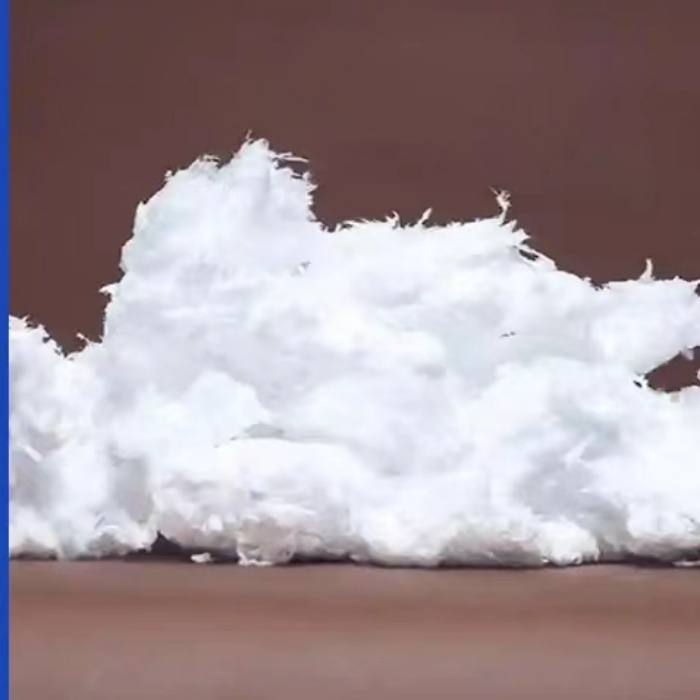
To understand why MGF outperforms its competitors, one must first understand its fundamental architecture. Unlike synthetic fibers such as polyester or polypropylene, which have smooth, hydrophobic surfaces, micro glass fibers are rigid, cylindrical, and possess a high surface area. The manufacturing process—typically flame blowing or rotary spinning—creates fibers that are not perfectly uniform. This “imperfection” is a feature, not a bug.
These fibers interlock to form a tortuous, three-dimensional labyrinth. The key metrics that define MGF performance are:
- Fiber Diameter: Sub-micron glass fibers (0.2–1.0 µm) are used for high-efficiency HEPA/ULPA filtration, while slightly larger fibers (1.0–4.0 µm) are used for battery separators.
- Chemical Durability: Borosilicate glass resists most acids, alkalis, and organic solvents, unlike polymer membranes that swell or degrade.
- Thermal Stability: MGF retains its structural integrity up to 700°C. Polypropylene melts at 160°C.
- Surface Chemistry: The silanol groups (Si-OH) on the glass surface create a hydrophilic environment, crucial for electrolyte wetting in batteries.
Part 2: The Role of Micro Glass Fiber in High-Performance Filtration
Filtration is a battle against particle size. Viruses (0.02–0.3 µm), fine dust (PM2.5), and diesel soot require a filter that does not simply act as a sieve (which would require microscopic holes and high pressure drop) but traps particles through physico-chemical mechanisms.
MGF filters utilize five distinct capture mechanisms: Interception, Inertial Impaction, Diffusion, Electrostatic attraction, and Sieving. However, the “secret” of glass fiber lies in the balance between Depth Filtration and High Porosity (90–95%) .
2.1. The Dominance of Depth Loading
Unlike membrane filters that capture particles only on their surface (cake filtration), MGF structures are thick (0.5mm to 5mm). Particles travel through the web and stick to the glass surfaces via Van der Waals forces. This allows the filter to hold a significant dust load without a drastic increase in pressure drop. In high-efficiency applications, this translates to longer filter life.
2.2. The HEPA/ULPA Standard
In cleanrooms, hospitals, and pharmaceutical manufacturing, High-Efficiency Particulate Air (HEPA) filters are mandatory. The standard requires 99.97% removal of particles 0.3 µm in diameter—the “Most Penetrating Particle Size” (MPPS). Coarser fibers might miss this size; finer fibers cause too much drag. MGF specifically engineered to 0.8–1.2 µm diameter achieves the MPPS sweet spot.
Furthermore, ULPA (Ultra-Low Penetration Air) filters, which remove 99.9995% of particles, rely entirely on sub-micron glass fiber paper. No polymer non-woven has yet replicated the rigid, open structure required for ULPA performance at low energy costs.
2.3. High-Temperature and Corrosive Environments
Consider a gas turbine filtration system. Intake air for a turbine contains salt, sulfuric acid precursors, and operates at varying temperatures. Cellulose filters carbonize; polyester filters melt. Glass fiber filters remain inert. This is why MGF is the standard for oil coalescing filters (separating water and oil aerosols) and paint spray booths. The fibers do not absorb solvents, preventing the filter from swelling and closing off airflow.
2.4. Case Study: Masks and HVAC
During the COVID-19 pandemic, the global demand for N95 masks exposed the fragility of supply chains reliant on electret (charged) polypropylene. Those masks lose efficiency when exposed to moisture (breath) or alcohol sanitizers. MGF, by contrast, relies on mechanical capture, not static charge. While heavier, a mask made with micro glass fiber media provides consistent, charge-free filtration regardless of humidity. In HVAC systems, MGF pleated filters remain the gold standard for hospital isolation rooms precisely because they can be sterilized via autoclave (heat) without degrading.
Part 3: Micro Glass Fiber as the Enabler for Advanced Battery Separators
While filtration uses glass fibers to keep things out, battery separators use glass fibers to let things through—specifically, ions. In Lead-Acid (AGM) and Nickel-Iron batteries, and increasingly in next-generation solid-state hybrids, MGF is irreplaceable.
3.1. The Absorbent Glass Mat (AGM) Revolution
The AGM battery, used in start-stop vehicles, UPS backups, and high-end motorcycles, replaced flooded lead-acid batteries using a micro glass fiber mat. Why is this a secret ingredient?
- Electrolyte Retention: The porous structure of MGF acts like a sponge. It holds the sulfuric acid electrolyte in suspension, preventing spillage and stratification (where acid sinks to the bottom of a wet cell, causing uneven wear).
- Oxygen Recombination: In a flooded battery, water hydrolysis produces oxygen and hydrogen, which escapes (requiring water topping up). In an AGM battery, the oxygen generated at the positive plate travels through the pores of the glass mat to the negative plate, where it recombines into water. This “recombination” efficiency is directly dependent on the pore size distribution of the glass fiber mat. MGF provides the specific 0.5–5 µm pore structure required for this gas phase transport.
- Cold Cranking Performance: Glass fibers maintain their rigidity in cold temperatures. Polymer separators (like PVC or PE) shrink or stiffen below -10°C, increasing internal resistance. MGF allows ions to flow even at -30°C, ensuring your car starts in winter.
3.2. Why Polymer Separators Fail in High-Heat
Standard Lithium-ion batteries use polyolefin separators (PP/PE). These have a shutdown feature—they melt at 130°C, stopping the reaction. However, in a catastrophic thermal runaway, they melt irregularly, shrinking and causing a massive internal short circuit. Micro glass fiber mats do not melt. They remain a rigid barrier even at 500°C. While not yet standard in mainstream Li-ion due to cost and brittleness in winding, MGF is the dominant separator for:
- High-Temperature Ni-Cd batteries (Aircraft & Rail): Where safety margins are mandatory.
- Flow Batteries: Vanadium redox batteries rely on MGF because the aggressive vanadium electrolyte dissolves most organic membranes.
- Solid-State Battery Prototypes: Researchers are using MGF as a mechanical support (scaffold) for solid electrolytes to prevent dendrite growth.
3.3. Wettability and Dendrite Suppression
Lithium metal batteries fail due to dendrites—sharp, tree-like lithium crystals that pierce the polymer separator, causing a fire. Glass fiber mats, due to their hydrophilicity, ensure uniform ion flux. When electrolyte is added to a glass fiber separator, it wets instantly. This uniform distribution reduces localized hotspots where dendrites initiate. Furthermore, the high modulus of glass (approx. 70 GPa vs. 2 GPa for PE) physically resists dendrite penetration. A lithium dendrite can poke through soft plastic; it bends and breaks against a rigid glass fiber.
Part 4: Synergistic Manufacturing Processes
The “secret ingredient” narrative is completed by how MGF is converted into usable media. Both filtration media and battery separators are produced via wet-laid nonwoven technology—a process borrowed from papermaking but calibrated for glass.
The Process:
- Batching: Borosilicate glass cullet is melted.
- Fiberizing: Molten glass flows into a spinning cup (rotary process) or is hit by high-pressure air jets (flame blowing). This produces discontinuous fibers of specific diameters.
- Slurry Formation: Fibers are dispersed in water with a surfactant (to prevent clumping) and a binder (typically acrylic or phenolic resin for filtration; latex or silica for batteries).
- Web Forming: The slurry is deposited on a moving wire screen. Water drains, leaving a random, isotropic mat.
- Bonding: The mat passes through an oven. The binder cures, cross-linking the fibers at their intersection points.
The “Binder” Trade Secret:
For filtration, the binder must not block the pores or outgas volatile organic compounds (VOCs). Low-binder content (5-10%) is used.
For battery separators, the binder must resist sulfuric acid (pH ~0) for 10+ years. Phenolic resins are used, but high-end AGM separators use a proprietary silica-based binder that is completely inert and improves the “stack pressure” of the battery.
Part 5: Comparative Analysis – Glass vs. The Alternatives
To truly appreciate the “secret ingredient,” a direct comparison with common alternatives is necessary for specific use cases.
|
Property |
Micro Glass Fiber |
Cellulose (Paper) |
Polyester (PET) |
Polypropylene (PP) |
|
Max Temp (Continuous) |
350°C – 700°C | 120°C (char) | 150°C (melt) | 130°C (melt) |
| Chemical Resistance | Excellent (HF excluded) | Poor (acid hydrolysis) | Good (oxidizers attack) | Excellent |
| Surface Area | Very High (porous fiber) | Medium | Low (smooth) | Very Low |
| Moisture Absorption | 0% (but hydrophilic) | 8-10% (causes swelling) | <0.4% | <0.1% |
| Dielectric Strength (Volts/mil) | High (300-400) | Low | Medium | Medium |
| Compression Resistance | High (rigid fibers) | Low (collapses) | Medium (flexes) | Low (creeps under load) |
Analysis: Cellulose is cheap, but it swells and rots. Polyester is tough, but melts. Polypropylene is cheap and chemical resistant, but it is hydrophobic (repels water electrolytes) and collapses under pressure. Micro glass fiber is the only material that offers high porosity, high rigidity, thermal stability, and chemical inertness simultaneously.
Part 6: Challenges and Innovations (The “Secret” isn’t perfect)
No material is without drawbacks. MGF has three historical weaknesses that engineers have had to overcome, often adding to its “secret genius” status.
6.1. Brittleness and Handling
Glass fibers are brittle. If you roll a dry glass fiber mat tightly, it cracks. Innovation: Manufacturers use a micro-crimp process or add 10-20% synthetic polymer fibers (like PET) as a “carrier” to improve tear strength. In AGM batteries, the separator is rarely dry; it is saturated with electrolyte during assembly, making the glass fibers “slippery” and flexible.
6.2. Cost
MGF is roughly 3-5x more expensive than cellulose and 2x more expensive than standard polypropylene. Justification: The lifecycle cost of a HEPA filter is dominated by energy consumption (pressure drop) and downtime for replacement. An MGF filter lasts longer and uses less energy, paying back its premium within months.
6.3. Manufacturing Complexity
Producing sub-micron glass fiber requires high-energy melting and flame attenuation, which has a high carbon footprint. Innovation: Recycled glass cullet is now used. Furthermore, new “stretched” glass fiber techniques produce thinner fibers with less energy.
Part 7: Future Frontiers – Where MGF is heading
The “secret ingredient” is currently being tested in cutting-edge R&D labs.
7.1. Lithium-Metal Batteries with Glass Scaffolds
Researchers at MIT and Stanford are using dense mats of micro glass fiber infused with ceramic electrolyte (LLZO). The glass provides the mechanical backbone, while the ceramic conducts the lithium ions. This hybrid separator has demonstrated resistance to lithium dendrites for over 1,000 cycles—a major breakthrough for electric aviation.
7.2. Air Filtration for VOC Removal
New composite MGF filters are being coated with zeolites or activated carbon in situ during the wet-laid process. Because the glass structure is porous, it traps the carbon particles without reducing airflow. The result is a single-stage HEPA + VOC filter for smart homes.
7.3. Biodegradable High-Performance Filters
While glass does not biodegrade, it is mineral (sand). New standards are emerging for “disposable” filters to be landfilled as inert waste, whereas plastic filters remain as microplastics. MGF offers a microplastic-free solution for single-use medical devices.
Conclusion
Micro glass fiber is the archetypal enabling technology. It lacks the glamour of graphene or the hype of solid-state electrolytes, yet it silently underpins the reliability of the world’s critical infrastructure. In a server room, the UPS batteries keeping the internet alive use AGM separators made of MGF. In a hospital operating theater, the air free of pathogens is cleaned by MGF HEPA filters. In an electric vehicle, while the battery chemistry is Li-ion, the cooling system filters and safety vents rely on MGF.
The “secret” lies in the paradox: a material made of sand, spun into fibers thinner than a human hair, creates a structure that is 95% air. That void space, when properly engineered, either traps deadly particles or facilitates the safe flow of ionic energy. As the world demands higher energy densities and cleaner air, the rigid, inert, and precise nature of micro glass fiber will move from “secret ingredient” to the main structural component of our future technological landscape.
Manufacturers who overlook MGF in favor of cheaper plastics do so at the risk of product failure under heat, pressure, or chemical stress. Those who embrace it gain a competitive edge in efficiency, safety, and longevity. In the quiet battle of microns and millivolts, micro glass fiber remains the undisputed champion.
Post time: May-14-2026