
In the intricate web of modern industrial supply chains, few materials are as quietly indispensable as micro glass fiber. This advanced material—composed of ultra-fine glass filaments often finer than a human hair—serves as the critical functional component in everything from the HEPA filters that keep semiconductor cleanrooms sterile to the vacuum insulation panels that make high-end refrigerators energy-efficient and the AGM separators that power advanced lead-acid batteries. In 2024, the global micro glass fiber market was valued at approximately 4.26 billion RMB, with projections indicating steady growth to nearly 5.73 billion RMB by 2031. However, what is more significant than the numbers themselves is the profound geographic shift taking place within this market: an accelerating migration of global manufacturers toward Chinese suppliers.
For years, the micro glass fiber industry was largely dominated by established players in the United States, Europe, and Japan—names like Hollingsworth & Vose, Johns Manville, and Ahlstrom were the gold standard. While these companies remain formidable, a new paradigm is emerging. Chinese manufacturers are no longer merely low-cost alternatives; they have evolved into technologically sophisticated partners capable of delivering world-class quality, competitive pricing, and, perhaps most critically, an unprecedented degree of customization. This article explores the key drivers behind this global shift, examining how China’s micro glass fiber industry has matured from a cost-driven producer into a genuine innovation hub.

The Quality Revolution: From “Good Enough” to “World-Class”
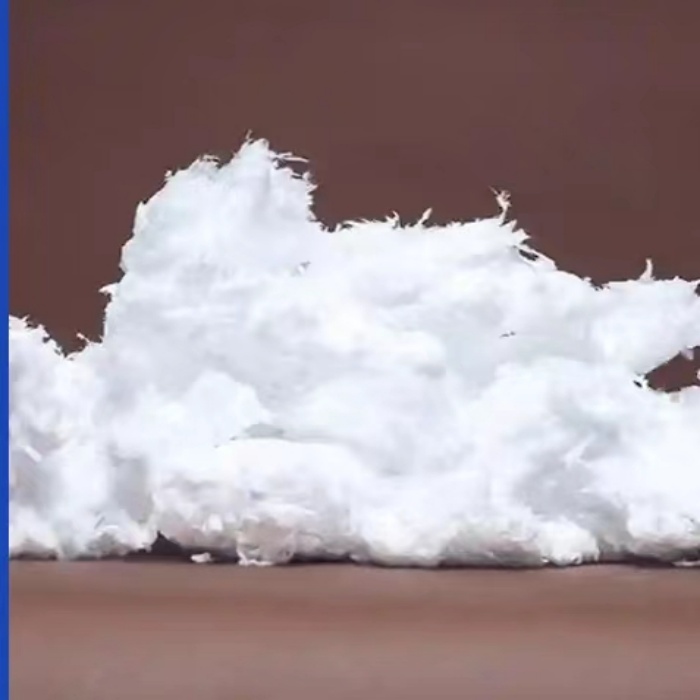
Perhaps the most compelling reason for the global switch is the demonstrable leap in product quality achieved by Chinese manufacturers. The narrative that “made in China” implies inferior performance is rapidly becoming obsolete, particularly in this high-tech materials sector. The material itself is produced through a sophisticated wet-laid process, creating a non-woven porous structure that provides high mechanical strength, excellent filtration efficiency, and remarkable thermal resistance. Chinese companies have mastered these complex manufacturing techniques, producing fibers with diameters ranging from as fine as 0.09 microns to 3 microns—a level of precision that directly translates to superior performance in demanding applications.
The most striking validation of this quality advancement comes from the aerospace sector. For years, the production of “aircraft cotton”—the specialized micro glass fiber used for thermal and acoustic insulation in airplanes—was a closely guarded secret, monopolized by just two companies in the United States and Japan. China’s ability to not only replicate but compete in this arena represents a quantum leap in capability. A Chinese firm, Zaisheng Technology (再升科技), successfully broke this duopoly, becoming only the third company globally to master the technology for producing aviation-grade ultra-fine fiber cotton. Their product is now certified for use in the C919, China’s domestically produced large passenger jet. This is not a story of cheap imitation; it is a story of high-tech achievement that required years of intensive R&D and collaboration with research institutions, culminating in a product capable of withstanding 1200°C flames without burning through. The same company also counts SpaceX among its export clients for materials used in extreme high-temperature insulation for rockets.
This success is not an isolated case. Another Chinese firm, Xuanhan Zhengyuan Micro Glass Fiber Co., Ltd. (宣汉正原微玻纤有限公司), was named a National Manufacturing Single Champion, a prestigious designation reserved for the best enterprises in their respective fields. Their journey from a start-up leveraging local natural gas resources to a supplier of high-performance insulation and core materials for export to Japan and South Korea exemplifies the sector’s overall rise. These examples underscore a critical point: for mission-critical applications where failure is not an option, Chinese micro glass fiber has proven its mettle. The technology has matured to the point where the question for many global purchasers is no longer if the quality is good enough, but which specific Chinese supplier best fits their exact specifications.
The Cost Advantage: Innovation in Efficiency, Not Just Labor
While the quality argument is compelling, the economics of switching to a Chinese supplier remain a powerful motivator. However, the cost advantage is no longer solely about cheap labor. It is increasingly a story of integrated supply chains, vertical integration, and strategic access to raw materials and energy.
Chinese micro glass fiber manufacturers have optimized their production processes to a fine art. The industry primarily uses quartz sand, soda ash, and borax as raw materials, with natural gas as a key energy source for the flame-spraying and melting processes. Companies like Zhengyuan located their facilities in regions like Xuanhan County, which is rich in natural gas resources, securing a stable and cost-effective energy supply that significantly lowers production costs. This strategic location strategy, combined with the development of complete industrial clusters, allows for unprecedented efficiency.
The Xuanhan Microfiber New Materials Industrial Park is a prime example of this cluster effect, where a complete value chain has been built within a single geographic area. In this park, one company produces the glass micro-fiber raw material, and its customer—a manufacturer of vacuum insulation panels—is located just a two-minute walk away. This co-location dramatically reduces logistics and inventory costs. The downstream company, Sichuan Microlon Vacuum New Materials Co., Ltd. (四川迈科隆真空新材料有限公司), has leveraged this proximity to grow into a “Little Giant” enterprise—a special designation for innovative SMEs in China—with an annual output value of 500 million RMB, exporting 60-70% of its products to overseas clients.
The scale of the industry also contributes to cost efficiencies. Chinese producers can command vast economies of scale, fulfilling large-volume orders that are challenging for smaller, boutique suppliers in other nations. This allows them to offer highly competitive pricing, often quoted at a fraction of the cost of comparable materials from traditional suppliers. For example, premium micro glass fiber paper can be sourced for as low as $0.5 per square meter, a price point that is extremely difficult for many non-Chinese producers to match. This combination of low energy costs, an efficient local supply chain, and massive manufacturing capacity creates a cost structure that is not just about cheap wages, but about systemic industrial efficiency.
Customization and Service: Beyond a Commodity
The third pillar of the global switch is the unparalleled flexibility and customization that Chinese suppliers now offer. In the past, Chinese manufacturing was sometimes perceived as rigid—capable of mass production but slow to adapt to specific, tailored needs. Today, the opposite is often true. Chinese suppliers, particularly the new generation of “Little Giant” enterprises, have built their business models around solving specific customer problems.
This commitment to customization is evident across the industry. Chinese manufacturers are not just selling “micro glass fiber”; they are offering engineered solutions. They provide a wide range of product specifications, including different weights (from 20g/m² to over 90g/m²), thicknesses, fiber diameters (from 0.3µm to 5µm), and binder content to meet the precise requirements of different applications. Whether it’s for a high-efficiency particulate air (HEPA) filter, a ULPA filter for semiconductor fabs, a catalyst carrier, or an AGM battery separator, suppliers can tailor the material’s porosity, mechanical strength, and thermal conductivity to the task.
The service model has also evolved to be highly responsive. Many suppliers openly advertise their ability to customize based on customer drawings, samples, and specific technical challenges. They offer free samples for testing and provide rapid turnaround times, often delivering orders within 10-25 days of payment. A supplier’s product description might be as simple as a list of technical data, but the underlying message is one of partnership—a willingness to develop a bespoke product rather than just delivering a commodity. This is a far cry from the transactional relationships of the past and reflects a deep understanding that in advanced manufacturing, a one-size-fits-all approach is often obsolete.
Market Leadership and Global Presence
The scale of China’s success in this sector is reflected in its dominant position in the global market. Industry analysis shows that China itself is the largest consumer of micro glass fiber, accounting for approximately 43% of global consumption, followed by North America and Europe. This internal demand, driven by its own booming high-tech manufacturing sector, has provided a fertile ground for domestic producers to refine their products and scale their operations before expanding globally. Crucially, leading Chinese companies like Zaisheng Technology, Chengdu Hanjiang New Materials, and Inner Mongolia Shihuan New Materials are now recognized as key players in the global market, competing directly with long-established Western giants like Alkegen, Hollingsworth & Vose, and Johns Manville.
This competitive landscape is a testament to the industry’s maturity. While Western companies still hold a significant portion of the global market—North America and Europe together account for about 51%—the trajectory of the industry suggests that Chinese market share will continue to grow. This is driven not just by the value proposition of quality, cost, and customization, but also by the increasing sophistication of Chinese companies in navigating global trade. While new trade barriers like US tariffs on Chinese goods present a challenge, they are also pushing Chinese firms to further innovate and adopt strategies like establishing regional manufacturing centers and diversifying into emerging markets from Southeast Asia to the Middle East and Latin America. This adaptive, global mindset reinforces the message: Chinese micro glass fiber manufacturers are here to stay and are ready to meet the world’s toughest challenges.
Conclusion
The global shift toward Chinese micro glass fiber is not a short-term trend driven by price alone. It represents a fundamental restructuring of a critical material supply chain. Chinese suppliers have successfully transitioned from marginal players to dominant global forces by delivering a trifecta of value: world-class quality that meets the exacting standards of the aerospace industry, cost-efficiency underpinned by advanced supply chain management and energy access, and unmatched customization that treats each customer relationship as a collaborative partnership.
For global manufacturers, the decision to switch is becoming a strategic imperative rather than a simple sourcing choice. By partnering with Chinese micro glass fiber companies, they are not just saving money; they are plugging into a dynamic, innovative ecosystem that is powering the next generation of clean energy, advanced manufacturing, and filtration technology. As the world moves toward higher energy efficiency and cleaner industrial processes, the role of this humble but mighty material will only grow, and China’s micro glass fiber industry is poised to remain at the very heart of that future.
Post time: Aug-20-2026


