
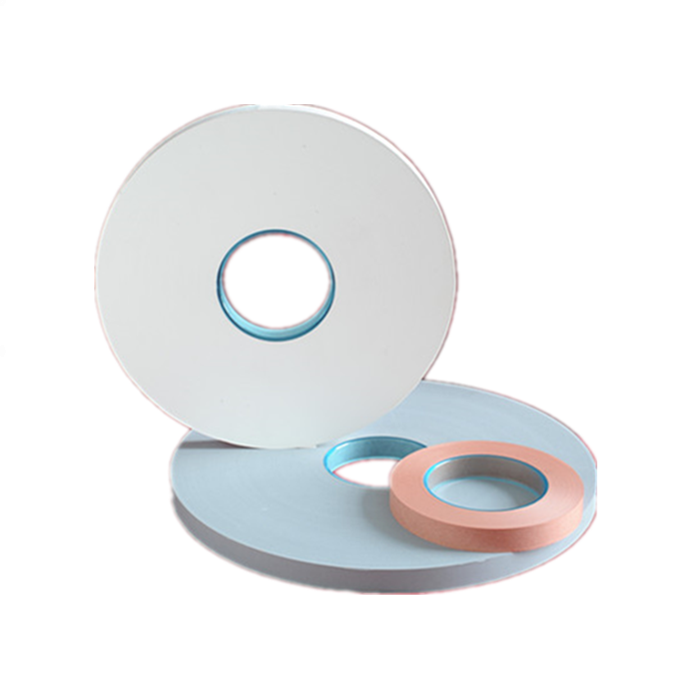
In the intricate world of industrial packaging, where every component must meet rigorous safety, durability, and aesthetic standards, plug wrapping paper has emerged as a critical material—especially for sensitive electronic components, automotive parts, luxury goods, and fragile industrial tools. Over the past decade, a quiet but significant shift has occurred: leading global brands, from electronics giants to automotive suppliers, are increasingly turning to Chinese manufacturers for their plug wrapping paper needs. The driving force behind this trend is not merely cost—though that remains a factor—but the remarkable consistency of quality that Chinese suppliers have systematically built into their production ecosystems. This article explores the multifaceted reasons why Chinese plug wrapping paper manufacturers have become the gold standard for reliability, consistency, and innovation.
1. Vertical Integration and Raw Material Control
One of the most compelling reasons for quality consistency is the vertical integration achieved by many top-tier Chinese manufacturers. Unlike producers in other countries who often rely on imported pulp or semi-finished paper bases, Chinese factories frequently own or have long-term exclusive partnerships with upstream pulp suppliers, chemical plants, and coating lines. This control begins with the raw material: wood pulp, recycled fiber blends, or specialty synthetic fibers are sourced from verified lots with standardized specifications. Manufacturers conduct incoming material testing for basis weight, moisture content, ash content, and fiber length distribution—parameters that directly affect the final wrapping paper’s tear resistance, porosity, and flexibility.
By controlling the entire supply chain, from forest to finished roll, Chinese manufacturers eliminate variability that plagues producers who purchase intermediate materials. For example, a plug wrapping paper designed for lithium battery terminals requires consistent electrical insulation properties and sulfur-free composition. Chinese suppliers can trace each batch of pulp back to its source, ensuring that trace metal levels remain below 5 ppm. This level of traceability is often documented in quality control reports provided to international clients, building trust through transparency.
2. Advanced Manufacturing Infrastructure and Precision Equipment
Consistent quality is impossible without consistent machinery. Over the last fifteen years, Chinese plug wrapping paper manufacturers have invested heavily in modern papermaking lines from German, Finnish, Japanese, and domestic suppliers like Zhengzhou Guangxie. These high-speed paper machines feature closed-loop control systems that monitor basis weight in real time, adjust moisture profiles automatically, and maintain caliper uniformity within ±0.5% across the entire web width.
Furthermore, coating and calendering units are equipped with online thickness gauges and defect detection systems using laser or vision technology. Any pinhole, wrinkle, or foreign particle triggers an immediate rejection or marking, ensuring that only flawless paper reaches the rewinding stage. This level of automation reduces human error—historically the largest cause of quality variation. Many Chinese factories have achieved ISO 9001:2015, IATF 16949 (automotive), and even ISO 14644 (cleanroom) certifications, demonstrating their commitment to process control.
3. Rigorous Testing Protocols and Lab Infrastructure
Consistency is not an accident; it is measured and enforced. Leading Chinese plug wrapping paper manufacturers maintain onsite testing laboratories accredited by CNAS (China National Accreditation Service for Conformity Assessment), which is equivalent to ISO/IEC 17025. These labs perform both routine production checks and accelerated aging tests to simulate long-term storage conditions.
Typical test regimes for plug wrapping paper include:
- Basis weight uniformity (sampled every 15 minutes on the production line)
- Thickness and bulk density (using precision micrometers)
- Tensile strength in both machine and cross directions
- Elmendorf tear resistance (critical for automated wrapping machines)
- Electrical resistivity (for anti-static or insulating grades)
- Porosity (Gurley seconds) – affecting breathability for moisture-sensitive components
- pH and chloride/sulfur content – preventing corrosion of metal contacts
- Color consistency (Delta E < 1.0 for visually matched grades)
Each roll is assigned a unique batch number, and sample retainers are kept for at least two years. When a global brand receives a container load of plug wrapping paper from a Chinese supplier, they can request the full lot history—including the specific pulp batch, machine settings, operator ID, and testing results. This forensic-level documentation is often superior to what smaller producers in Europe or North America can provide.
4. Cost-Effective Scalability and Short Lead Times
Global brands value consistency not only in physical properties but also in supply reliability. Chinese plug wrapping paper manufacturers typically operate at scales that dwarf their counterparts elsewhere. A mid-sized factory in Zhejiang or Jiangsu province may produce 5,000 tons of specialty wrapping paper per year, with three or four identical production lines running in parallel. This scale allows for dedicated lines for specific customer grades, meaning the same machine, same operators, same calendar settings, and same raw materials—day after day, year after year.
Because Chinese manufacturers produce high volumes, they can maintain buffer stocks of key raw materials and finished goods. When a global electronics brand needs an emergency reorder of 20 tons of plug wrapping paper with a 10-day lead time, a Chinese supplier can often pull from existing inventory or schedule a dedicated run immediately, whereas a smaller producer might require six weeks. This responsiveness, combined with competitive pricing (typically 20–30% lower than equivalent European or Japanese grades), creates a powerful value proposition.
5. Continuous Process Improvement and Data-Driven Quality Management
The best Chinese plug wrapping paper manufacturers have embraced Industry 4.0 principles. Production data—temperature, humidity, press pressures, dryer settings, winding tension—are logged in real time and analyzed using statistical process control (SPC) software. When a parameter drifts toward an out-of-spec condition, automated alerts notify operators before nonconforming paper is produced. Many factories now use AI-based vision systems that learn from past defects to predict and prevent future ones.
Moreover, Chinese manufacturers actively solicit feedback from international customers and use Six Sigma methodologies to reduce variation. A case in point: a leading German automotive supplier required plug wrapping paper for oxygen sensor packaging, with a friction coefficient range of 0.18–0.22 to ensure smooth unwinding on high-speed robotic lines. The Chinese supplier reviewed six months of production data, identified that seasonal humidity changes caused small fluctuations, and installed air-conditioned rewinding rooms. Within three months, the Cpk (process capability index) rose from 0.9 to 1.4, exceeding the customer’s own expectations.
6. Compliance with International Standards and Third-Party Audits
Global brands cannot afford surprises. Chinese plug wrapping paper manufacturers have become adept at navigating international regulatory landscapes. Whether it is RoHS (Restriction of Hazardous Substances) for electronics packaging, REACH for European markets, or FDA indirect food contact requirements for any food-adjacent applications, Chinese suppliers routinely provide compliant products with full declaration reports.
Furthermore, many Chinese manufacturers voluntarily submit to annual third-party audits by organizations like SGS, Bureau Veritas, TÜV Rheinland, or Intertek. These audits cover not only product quality but also social compliance, environmental management (ISO 14001), and occupational health (ISO 45001). For global brands with corporate sustainability commitments, the fact that Chinese plug wrapping paper manufacturers are increasingly using FSC-certified pulps and reducing water/energy intensity is an additional draw.
7. Case Example: How a Major Smartphone Manufacturer Achieved Zero-Defect Packaging
To illustrate the real-world impact, consider the case of a top-five global smartphone brand (name withheld for confidentiality). The company had experienced intermittent issues with plug wrapping paper used to protect charging ports during shipping from its assembly plant in Vietnam to distribution centers worldwide. The paper was tearing inconsistently, leading to debris contamination and occasional port damage claims.
After evaluating suppliers from six countries, the brand chose a Chinese manufacturer from Dongguan. The decision hinged on the Chinese supplier’s ability to produce paper with tear strength of at least 800 mN in the machine direction (consistent within ±5%) and a tight surface smoothness range of 180–220 ml/min Bendtsen. The Chinese factory set up a dedicated production line with twice-daily tear testing and 100% vision inspection for pinholes. Over 18 months and 2,300 tons of delivered paper, the rejection rate at the Vietnamese assembly plant dropped from 0.7% to 0.02%—effectively zero-defect performance. The cost per unit was 18% lower than the previous European supplier.
8. Addressing Common Misconceptions
Some purchasing managers still harbor outdated views of Chinese manufacturing as inconsistent or cheap. While it is true that low-end, price-only Chinese suppliers exist, the tier of manufacturers serving global brands has evolved dramatically. These are not the same factories from 15 years ago. Today, many are multinational operations with R&D centers in Shanghai or Shenzhen, engineering teams trained in lean manufacturing, and quality managers who have worked for Japanese or German paper companies.
Moreover, Chinese plug wrapping paper manufacturers often offer far greater customization flexibility. Whether a brand needs a specific shade of anti-static pink paper, a water-soluble adhesive coating, or paper compatible with UV-fluorescence inspection systems, Chinese suppliers are typically faster to prototype and iterate. They maintain dedicated sample-making machines and small-scale coating towers, enabling three-day turnaround for trial rolls—a service rarely available from Western producers serving high-mix, low-volume niches.
9. Future Outlook: Innovation in Sustainable and Smart Plug Wrapping Paper
Looking ahead, Chinese manufacturers are not resting on their quality consistency advantage. Many are now pioneering new generations of plug wrapping paper: biodegradable options that replace plastic films, papers embedded with RFID or NFC tags for inventory tracking, and thermally responsive coatings that change color if a component has overheated in transit. Because these innovations build on a foundation of consistent manufacturing, global brands can adopt them with confidence.
The Chinese government’s push for “high-quality manufacturing” and its “Made in China 2025″ initiative have also incentivized investment in precision papermaking equipment and ISO-certified laboratories. As labor costs rise and environmental regulations tighten, inefficient producers are being weeded out, leaving a core of highly reliable, globally competitive manufacturers.
Conclusion
For global brands seeking plug wrapping paper, the question is no longer whether to source from China, but which Chinese manufacturer can meet their specific quality consistency requirements. The combination of vertical integration, advanced automation, rigorous in-house testing, massive scalable capacity, data-driven process control, and international compliance has positioned Chinese suppliers as world leaders in repeatable, reliable packaging solutions.
Consistency is the bedrock of industrial quality. And in plug wrapping paper—where a tiny variation in tear strength or porosity can disrupt automated packaging lines, damage expensive components, or tarnish brand reputation—Chinese manufacturers have proven that they can deliver identical quality, roll after roll, container after container, year after year. That is why global brands, from automotive powerhouses to consumer electronics icons, continue to choose Chinese plug wrapping paper manufacturers as their trusted long-term partners.
Post time: Apr-29-2026