
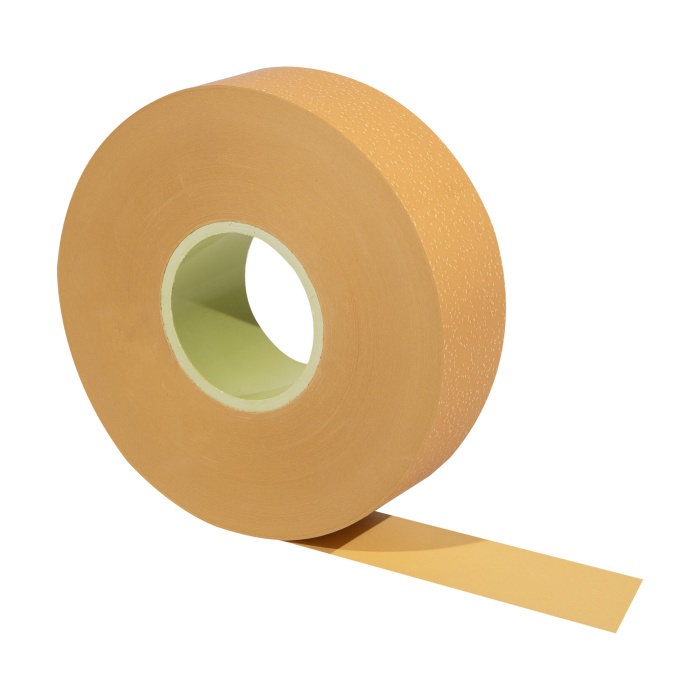
For decades, the global tipping paper industry was a relatively insulated club. A handful of European and North American specialty paper giants, alongside a few established Asian players, controlled the supply chains that feed the world’s cigarette manufacturing lines. Tipping paper—the thin strip that joins the filter to the tobacco column—is a small component by weight, but it is disproportionately important. It is the most visible branding element on a cigarette, the primary interface with the smoker’s lips, and a critical factor in machine runnability and regulatory compliance.
In recent years, however, a quiet shift has taken place. Buyers from Dubai to Southeast Asia, from Eastern Europe to Latin America, are increasingly turning to Chinese suppliers for their tipping paper needs. This is not merely a story about price. While cost competitiveness remains a foundational advantage, the more compelling narrative is one of technical maturation, supply chain resilience, and an aggressive push into value-added segments that were once the exclusive domain of legacy Western mills.
Chinese tipping paper manufacturers are no longer just volume players. They are becoming specification-driven partners for brand owners who demand precision, consistency, and innovation. To understand why global buyers are increasingly awarding contracts to Chinese mills, one must examine the structural, technical, and commercial forces at play.
From Price Taker to Specification Setter
The historical knock on Chinese specialty paper was consistency. Buyers appreciated the pricing but worried about batch-to-batch variation, dust levels, and the occasional horror story about a web break halting a high-speed cigarette maker. That gap has narrowed dramatically.
Consider the technical specifications now routinely published by leading Chinese suppliers. Zhejiang Kaifeng New Material, for instance, lists a Cobb value of 25 g/m² (±5) for its CIGAPAK tipping base paper, a machine-direction tensile strength of ≥27 N/15mm, and a D65 brightness of ≥85% with controlled fluorescent content . These are not budget-tier numbers; they align with the requirements of high-speed gravure printing and laser perforation lines used by multinational tobacco companies. The company operates Fourdrinier and inclined wire machines integrated with Siemens drive systems and Honeywell quality control, and holds certifications including ISO 9001, ISO 14001, FSC, PEFC, and BRC .
This certification profile matters enormously to global buyers. A procurement manager sourcing for a brand sold in the Gulf or the EU cannot afford a supplier whose quality management system is opaque. The fact that Chinese mills have invested in the same internationally recognized audit frameworks as their European competitors removes a significant barrier to entry. It signals that the supplier understands documentation, traceability, and the boring but essential discipline of process control.
The Engineering of Everyday Reliability
Tipping paper is a deceptively demanding product. It must have sufficient stiffness to run through a cigarette maker at speeds exceeding 10,000 cigarettes per minute without curling or tearing. It must accept printing—often intricate gravure work with metallic inks and security foils—without surface distortion. It must be perforated, either online or offline, with clean holes that deliver precise air dilution rates. And it must feel smooth and non-sticky against the smoker’s lips, a property achieved through carefully formulated lip-release coatings.
Chinese suppliers have made targeted investments in exactly these areas. The emphasis on “runnability” is particularly telling. Suppliers now market their machine-direction tensile strength and elongation properties as explicit selling points, because they understand that a converter’s biggest fear is downtime. A web break on a high-speed line costs thousands of dollars per hour in lost production, and no procurement savings can offset that risk.
The Dubai case is instructive. In mid-2026, Anhui Genuine Paper Packing held a technical review with a long-standing Middle Eastern distributor client focused on upgrading both tipping paper and cigarette cartons. The discussion covered high-definition gravure printing for metallic ink vibrancy, laser perforation specifications for optimal air dilution, and—critically—adjustments to the coating formula to improve moisture-proof performance in the Gulf’s high-humidity climate . The client’s supply chain manager praised the supplier’s ability to “translate our brand vision into practical, high-quality packaging while ensuring the supply chain remains robust” .
This is not a commodity transaction. It is a collaborative engineering relationship, and it is exactly the kind of engagement that Chinese suppliers have learned to execute well.
The Cost Equation, Revisited
It would be naive to pretend that price is irrelevant. It is not. Chinese tipping paper suppliers benefit from scale, integrated pulp sourcing, and lower conversion costs. Mudanjiang Hengfeng Paper, one of China’s largest cigarette paper producers, holds nearly one-third of the domestic market and ranks among the top two globally in cigarette accessory papers, with an annual production capacity of 230,000 tons across 21 paper machines . That scale translates into a structural cost advantage that is difficult for smaller regional mills in Europe or Southeast Asia to match.
But the more interesting dynamic is how Chinese suppliers are using cost advantage not as a standalone proposition but as a lever to win higher-value business. A buyer who saves 10-15% on tipping paper can reinvest that savings into more complex print designs, higher-performance coatings, or simply better margin protection in a regulated industry where tobacco taxes and compliance costs are constantly rising.
Moreover, the cost advantage is not static. Mudanjiang Hengfeng’s competitive pricing has been noted by financial analysts as a driver of market share gains, even as it carries the risk of margin compression if price wars intensify . The smart players are not competing solely on price. They are competing on the total cost of ownership—the combination of unit price, yield, machine efficiency, and supply reliability.
Supply Chain Geography and the New Proximity
Global tobacco manufacturing has shifted eastward and southward. Indonesia, Vietnam, Bangladesh, and the Middle East have become significant production hubs for both domestic consumption and export. For a cigarette maker in Jakarta or Dhaka, sourcing tipping paper from Europe means long lead times, expensive freight, and inflexible minimum order quantities. Sourcing from China means shorter transit times, more frequent shipments, and a supplier base that is culturally and logistically attuned to the rhythms of Asian manufacturing.
Chinese suppliers have also become adept at managing the logistics of moisture-sensitive paper. The Anhui Genuine case highlighted the use of reinforced, moisture-barrier packaging for sea freight and phased delivery schedules synchronized with the client’s warehouse inventory turnover . These are the unglamorous details that separate a reliable supplier from a transactional one. A European mill can do this too, but it will charge for it. A Chinese mill can do it while remaining cost-competitive.
Regulatory Pressure and the Innovation Imperative
The global regulatory environment for tobacco products is tightening, and tipping paper is not immune to these pressures. Fire safety standards—particularly reduced ignition propensity (RIP) regulations—require specific paper designs and coating formulations. Environmental concerns are pushing brands toward biodegradable and recyclable materials. The EU and the US FDA impose material safety guidelines that cascade down to every component, including the tipping paper .
This regulatory pressure is a double-edged sword for Chinese suppliers. On one hand, compliance costs rise. On the other, it creates an opening for suppliers who can demonstrate that their products meet these standards without requiring the brand owner to pay a premium. Chinese patent activity in flame-retardant tipping paper formulations suggests that domestic manufacturers are investing in exactly this kind of functional innovation .
The sustainability question is more complex. Chinese specialty paper mills are making credible strides—FSC and PEFC certifications are now common among the leading exporters, and green factory designations are being pursued as marketing assets . But the industry as a whole still faces scrutiny over the environmental footprint of pulp sourcing and energy use. The suppliers who win long-term contracts will be those who can provide documented evidence of sustainability performance, not just a certificate on a brochure.
What Global Buyers Actually Want
To understand why Chinese suppliers are winning, it helps to listen to what buyers say they value. The Dubai client’s feedback is a useful proxy. They did not lead with price. They led with “feasibility of balancing luxury aesthetics with functional durability” . They valued the supplier’s ability to propose technical adjustments—coating formula changes for humidity resistance, precise laser perforation specs—rather than simply quoting a price per kilogram.
This is the fundamental shift. Chinese tipping paper suppliers have moved from selling paper to selling solutions. They employ structural designers and process engineers who can sit in a video conference with a brand owner and discuss gravure ink transfer rates, moisture barrier properties, and the logistics of phased deliveries. That capability was rare among Chinese exporters a decade ago. It is increasingly standard today.
The global tipping paper market is not growing rapidly—forecasts suggest low single-digit annual growth, constrained by declining cigarette volumes in developed markets . But the competitive landscape is shifting. European incumbents like Delfort, Glatz, and Mayr-Melnhof remain formidable, with deep technical expertise and long-standing relationships with multinational tobacco companies . They will not be displaced overnight. But for the mid-tier and emerging brand owners—the regional champions of Southeast Asia, the Middle East, Africa, and Latin America—Chinese suppliers offer a combination of price, flexibility, and technical competence that is difficult to beat.
The Road Ahead
The next phase of this story will be defined by two factors: consistency and trust. Chinese suppliers have proven they can meet specifications on a sample basis. The challenge is doing it across millions of square meters, across years, across the inevitable personnel changes and raw material price swings that afflict every manufacturing operation.
The suppliers who will continue winning global buyers are those who treat quality assurance not as a department but as a culture. They are the ones who invest in the unsexy infrastructure—laboratory testing, traceability systems, customer complaint resolution processes—that gives a procurement manager the confidence to sign a three-year contract rather than a one-off purchase order.
The evidence suggests that the leading Chinese mills are doing exactly this. They are hiring engineers, pursuing international certifications, and building the kind of institutional discipline that global buyers demand. They are no longer asking for a chance to quote. They are asking for a seat at the table where specifications are written.
For global buyers, the implication is clear. The supplier landscape for tipping paper has diversified, and the diversification is durable. A sourcing strategy that excludes Chinese suppliers is no longer prudent. It is leaving value—technical, commercial, and logistical—on the table.
The Chinese tipping paper industry has earned its place in the global supply chain. The question is no longer whether it deserves to be there, but how quickly the remaining skeptics will catch up to a reality that the market has already priced in.

Post time: Nov-05-2026


