
The global lithium-ion battery industry is experiencing an unprecedented transformation, and at the heart of this revolution lies a critical component that often goes unnoticed: the separator. Among the various types of separators available, polyethylene (PE) separators manufactured in China have emerged as the preferred choice for battery manufacturers worldwide. This comprehensive analysis explores the multifaceted reasons behind this phenomenon, examining the technological, economic, and strategic factors that have propelled Chinese PE separators to global dominance.
Understanding the Critical Role of Battery Separators
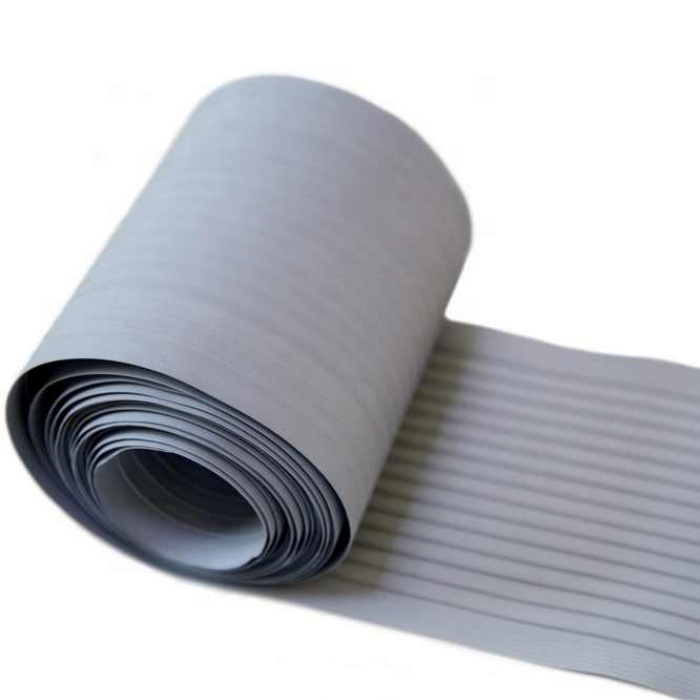
Before delving into the reasons behind Chinese dominance, it is essential to understand why separators matter so profoundly in battery technology. The separator is a microporous membrane positioned between the cathode and anode in lithium-ion batteries. Its primary function is to prevent physical contact between the electrodes while allowing lithium ions to pass through during charging and discharging cycles. This seemingly simple role is actually critical for battery safety, performance, and longevity.
The separator’s characteristics—including thickness, porosity, pore size, mechanical strength, and thermal stability—directly influence a battery’s energy density, power output, cycle life, and safety profile. In an era where electric vehicles demand increasingly higher energy densities and faster charging capabilities, the separator has become a focal point for technological innovation and competitive differentiation.
The Rise of Chinese PE Separator Manufacturers
The numbers tell a remarkable story of Chinese ascendancy in the global separator market. As of the second quarter of 2026, Chinese separator manufacturers have captured an astounding 91.5% of the global market share. This represents a significant increase from 88.5% in the same period of 2025, demonstrating the accelerating dominance of Chinese suppliers. Meanwhile, Japanese manufacturers saw their share decline from 7.2% to 5.8%, and Korean manufacturers experienced a drop from 4.3% to 2.7%.
This market concentration reflects not merely scale but also technological leadership. Chinese companies such as SEMCORP (Yunnan Energy New Material), Senior Technology, and Sinoma Science & Technology have established themselves as global leaders in separator production. SEMCORP alone recorded approximately 2,877 million square meters in the first half of 2026, representing a 16% year-over-year increase. Even more impressively, companies like Gellec, Lanketu, and Putailai achieved growth rates of 101%, 67%, and 62% respectively, demonstrating the dynamism and competitive vitality of the Chinese separator industry.
Technological Superiority in Wet-Process Manufacturing
The foundation of Chinese dominance in PE separators lies in their mastery of wet-process manufacturing technology. Wet-process separators accounted for approximately 86.16% of total separator production in the first half of 2026, with monthly production rising from 2.296 billion square meters in January to 2.9 billion square meters in June—an increase of 26.30%.
The wet-process method, which involves biaxial stretching of polyethylene film in the presence of a pore-forming agent, produces separators with superior properties compared to dry-process alternatives. These include more uniform pore distribution, better mechanical strength in both machine and transverse directions, and the ability to produce thinner films with higher consistency. Chinese manufacturers have optimized this technology to produce ultra-thin separators (5μm and below) that meet the demanding requirements of modern high-energy-density batteries.
The shift toward thinner separators is driven by the pursuit of higher energy density in battery cells. As EV manufacturers strive to extend driving range and reduce costs, the demand for ultra-thin base films with high-performance coatings has increased substantially. Chinese suppliers have responded by maintaining high utilization rates on their advanced production lines, ensuring consistent supply of these critical materials.
Cost Competitiveness Through Scale and Integration
Perhaps the most compelling factor driving global battery makers toward Chinese PE separators is cost competitiveness. The separator industry is characterized by significant economies of scale, and Chinese manufacturers have leveraged their massive production volumes to achieve cost structures that competitors struggle to match.
This cost advantage stems from multiple sources. First, Chinese separator companies have invested heavily in increasingly larger production lines. Single-line capacity has grown from approximately 0.3 billion square meters in 2014 to 1.0-1.5 billion square meters by 2022, with leading companies like Senior Technology operating fifth-generation super wet-process lines capable of producing 2.5 billion square meters annually. These larger lines significantly dilute fixed costs and improve manufacturing efficiency.
Second, Chinese manufacturers have achieved remarkable improvements in production speed and width. Modern production lines operate at speeds exceeding 100 meters per minute with widths of 6-8 meters, compared to earlier generations that ran at 60 meters per minute with 4-meter widths. These improvements alone can reduce production costs by more than 30%.
Third, domestic equipment manufacturing has reduced capital expenditure requirements. While imported separator production equipment previously cost over 100 million RMB per line, domestic alternatives now achieve cost reductions of over 40%. This localization of the supply chain further strengthens the cost position of Chinese manufacturers.
Superior Quality and Performance Characteristics
Despite historical perceptions that Chinese products might lag in quality, modern Chinese PE separators have demonstrated exceptional performance characteristics that meet or exceed international standards. These separators offer excellent chemical resistance, mechanical properties, and thermal stability—all critical for battery safety and longevity.
The thermal shutdown property of PE separators is particularly valuable for battery safety. Polyethylene has a melting point of approximately 130°C, and when a battery experiences thermal runaway, the PE separator can melt and close its pores, shutting down ion transport and preventing further temperature escalation. Chinese manufacturers have optimized this shutdown behavior while maintaining the mechanical integrity needed to prevent electrode contact even at elevated temperatures.
Advanced manufacturing techniques have also enabled Chinese producers to offer ceramic-coated PE separators that provide enhanced thermal stability. These coated separators can withstand temperatures above 200°C, significantly improving battery safety in high-nickel cathode systems that generate more heat during operation. The ceramic coating also improves electrolyte wettability, reducing formation time and enhancing battery performance.
Meeting the Demands of Next-Generation Battery Technologies
The global transition toward electric vehicles and renewable energy storage has created unprecedented demand for high-performance battery separators. Global EV sales exceeded 17 million units in 2024, consuming approximately 2.1 billion square meters of separator material. This demand is expected to grow substantially, with the global separator market projected to reach USD 22.97 billion by 2031, growing at a compound annual growth rate of 14.62%.
Chinese PE separator manufacturers are uniquely positioned to serve this growing market. Their production capacity, technological capabilities, and cost advantages align perfectly with the requirements of battery manufacturers scaling up production to meet EV and energy storage demand.
The energy storage sector has emerged as a particularly important growth driver. Energy storage system (ESS) battery enterprises have continued to increase their production schedules, creating significant growth in separator demand. As ESS battery cells move toward larger capacities and longer cycle life, battery enterprises place even greater emphasis on the safety, consistency, and supply stability of separators—areas where Chinese manufacturers have demonstrated strong capabilities.
Supply Chain Integration and Customer Responsiveness
Chinese separator manufacturers have also distinguished themselves through superior supply chain integration and customer responsiveness. Companies like Shandong Gelon LIB Co., Ltd. offer comprehensive solutions that extend beyond separator supply to include full sets of lithium battery materials, equipment, and technical services. This one-stop-shop approach simplifies procurement for battery manufacturers and reduces their supply chain complexity.
The geographic diversification of Chinese separator exports further demonstrates their global competitiveness. Chinese PE separators are now exported to South America, Southeast Asia, the Middle East, North America, Eastern Europe, and other regions. This global reach reflects both the quality of Chinese products and the reliability of Chinese supply chains.
Moreover, Chinese manufacturers have demonstrated flexibility in accommodating customer requirements. They offer customized solutions including various thicknesses, widths, and coating options to meet specific application requirements. This customer-centric approach has helped Chinese suppliers build lasting relationships with battery manufacturers worldwide.
Challenges and Future Outlook
Despite their current dominance, Chinese PE separator manufacturers face several challenges that could affect their long-term position. Trade tensions and tariff policies in key markets pose significant risks. The United States, for example, has imposed substantial tariffs on Chinese battery materials, with rates reaching 53.4% for certain battery energy storage systems. Such measures could impact Chinese separator exports to North America, although the critical nature of these components and limited alternative supply sources may mitigate the impact.
Environmental regulations also present challenges. The European Union’s new battery regulation requires carbon footprint disclosure for imported separators, which could affect Chinese exports to Europe. Chinese manufacturers are responding by improving their environmental performance and establishing overseas production facilities to serve regional markets more effectively.
Looking ahead, the separator industry is expected to continue evolving toward thinner, safer, and more sustainable products. Research into bio-based separators using cellulose, chitin, and lignin is progressing, though commercial viability remains years away. Chinese manufacturers are investing in next-generation technologies to maintain their competitive advantage.
The transition toward solid-state batteries represents both a challenge and an opportunity. While solid-state technology could eventually reduce demand for traditional separators, semi-solid-state batteries will continue to require high-performance separators for the foreseeable future. Chinese manufacturers are developing products specifically designed for these emerging battery technologies.
Conclusion
The emergence of Chinese PE separators as the top choice for global battery makers reflects a confluence of technological mastery, manufacturing scale, cost competitiveness, and customer responsiveness. Chinese manufacturers have transformed what was once a niche component into a strategic advantage, capturing over 90% of the global market through continuous innovation and investment.
For global battery manufacturers, the choice of Chinese PE separators is not merely about cost—it is about accessing the most advanced, reliable, and scalable separator technology available. As the world accelerates its transition to electric mobility and renewable energy, Chinese separator manufacturers are positioned to remain indispensable partners in the global battery supply chain.
The dominance of Chinese PE separators in the global market is not accidental but the result of decades of strategic investment, technological innovation, and manufacturing excellence. As battery technology continues to evolve, Chinese manufacturers are likely to maintain their leadership position, driving the industry toward safer, more efficient, and more sustainable energy storage solutions for the world.
Post time: Sep-10-2026


