
The European nicotine pouch and snus market is expanding at a pace that few consumer goods categories can match. According to industry estimates, the European nicotine pouches market alone reached approximately USD 1.04 billion in 2024 and is projected to climb to nearly USD 23.4 billion by 2033, representing a compound annual growth rate of over 41% . This surge has created intense demand for every component in the supply chain, from nicotine and flavorings to the seemingly humble but technically demanding material that holds it all together: the pouch paper.
In recent years, a growing share of that paper—technically a heat-sealable, food-contact-grade nonwoven fabric—has been sourced from Chinese manufacturers. What was once a niche dominated by a handful of European and Scandinavian suppliers is now seeing Chinese producers gain meaningful traction with buyers across the continent. The reasons behind this shift reveal as much about the maturation of Chinese nonwoven technology as they do about the pressures facing European pouch converters and brand owners.
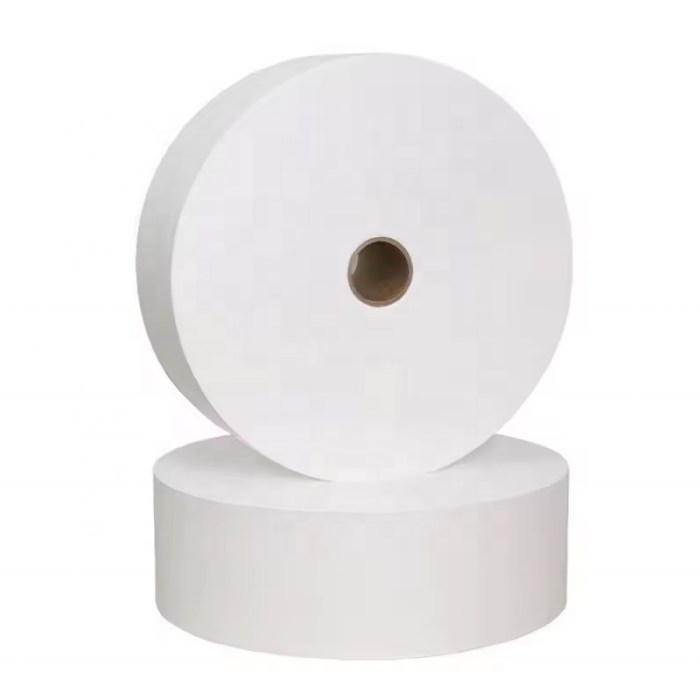
Understanding the Material: It Is Not Really Paper
Before examining the commercial dynamics, it is worth clarifying what the industry loosely calls “snus paper.” In technical terms, the material used to form the outer pouch of snus and nicotine products is a specialized nonwoven fabric, typically made from cellulose-based staple fibers combined with thermoplastic fibers that allow for heat sealing . The material must be saliva-permeable, allowing nicotine and flavor compounds to diffuse into the user’s mouth while containing the filling material—whether tobacco, plant fiber, or nicotine salts—within the pouch .
The performance requirements are stringent. The fabric must be thin and flexible enough to feel comfortable against the gum, yet strong enough to survive high-speed packaging machinery without tearing. It must seal reliably at the seams, resist discoloration from moisture and nicotine, and meet food-contact safety standards. Typical specifications for pouch-grade nonwoven include a grammage of 12 to 38 GSM, pore sizes in the 70 to 90 micron range, and air permeability of 500 to 1,200 liters per square meter per second .
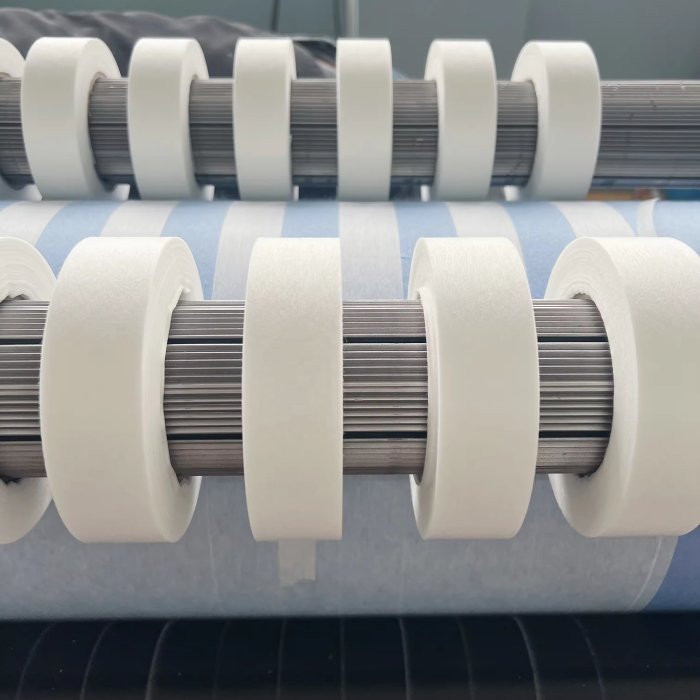
Chinese manufacturers have invested heavily in mastering these specifications. Suppliers such as Guangdong Huiming Nonwoven Technology now offer pouch-grade materials under dedicated product lines, supporting custom slitting widths (commonly 31 or 32 millimeters), trial rolls for machine compatibility testing, and technical documentation tailored to export markets . The availability of such direct factory support has made Chinese suppliers increasingly viable partners for European converters who need flexibility and responsiveness.
The Supply Chain Reconfiguration Behind the Trend
The rise of Chinese snus paper in Europe cannot be understood in isolation from broader shifts in the global nicotine pouch supply chain. In 2024, China’s domestic nicotine pouch manufacturing sector expanded rapidly, only to cool sharply in 2025 as regulatory attention and market consolidation took hold . During that same period, however, global demand continued to surge. Multinational tobacco companies reported sustained growth for brands such as ZYN, VELO, and on!, and the European market—particularly the Nordic region, the United Kingdom, and Central Europe—emerged as a critical growth engine .
Faced with a domestic manufacturing slowdown but strong overseas demand, Chinese producers of nicotine pouches and related components began to relocate production closer to their end markets. Some moved to Southeast Asia; others set their sights on Europe, where proximity to consumers, a mature supply chain, and a regulatory environment that—while complex—is at least predictable, made the region attractive .
For snus paper specifically, this reconfiguration created an opening. European pouch manufacturers, whether producing traditional tobacco snus for the Scandinavian market or tobacco-free nicotine pouches for the broader EU, found themselves needing reliable sources of pouch material that could meet both performance and compliance requirements. Chinese nonwoven producers, many of whom had already been supplying food-grade materials to other industries, moved quickly to adapt their offerings.
Cost, Capacity, and the China Advantage
The most immediate driver of Chinese snus paper’s popularity is straightforward: cost competitiveness combined with manufacturing capacity. European nonwoven producers, while highly regarded for quality and consistency, operate in a high-cost environment. Chinese manufacturers benefit from integrated supply chains for cellulose and thermoplastic fibers, lower energy costs, and economies of scale that come from serving multiple industries simultaneously.
But cost alone does not explain the trend. European buyers of pouch material are not merely looking for the cheapest roll of nonwoven. They need suppliers who can deliver consistent specifications across large volumes, provide technical support for machine trials, and adapt quickly to changing requirements. The Chinese suppliers that have gained traction in Europe are those that have invested in quality systems and customer service, not just low pricing.
Industry sources indicate that Chinese pouch material suppliers are increasingly offering food-contact certifications, batch traceability, and customization options that were once the exclusive domain of European manufacturers . For mid-sized European converters who may not have the leverage to secure favorable terms from large Western nonwoven producers, Chinese suppliers offer a combination of flexibility and responsiveness that is difficult to match.
Regulatory Pressures and the Search for Diversification
The European regulatory landscape for nicotine products is complex and evolving. Traditional snus is banned in most EU member states under the Tobacco Products Directive, though Sweden has a permanent exemption and Norway—while not an EU member—has maintained its own framework permitting snus . Tobacco-free nicotine pouches occupy a somewhat ambiguous regulatory space: they are not tobacco products in the strict sense, but they are increasingly subject to restrictions on nicotine content, marketing, and packaging.
Norway’s implementation of the EU Tobacco Products Directive in 2026 introduced new health warning requirements for snus, including warnings on both the front and back of packages and a specific warning directed at pregnant women . The European Nicotine Pouches Alliance has argued that regulatory frameworks should distinguish between combustible tobacco, smokeless tobacco, and tobacco-free nicotine products, noting that the risk profiles differ substantially . While the regulatory debate continues, one thing is clear: manufacturers and brand owners need supply chains that can adapt to changing labeling, packaging, and product specifications without excessive disruption.
This regulatory uncertainty has encouraged diversification. European pouch producers who once relied on a single regional supplier of nonwoven material are now qualifying multiple sources, including Chinese manufacturers. The logic is not simply about price—it is about supply security. A supplier that can deliver consistent material from multiple production sites, or that can adjust specifications quickly in response to regulatory changes, becomes more valuable than one offering marginally superior quality at a higher cost and longer lead time.
Quality Convergence and the Remaining Gaps
It would be an overstatement to suggest that Chinese snus paper has achieved parity with the best European nonwoven products across every dimension. In certain high-end applications—particularly traditional Swedish snus, where the feel and behavior of the pouch material are deeply embedded in consumer expectations—established Scandinavian suppliers retain a strong position. The sensory experience of a snus pouch involves subtle factors such as softness, flexibility, and the rate at which moisture passes through the material, and some brand owners remain reluctant to switch suppliers for these products.
However, for the rapidly growing nicotine pouch segment, where consumers are often newer to the category and brand loyalty is less entrenched, the performance requirements are somewhat different. Nicotine pouches tend to be smaller and drier than traditional snus, and the pouch material’s role is more about consistent nicotine release and reliable machine performance than about the tactile experience of moist tobacco. In this segment, Chinese suppliers have found a receptive audience.
Several Chinese manufacturers now produce nonwoven materials specifically engineered for nicotine pouches, with tighter pore-size distributions and improved heat-sealing characteristics. The gap between Chinese and European suppliers in this specific application has narrowed considerably, and for many buyers, the remaining differences do not justify the price premium commanded by Western alternatives.
The View from the Factory Floor
Conversations with industry participants suggest that the shift toward Chinese snus paper is not a fleeting phenomenon driven by a single factor. It reflects a structural change in how the European nicotine products industry sources its materials. As the market has grown and diversified—with tobacco-free pouches, functional pouches containing caffeine or nootropics, and novel flavor systems all gaining traction—the demand for specialized nonwoven materials has outstripped the capacity and willingness of traditional suppliers to serve every segment.
Chinese manufacturers have stepped into this gap, not by competing head-on with established European suppliers in their strongest markets, but by serving the faster-growing, more price-sensitive segments where speed and flexibility matter more than heritage. In doing so, they have built relationships with European converters and brand owners that are likely to deepen as volumes grow.
What Comes Next
The trajectory of Chinese snus paper in Europe will depend on several factors. Continued growth in the nicotine pouch market will sustain demand for pouch material, creating opportunities for suppliers who can scale. Regulatory developments—particularly any EU-wide framework for nicotine pouches—could reshape the competitive landscape, potentially favoring suppliers with the resources to navigate compliance requirements. And the ongoing evolution of Chinese nonwoven technology will determine whether suppliers can move further up the value chain, competing for the most demanding applications that remain the preserve of European specialists.
For now, the trend is clear. Chinese-made snus paper has moved from the margins to a meaningful position in European supply chains. It is no longer a curiosity or a stopgap. It is a competitive force that European manufacturers must reckon with, and a reflection of a broader truth about global manufacturing: in specialized materials, as in so many other categories, the gap between “low-cost” and “high-quality” is narrower than it once was, and the suppliers who can deliver both are the ones gaining ground.
Post time: Nov-05-2026


