
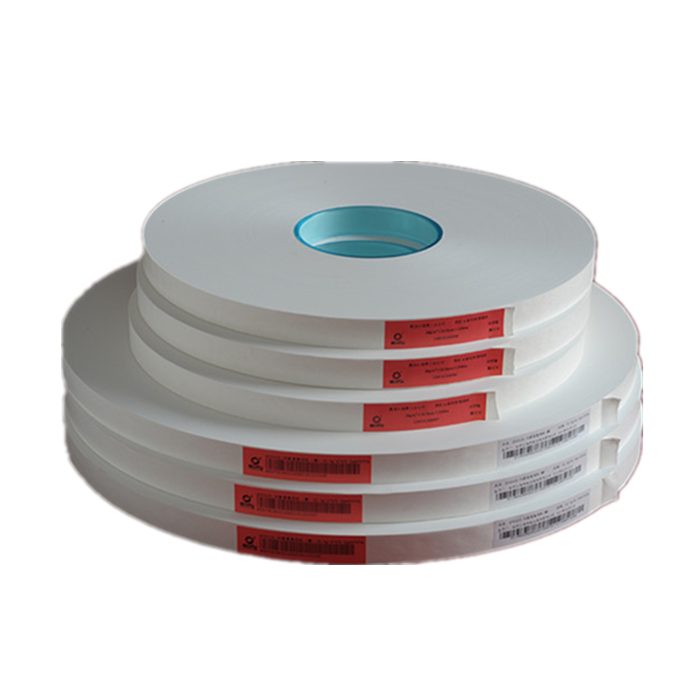
The global market for cigarette rolling paper was estimated to be worth approximately US$2.8 billion in 2024, with forecasts suggesting substantial growth in the coming years. Within this highly specialized and regulated industry, China has emerged as the undisputed leader, accounting for approximately 26% of the global market share. While Europe remains the largest consumer market with roughly 60% share, China’s dominance as a manufacturer and exporter is unmatched. This article explores the multifaceted reasons behind China’s sustained leadership in cigarette paper exports, examining its regulatory framework, manufacturing capabilities, strategic industry consolidation, and adaptation to emerging market trends.
The Regulatory Moat: A Controlled Yet Enabling Environment
China’s cigarette paper industry operates within a unique regulatory framework that paradoxically serves as both a barrier to entry and a foundation for global dominance. Under the Tobacco Monopoly Law of the People’s Republic of China, cigarette paper is classified as a “tobacco monopoly product,” placing it under strict state control. This classification mandates that any enterprise producing cigarette paper must obtain a Tobacco Monopoly Production Enterprise License from the State Tobacco Monopoly Administration.
This regulatory structure creates a controlled market with limited domestic competition—a factor that, counterintuitively, strengthens China’s export position. By limiting the number of licensed producers, the system ensures that manufacturers achieve economies of scale and maintain consistent quality standards. The law also stipulates that cigarette paper enterprises must organize production according to state plans and contracts with tobacco manufacturing companies, ensuring stable demand and predictable production cycles.
Furthermore, customs regulations classify cigarette paper under HS code 4813900000, with import tariffs set at 7.5% and automatic import licensing requirements. This regulatory clarity facilitates international trade while maintaining state oversight, creating a stable export environment that international buyers can rely upon.
Industrial Concentration and Market Dominance
At the heart of China’s cigarette paper export success lies an extraordinary concentration of production capability in a few dominant players. Mudanjiang Hengfeng Paper Co., Ltd. stands as the global leader in cigarette paper production. According to multiple securities firm analyses, Hengfeng achieved a 38.49% market share in China’s domestic cigarette industrial paper market in 2024 and ranks first globally in cigarette paper sales volume. The company serves major international tobacco giants including Philip Morris International, British American Tobacco, and Japan Tobacco International.
Hengfeng’s market position is nothing short of dominant. The company operates 22 production lines with an annual production capacity of 270,000 tons. Its domestic market share in cigarette paper specifically reached approximately 55% in 2024, while its global market share stands at 22.16%. The company’s revenue reached 2.774 billion yuan in 2024, with tobacco industrial paper contributing 67.5% of total revenue.
Minfeng Specialty Paper Co., Ltd. represents the second pillar of China’s cigarette paper industry. In March 2025, Minfeng completed a major technical upgrade, commissioning its New No. 8 Machine (capable of producing 15,000 tons of tracing paper annually) and New No. 20 Machine (capable of producing 21,000 tons of cigarette paper and other cigarette-related high-value products annually). These upgrades demonstrate continuous capacity expansion to meet growing global demand.
Strategic Consolidation: The Hengfeng-Jinfeng Merger
A landmark development in 2024-2025 significantly strengthened China’s cigarette paper export position. Hengfeng Paper announced its acquisition of Sichuan Jinfeng Paper Co., Ltd. , completing the share transfer in February 2026. This strategic acquisition offers multiple synergistic advantages:
Geographic Diversification: Jinfeng is located in Sichuan Province, closer to major tobacco-producing regions and the major tobacco company clusters in Yunnan and Sichuan. This “Southwest-Northeast” dual-line layout substantially reduces transportation costs and enables better service to regional customers.
Export Logistics Advantage: Chengdu, where Jinfeng is situated, boasts a national-level China-Europe Railway Express hub, providing convenient export transportation channels for European markets. This positions China’s cigarette paper industry to serve international clients more efficiently.
Capacity Expansion: Jinfeng adds approximately 15,400 tons of cigarette paper and forming paper capacity (via PM2 and PM3 lines), with additional capacity from PM1 (30,000 tons for medical dialysis paper, non-aluminum lining paper) and PM4 (6,000 tons for forming paper) under technical transformation.
International Supplier Requirements: Major global tobacco companies typically require their key suppliers to maintain production facilities in multiple regions—a “standard practice” in the industry. The Hengfeng-Jinfeng consolidation helps Chinese manufacturers meet this prerequisite for maintaining and expanding relationships with multinational tobacco corporations.
Technical Innovation and Product Diversification
China’s cigarette paper leadership extends beyond sheer production volume to encompass technical sophistication and product diversification. Chinese manufacturers have demonstrated particular strength in developing products for Heated Tobacco Products (HTPs) , one of the fastest-growing segments in the global tobacco market.
The HTP market has grown dramatically from US$1.38 billion in 2016 to US$38.4 billion in 2024, representing a compound annual growth rate of 51.55%. Philip Morris International dominates this segment with a 71% share, and Chinese manufacturers have strategically positioned themselves within this supply chain.
HTP products require significantly more paper components than traditional cigarettes. The structure of HTP cartridges typically includes specialized base paper, sealing paper, anti-permeability forming paper, spiral hollow tube paper, tipping paper, and cigarette paper—each requiring distinct functional properties such as high absorbency, thermal conductivity, flame retardancy, or anti-permeability. Chinese manufacturers, particularly Hengfeng, have invested heavily in R&D for these applications, with annual R&D expenses reaching 85 million yuan in 2024, accounting for 3.07% of revenue.
Hengfeng has developed dedicated product lines for HTP applications including special base paper, anti-permeability forming paper, and heating segment wrapping paper. This forward-looking technical development ensures that Chinese manufacturers are not merely meeting current market demands but positioning themselves for future growth segments.
Regional Manufacturing Hubs and Supply Chain Integration
China’s cigarette paper industry benefits from regional specialization that enhances efficiency and export capability. Key manufacturing clusters have emerged with distinct advantages:
Shenzhen and Guangdong Province: Manufacturers in this region benefit from proximity to Hong Kong’s world-class port infrastructure, enabling rapid export processing and faster turnaround for international buyers. These urban centers house advanced converting lines capable of producing ultra-thin rice papers, flavored wraps, and slow-burning hemp blends compliant with European and North American regulatory frameworks.
Mudanjiang (Heilongjiang Province): Producers in this region leverage access to forest resources and local pulp mills, allowing tighter control over raw material consistency. This geographic advantage supports large-volume output optimized for industrial clients requiring tonnage-level orders. The integration of printing, coating, and die-cutting services within close proximity further enhances agility in custom packaging development, including moisture-resistant laminates and tamper-proof designs.
This vertical integration—controlling everything from pulp processing to finished packaging—represents a significant competitive advantage that most international competitors cannot match.
Price Competitiveness and Supplier Responsiveness
Chinese cigarette paper exporters have achieved remarkable success through a combination of competitive pricing and operational responsiveness. Data from B2B platforms reveals that Chinese suppliers consistently demonstrate strong performance metrics:
Shenzhen-based suppliers, for example, report on-time delivery rates of 100%, average response times of under 2 hours, and low minimum order quantities starting at just 1,000 pieces. This agility allows Chinese manufacturers to serve both large industrial clients requiring tonnage-level orders and smaller buyers seeking customized products.
The ability to offer extensive customization options—including color, size, logo printing, graphic design, packaging, and material selection—further strengthens China’s export position. By accommodating diverse international market preferences, Chinese manufacturers can serve the varied regulatory and consumer requirements across different regions.
Raw Material Expertise and Product Quality
Chinese cigarette paper manufacturers have developed deep expertise in utilizing diverse raw materials for paper production. Common substrates include bleached and unbleached wood pulp, hemp cellulose, flax, and rice paper. Hemp-based papers, which offer slower combustion rates, have gained particular popularity in organic-focused markets. Additives such as sodium carbonate regulate burn speed, while flavor-infused variants (menthol, vanilla, and others) cater to evolving sensory preferences in international markets.
The ability to manufacture papers with precisely controlled properties—porosity, opacity, combustion rate, and strength—demonstrates the sophisticated technical capabilities developed by Chinese producers over decades of industry experience.
Export Growth Trajectory
China’s cigarette paper export sector has demonstrated consistent growth. Hengfeng Paper’s cigarette direct material paper exports have maintained industry-leading levels, achieving over 20% annual growth for multiple consecutive years. The company has established stable, long-term cooperative relationships with Philip Morris International, British American Tobacco, and Japan Tobacco International.
The global cigarette paper market is projected to grow from approximately US$2.8 billion in 2024 to a significantly larger figure by 2031, with a compound annual growth rate of 34.5% according to some forecasts. While Europe currently represents the largest consumption market with approximately 60% share, China’s manufacturing and export position is expected to strengthen further as global demand expands.
Market Structure and Future Outlook
China’s cigarette paper industry demonstrates several characteristics that bode well for continued export leadership:
Stable Demand Base: Traditional cigarette demand remains stable globally, with China accounting for approximately 48% of global cigarette consumption by volume. This substantial domestic market provides Chinese manufacturers with a stable production base that supports economies of scale.
HTP-Driven Growth: The rapid growth of the HTP segment creates new demand for specialized papers. As the world’s leading cigarette paper manufacturer, China is well-positioned to capture this growth through the companies’ existing relationships with major HTP producers.
Industry Consolidation: The Hengfeng-Jinfeng merger demonstrates ongoing consolidation that strengthens competitiveness, expands production capacity, and improves geographic reach.
Margin Stability: The cigarette paper industry benefits from long pricing cycles and the tobacco industry’s inverse-cyclical nature, providing stable profitability that supports continued investment in capacity and R&D.
Conclusion
China’s leadership in cigarette paper exports rests on a foundation of regulatory protection, industrial concentration, strategic consolidation, technical innovation, and operational excellence. The cigarette paper industry exemplifies how China’s unique combination of state oversight and market-driven competition can create globally dominant industries. By maintaining strict quality standards through regulated domestic competition, investing in capacity expansion and technical development, and strategically positioning itself to capture emerging market segments such as HTP papers, China has built an unassailable position in this specialized global industry.
As the global tobacco market evolves—with traditional cigarette demand remaining stable while HTP and other innovative products gain traction—China’s cigarette paper manufacturers appear well-positioned to maintain and even strengthen their export leadership. The combination of established relationships with global tobacco giants, technical capabilities for emerging product categories, and continuous capacity expansion suggests that China’s dominance in cigarette paper exports will persist for the foreseeable future.
Post time: Jul-16-2026


