
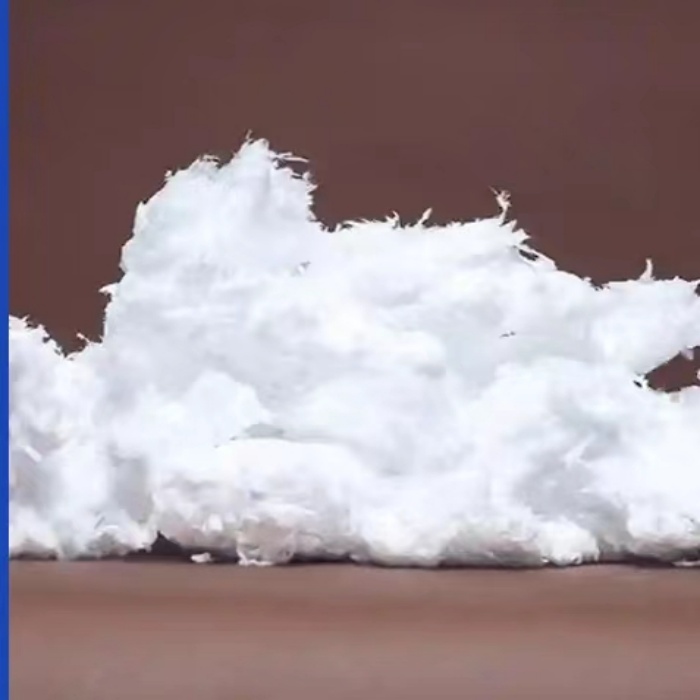
Micro glass fiber—also known as glass microfiber or ultrafine glass fiber—occupies a specialized and strategically vital niche within the broader glass fiber industry. Unlike conventional glass fiber used primarily in composites and construction, micro glass fiber is characterized by fiber diameters typically below 3 microns, often reaching sub-micron levels. This extreme fineness confers unique properties: exceptional filtration efficiency, high surface area, superior thermal insulation, and precise acoustic control. These characteristics make micro glass fiber indispensable in high-stakes applications ranging from nuclear-grade air filtration and high-efficiency battery separators to aerospace thermal protection and cleanroom environments.
In the global landscape of micro glass fiber production, China has emerged not merely as a participant but as the dominant force. The question of how China achieved this position—and why it continues to consolidate its leadership—requires examination across multiple dimensions: industrial scale, technological capability, supply chain integration, cost structure, and policy support. This article analyzes the structural and strategic factors that explain China’s ascendancy in the global micro glass fiber market.
The Foundation: Scale and Concentration in China’s Glass Fiber Industry
Any discussion of China’s position in micro glass fiber must begin with the broader glass fiber industry, because scale in the base material creates the conditions for dominance in specialized segments. China’s glass fiber industry operates at a scale unmatched anywhere in the world. As of mid-2025, China’s total glass fiber yarn production capacity reached approximately 8.7 million tons, with active pool kiln capacity accounting for roughly 7.77 million tons . The industry has continued to expand, adding five new kiln production lines in the first half of 2025 alone, contributing an additional 500,000 tons of capacity .
More significant than raw capacity is the industry’s concentration. China’s glass fiber sector has consolidated into an oligopolistic structure in which the top five producers command 74% of the market . This concentration creates substantial advantages: coordinated capacity management, reduced destructive competition, and the ability to invest in research and development at a scale that smaller, fragmented competitors cannot match. The leading players—China Jushi, Taishan Fiberglass (a subsidiary of Sinoma Science & Technology), and Chongqing Polycomp International—have evolved from commodity producers into technology-driven enterprises with global reach.
China Jushi, the world’s largest glass fiber manufacturer, exemplifies this transformation. In 2025, the company reported revenue of 18.881 billion yuan (approximately $2.6 billion), a year-on-year increase of 19.08%, while net profit surged 34.38% to 3.285 billion yuan . The company achieved record sales volumes for both glass fiber roving and electronic yarn, demonstrating that Chinese producers are not merely volume players but are moving decisively into higher-value product segments .
Technological Capability and Product Upgrading
The assumption that China competes only on cost is increasingly outdated, particularly in the micro glass fiber segment. Chinese producers have made substantial investments in the specialized technologies required to manufacture ultrafine fibers with consistent quality and tailored properties.
Taishan Fiberglass, under the Sinoma Science & Technology umbrella, has pursued a deliberate “product premiumization” strategy. In 2025, the company sold 1.37 million tons of glass fiber products, generating revenue of 8.9 billion yuan . More importantly, the company has developed capabilities in high-end segments that directly compete with established Western manufacturers.
Chongqing Zaisheng Technology (再升科技) represents perhaps the most compelling example of Chinese technological achievement in micro glass fiber. The company has been recognized as a “double individual champion” enterprise—a designation awarded by China’s Ministry of Industry and Information Technology to companies that hold the leading global market position in a specific product category—for both “glass microfiber” and “high-efficiency air filtration paper” . Zaisheng has built a complete industrial chain from upstream micro glass fiber wool through downstream clean air materials and energy-efficient products. The company has achieved domestic substitution in critically important applications: silicon-free and aluminum-free water filtration materials for nuclear power plants, nuclear-grade high-efficiency air filter paper, and high-temperature hydraulic oil filter paper . These are not commodity products; they are specialized materials that meet exacting performance standards, and their production requires deep technical expertise.
The Chinese micro glass fiber industry has also benefited from a broader national push toward technological self-reliance. In filtration media, battery separators, and high-performance insulation, Chinese firms have moved from importing foreign technology to developing proprietary processes. The “double champion” model—encouraging firms to dominate specific niches rather than spread themselves thin across multiple product lines—has proven effective in cultivating specialized expertise.
Supply Chain Integration and Cost Structure
China’s advantage in micro glass fiber is not simply a matter of production capability; it is rooted in a deeply integrated supply chain that encompasses raw materials, equipment manufacturing, and downstream processing.
The upstream segment of the glass fiber supply chain includes raw materials such as pyrophyllite, kaolin, dolomite, and soda ash, along with the energy required for high-temperature melting . China possesses substantial domestic reserves of these minerals and has developed a robust chemical industry to supply the necessary inputs. Major upstream suppliers like San You Chemical and Shandong Haihua are located in proximity to glass fiber production clusters, reducing logistics costs and supply chain vulnerability .
Geographically, China’s glass fiber production is clustered in Jiangsu, Zhejiang, and Shandong provinces, creating agglomeration effects that benefit both producers and their suppliers . This clustering facilitates knowledge spillovers, workforce development, and the rapid diffusion of process innovations—advantages that are difficult for geographically dispersed industries to replicate.
The cost structure of Chinese micro glass fiber producers reflects these integration advantages. Chinese firms benefit not only from lower labor costs (though these are rising) but also from cheaper energy, locally sourced raw materials, and the economies of scale that come from operating the world’s largest production facilities. The ability to amortize research and development costs over massive production volumes further strengthens the cost position of Chinese manufacturers.
Export Dynamics and Global Market Penetration
China’s dominance in micro glass fiber is reflected in its export performance, though the picture is more nuanced than aggregate numbers suggest. In the first seven months of 2025, China exported 1.156 million tons of glass fiber and products, a decline of 6.8% compared to the same period in 2024 . However, export value declined by only 0.4%, indicating a significant increase in unit value—average export prices rose 6.9% . This divergence between volume and value tells an important story: China is shifting from exporting commodity glass fiber products toward higher-value, more specialized products where micro glass fiber features prominently.
The product mix within China’s glass fiber exports confirms this structural shift. Traditional commodity products such as glass fiber roving and chopped strands still dominate by volume, but the fastest-growing categories in terms of export value are high-performance products: thermoplastic long fiber composites, high-performance electronic-grade glass fiber cloth, and multi-axial fabrics for wind turbine blades . These products command premium prices and compete on performance rather than cost alone.
Geographically, Chinese exports are diversifying. While North America and Europe remain important markets, the share of exports going to Belt and Road Initiative countries, Southeast Asia, and emerging economies has grown steadily . These regions are in the midst of industrialization and urbanization, creating sustained demand for infrastructure, transportation, and energy-related glass fiber products.
It is worth noting that China’s export performance in 2025 faced headwinds from international trade tensions and weaker global demand. The overall decline in export volume reflects these challenges . Yet the simultaneous increase in average export prices suggests that Chinese producers are successfully moving up the value chain, positioning themselves to compete on technology and product performance rather than purely on price.
Policy Support and Industrial Strategy
China’s leadership in micro glass fiber has not emerged in a policy vacuum. The Chinese government has provided sustained support for advanced materials industries through a combination of direct investment, research funding, and industrial policy frameworks.
The “individual champion” enterprise program, administered by the Ministry of Industry and Information Technology, is a particularly notable example. By designating companies like Zaisheng Technology as champions in specific product categories, the government signals national priority, facilitates access to financing, and encourages focus on niche dominance rather than undifferentiated expansion . The program reflects a sophisticated understanding of industrial strategy: rather than trying to win everywhere, cultivate world-class capabilities in specific, defensible segments.
The “15th Five-Year Plan” (2026-2030) is expected to continue prioritizing advanced materials, including high-performance fibers and composites, as part of China’s broader push toward technological self-reliance and industrial upgrading. The micro glass fiber segment, with its applications in clean energy, environmental protection, and advanced manufacturing, aligns well with national priorities.
Local governments have also played a role. Provinces such as Zhejiang, Jiangsu, and Shandong have cultivated glass fiber industrial clusters, providing land, infrastructure, and favorable policies to attract investment and support the growth of local champions. The clustering effect reinforces the competitive advantages of Chinese producers, making it difficult for new entrants from other countries to establish a foothold.
Applications Driving Future Growth
Understanding why China leads in micro glass fiber requires looking forward as well as backward. The applications driving demand for micro glass fiber are precisely those sectors where China has made substantial investments and where future growth is concentrated.
Air filtration is perhaps the most mature application. As global air quality standards tighten and industries from semiconductors to pharmaceuticals require increasingly stringent contamination control, demand for high-efficiency particulate air (HEPA) and ultra-low penetration air (ULPA) filters grows. Micro glass fiber is the material of choice for these filters, and Chinese producers have invested heavily in filtration media capacity. Zaisheng Technology’s nuclear-grade air filter paper capabilities position it to serve both domestic nuclear power expansion and export markets .
Battery separators represent a rapidly growing application. As the world transitions to electric vehicles and grid-scale energy storage, demand for high-performance battery separators has surged. Micro glass fiber separators offer advantages in thermal stability and electrolyte absorption, making them suitable for demanding applications. Chinese battery manufacturers are among the world’s largest, creating a natural domestic market for Chinese micro glass fiber producers.
Thermal and acoustic insulation applications benefit from micro glass fiber’s unique properties. In aerospace, where weight and performance are at a premium, micro glass fiber insulation is used in aircraft engines, spacecraft, and other critical systems. In construction and industrial settings, micro glass fiber provides superior thermal performance compared to conventional insulation materials.
The common thread across these applications is that they are technology-intensive, performance-driven, and often subject to stringent regulatory standards. Competing in these markets requires not just production capacity but also quality control, certification, and the ability to work closely with customers to tailor products to specific requirements. Chinese producers have demonstrated that they can meet these demands.
Challenges and Limitations
An honest assessment of China’s leadership in micro glass fiber must acknowledge the challenges and limitations that persist.
Trade tensions and protectionist measures in key export markets pose a significant risk. Both the United States and the European Union have implemented or considered tariffs and other trade barriers on Chinese glass fiber products. These measures can disrupt export flows and incentivize customers to seek alternative suppliers.
Competition from established Western manufacturers should not be underestimated. Companies such as Johns Manville, Unifrax, and Hollingsworth and Vose retain significant technological capabilities and strong customer relationships, particularly in aerospace, defense, and other applications where qualification cycles are long and switching costs are high . The global micro glass fiber market remains relatively concentrated, with the top three players holding over 30% of the market .
The Chinese micro glass fiber industry also faces internal challenges. Rapid capacity expansion in some segments has created overcapacity and price pressure, particularly in commodity-grade products. The transition toward higher-value products is necessary to sustain profitability, but it requires continuous investment in research and development and the cultivation of technical talent—both of which take time.
Finally, the global economic environment presents uncertainties. Weaker-than-expected growth in key markets, geopolitical disruptions, and the lingering effects of pandemic-era supply chain dislocations all create headwinds for exporters.
Conclusion
China’s leadership in the global micro glass fiber market rests on multiple reinforcing pillars: industrial scale and concentration, technological capability in specialized segments, deep supply chain integration, favorable cost structures, and supportive government policies. No single factor explains China’s position; rather, it is the combination of these elements that has proven so difficult for competitors to replicate.
The foundation of China’s advantage is the sheer scale and concentration of its glass fiber industry. With the top five producers commanding nearly three-quarters of the domestic market and total capacity approaching 9 million tons, Chinese firms enjoy economies of scale that underpin investment in research, process innovation, and product development .
Yet scale alone would be insufficient without technological capability. The emergence of companies like Zaisheng Technology as global leaders in specialized micro glass fiber products demonstrates that Chinese firms can compete at the highest levels of technology and quality. The “individual champion” model has encouraged focus and excellence rather than undifferentiated expansion.
Looking forward, China’s position appears secure for the foreseeable future, though not unchallenged. The applications driving demand for micro glass fiber—filtration, batteries, insulation, and advanced composites—are growth sectors that align with China’s industrial priorities. Chinese producers are well-positioned to serve both domestic demand and export markets, even as they navigate trade tensions and competitive pressures.
The global micro glass fiber market will continue to evolve, but the structural factors that have propelled China to leadership—scale, concentration, technological upgrading, supply chain integration, and policy support—are durable. China’s leadership in this specialized and strategically important material segment is not a temporary phenomenon but a reflection of deeper industrial capabilities that will shape the competitive landscape for years to come.

Post time: Oct-15-2026


