
In the evolving landscape of energy storage, the Valve-Regulated Lead-Acid (VRLA) battery remains a cornerstone for automotive, telecommunications, and backup power applications. At the heart of this maintenance-free, high-performance battery lies a critical component often overlooked by general consumers but scrutinized by professional buyers: the Absorbent Glass Mat (AGM) Separator.
For procurement specialists, quality assurance managers, and battery designers, understanding the technical nuances of AGM separators is essential for sourcing components that ensure longevity, safety, and compliance. This guide provides a deep dive into what AGM separators are, their core functions, material science, key performance metrics, and the global market landscape.
1. Definition and Core Function
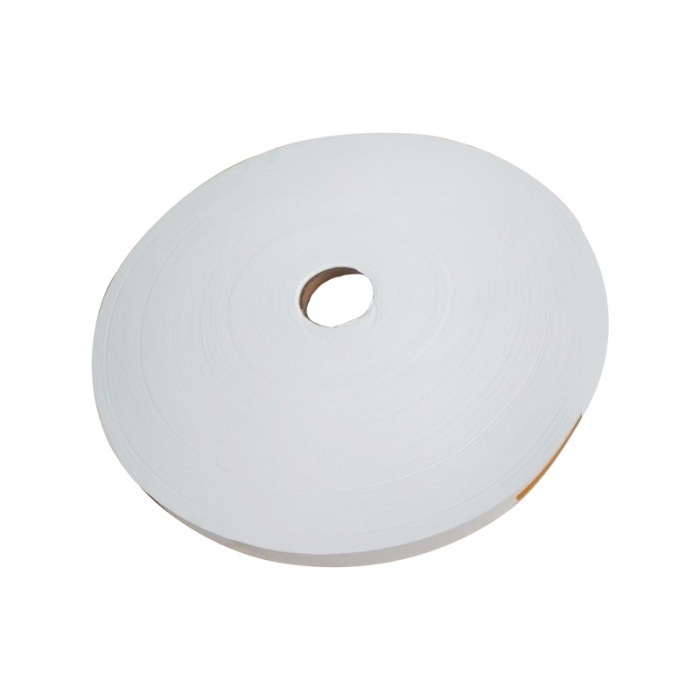
An AGM separator is a high-porosity, non-woven mat manufactured primarily from micro-fine glass fibers. It is placed between the positive and negative plates inside a lead-acid battery. Unlike traditional flooded batteries where the electrolyte is a free-flowing liquid, in an AGM battery, the electrolyte (sulfuric acid) is absorbed and held within the pores of this glass mat .
This design serves three paramount functions:
- Electrical Isolation: It acts as an electronic insulator, preventing physical contact and short-circuits between the cathode (positive) and anode (negative) plates .
- Electrolyte Reservoir: It absorbs and retains 100% of the electrolyte, holding it in a “starved” state. This immobilization makes the battery spill-proof and allows for gas recombination .
- Ionic Conduit: While blocking electrons, the porous structure allows ions (sulfate and hydrogen) to pass freely during the charge and discharge cycles, enabling the electrochemical reaction .
2. Material Composition and Microstructure
To a global buyer, the term “glass mat” might sound simple, but the engineering behind it is highly sophisticated. AGM separators are made from borosilicate glass microfibers. These fibers are typically produced through a flame-blown or rotary process, resulting in diameters ranging from 0.25 µm to 4 µm .
The Role of Fiber Diameter
The performance of the separator is directly linked to the blend of fiber diameters:
- Fine Fibers (Sub-micron): These increase surface area and improve the mat”s ability to wick and retain electrolyte. They also create smaller pores, which are crucial for preventing short circuits caused by dendrite growth .
- Coarse Fibers (Micron-sized): These act as a structural backbone. They provide mechanical strength, resilience (spring-back), and help maintain porosity, ensuring the mat doesn”t collapse under the compressive pressure of the battery cell .
The industry has also seen innovation in multi-layered AGM separators. By segregating fine and coarse fibers into distinct layers, manufacturers can optimize the interface with each electrode. For example, a layer with finer fibers facing the positive plate can help protect it from shedding active material, while a coarser layer maintains acid supply .
3. Critical Performance Parameters for Buyers
When sourcing AGM separators, technical datasheets must be scrutinized. Here are the key performance indicators defined by standards like JB/T 7630.1 or IEC 60993 :
3.1 Porosity and Pore Size
- Porosity: AGM separators typically exhibit porosity above 90% . This high void volume is necessary to hold sufficient electrolyte for the battery”s capacity.
- Pore Size: The maximum pore size is critical. If pores are too large, conductive pathways (dendrites) can penetrate the mat and cause a short circuit. Maximum pore sizes are generally specified below 22 µm .
3.2 Electrical Resistance (ER)
This measures the impedance the separator adds to the battery circuit. Lower resistance is better for high-rate discharge applications like engine starting or UPS backup. Quality separators show resistance as low as 0.00032 Ω·dm² per millimeter of thickness .
3.3 Wicking Rate and Acid Stratification
The wicking rate measures how quickly the separator absorbs electrolyte vertically. A high wicking rate (e.g., 100 mm/5min) ensures rapid filling during battery assembly and uniform acid distribution .
Poor wicking leads to acid stratification—a condition where acid concentration becomes higher at the bottom of the battery than the top. This causes sulfation and premature battery failure. Studies show that using finer glass fibers significantly suppresses stratification by slowing the drainage and equalizing acid distribution .
3.4 Wet-Elasticity (Compressibility)
This is perhaps the most important mechanical property. Inside a battery, the separator is compressed (typically by 10-20%) to ensure good plate contact. Wet-elasticity refers to the separator”s ability to maintain this compressive force against the plates even after absorbing electrolyte and undergoing temperature changes .
High wet-elasticity ensures that the active material on the plates remains under pressure, preventing it from shedding and extending the battery”s cycle life. H&V”s “EnergyGlass,” for example, is noted for its “best-in-class elasticity rebounding close to original thickness” .
3.5 Purity and Leachables
Glass fibers must be chemically stable. Impurities like iron (Fe³⁺) or chlorides (Cl⁻) can leach into the acid and contaminate the battery, leading to self-discharge and grid corrosion. Strict quality control mandates extremely low levels of these contaminants, typically Fe³⁺ below 0.0050% and Cl⁻ below 0.0030% .
4. Types and Grades
The market segments AGM separators based on composition and application:
- Pure Glass Fiber: The industry standard for premium applications. Offers the highest purity and oxidation resistance. Preferred for deep-cycle and critical standby power .
- Mixed Fiber (Hybrid): Incorporates synthetic fibers (like polyester) or other materials (like rice husk ash or sepiolite) to enhance mechanical strength or reduce material costs . While sometimes cheaper, buyers must verify that synthetic additions do not compromise chemical resistance or increase electrical resistance.
- By Basis Weight: Measured in g/m², this dictates thickness and compression.
- *<200 g/m²:* Used for smaller batteries or where space is limited.
- *200-300 g/m²:* The “sweet spot” for most automotive Start-Stop and standard UPS applications, balancing acid volume and cost .
- *>300 g/m²:* Used for heavy-duty deep-cycle and industrial batteries requiring maximum acid reserves.
5. Market Drivers and Global Outlook
For the global buyer, understanding the market dynamics is crucial for supply chain planning.
As of 2025, the global Lead-acid Battery AGM Separators market is valued at approximately USD 1.5 billion, with projections to reach USD 1.91 billion by 2034 . Production volumes exceeded 1 billion square meters in 2025 .
Key Growth Drivers:
- Automotive Start-Stop Systems: Stringent global CO₂ emission regulations have forced automakers to adopt Start-Stop technology. These vehicles require batteries that can handle frequent cycling, and AGM batteries are the technology of choice. This segment is projected to grow at over 8% annually .
- Data Centers and 5G Infrastructure: The exponential growth of data and the Internet of Things (IoT) requires reliable backup power. AGM batteries remain a cost-effective, reliable solution for UPS systems in data centers and telecom towers .
- Renewable Energy Storage: As solar and wind power expand, so does the need for stable energy storage. AGM batteries are widely used in off-grid and residential storage systems due to their maintenance-free nature .
Challenges:
Buyers should also be aware of market restraints. Competition from lithium-ion (Li-ion) batteries is intense, particularly in high-energy-density applications. However, AGM technology maintains a strong foothold due to its superior recyclability (over 99% of lead-acid batteries are recycled) and lower upfront cost .
6. How to Specify for Sourcing
When engaging with suppliers, global buyers should look beyond price and focus on consistency. Here is a checklist for technical vetting:
- Verify Dimensional Tolerances: Thickness variation should be minimal (e.g., ±0.03mm) to ensure uniform compression in the battery stack.
- Request Purity Certificates: Insist on ICP (Inductively Coupled Plasma) test reports to verify trace element levels.
- Check Tensile Strength (MD/CD): Machine Direction (MD) and Cross Direction (CD) strength must be sufficient to withstand high-speed battery assembly processes (wrapping and stacking) without tearing .
- Understand the Supplier”s Vertically: Suppliers like Hollingsworth & Voss control the process from sand to finished separator, ensuring traceability and quality consistency. This vertical integration is a significant advantage .
Conclusion
The AGM separator is far more than a simple piece of paper; it is a sophisticated electro-mechanical component that dictates the performance, safety, and lifespan of a VRLA battery. For the global battery buyer, a deep understanding of fiber dynamics, porosity, wet-elasticity, and purity is not just technical knowledge—it is a business imperative.
As the automotive industry shifts toward smarter electrical systems and the demand for reliable standby power grows, sourcing high-quality AGM separators will remain a critical success factor for battery manufacturers worldwide.
Post time: Mar-12-2026