
In the highly competitive landscape of energy storage, the valve-regulated lead-acid (VRLA) battery remains a cornerstone technology for applications demanding reliability, safety, and cost-effectiveness. From automotive start-stop systems to critical uninterruptible power supplies (UPS) and telecommunications base stations, the VRLA battery’s performance is fundamentally dictated by its internal architecture. At the heart of this architecture lies a deceptively simple yet highly engineered component: the Absorptive Glass Mat (AGM) separator.
For battery manufacturers and distributors, understanding the AGM separator is not merely an academic exercise. It is a commercial imperative. This component acts as the battery’s lungs, skeleton, and safety barrier simultaneously. As the global market for ultrafine glass fiber AGM separators continues to expand—projected to grow from approximately US$1.6 billion in 2025 to over US$2 billion by 2032—the demand for higher performance, consistency, and durability in this critical component has never been greater . This guide provides a comprehensive technical and commercial overview of the AGM separator, detailing its function, manufacturing intricacies, key performance metrics, and strategic considerations for industry professionals.
The Fundamental Role of the AGM Separator in VRLA Batteries
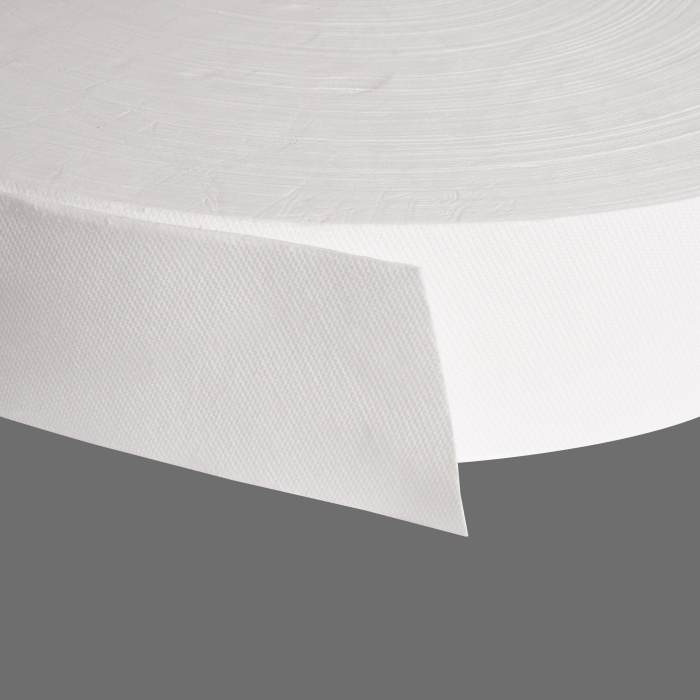
Unlike traditional flooded lead-acid batteries where the electrolyte circulates freely as a liquid, the VRLA battery relies on the AGM separator to immobilize the electrolyte. The separator is a non-woven mat composed primarily of glass microfibers, engineered to absorb and hold the sulfuric acid electrolyte while maintaining a porous structure that allows for gas recombination .
The separator serves three primary functions that are critical to battery operation. First, it provides electrical insulation between the positive and negative plates, preventing short circuits while allowing ionic flow. Second, it acts as a reservoir for the electrolyte, ensuring that the active material on the plates remains in contact with the acid necessary for the electrochemical reaction. Third, and perhaps most importantly for VRLA technology, it facilitates the oxygen recombination cycle. The separator must retain a specific volume of connected gas porosity (typically around 5-10% of its volume) to allow oxygen generated at the positive plate during charging to transport rapidly to the negative plate, where it recombines into water. This internal cycle eliminates the need for water maintenance and allows the battery to be sealed .
The physical structure of the AGM is defined by its high porosity (typically 90-95%) and a small pore size (often in the range of 5-8 micrometers). These characteristics are achieved through a precise blend of glass microfibers, typically finer than 1 micrometer in diameter, which are processed using a modified paper-making technique . The resulting mat is not merely a passive spacer; it is an active participant in the battery’s electrochemical balance.
The Manufacturing Process: From Glass to Mat
The production of a high-quality AGM separator is a sophisticated process that distinguishes it from standard non-woven materials. The traditional method involves dispersing glass microfibers in an acidic aqueous solution (typically sulfuric acid with a pH of 2.0 to 3.0). This acidic environment is necessary to properly disperse the fine fibers and prevent flocculation. The slurry is then deposited onto a moving wire or a roto-former, where the water is vacuumed away, leaving a wet web of fibers. This web is subsequently pressed and dried against heated drums to form the final mat .
The choice of fibers is a careful balancing act between performance and cost. While fine glass microfibers (often produced via the flame-blown process) provide the high surface area and small pore sizes necessary for excellent electrolyte absorption and retention, they are expensive and can result in a brittle mat. To address this, manufacturers incorporate coarser fibers (produced via the rotary process) and sometimes organic polymer fibers. The coarser fibers enhance the tensile strength of the mat, improving its handleability during battery assembly, while the organic fibers (such as synthetic pulp or bicomponent fibers) can significantly boost puncture resistance and resilience .
Modern manufacturing has evolved to include multi-layered designs. Instead of a homogenous blend, some advanced separators feature distinct layers of fine and coarse fibers. This stratification can optimize performance by placing finer pores against the positive plate to prevent active material shedding, while using coarser, stronger layers against the negative plate for structural support. Research indicates that such multi-layered constructions can reduce maximum pore sizes by up to 50% compared to mono-layer mats, significantly improving the separator’s ability to prevent dendrite growth and short circuits .
Critical Performance Metrics for Manufacturers and Distributors
When evaluating AGM separators, professionals must look beyond basic thickness and weight. Several key parameters directly influence battery performance, life, and reliability.
Porosity and Pore Size Distribution are paramount. High porosity ensures a large volume of electrolyte can be absorbed, which is essential for high-rate discharge performance (such as engine cranking). However, the pore size must be small enough to prevent the penetration of active material particles and to provide a strong capillary force to hold the electrolyte in place, especially in high-vibration environments like automotive applications .
Compression and Resilience are often overlooked but are critical for long-term battery life. During battery assembly, the separator is compressed between the plates. Over the battery’s life, the plates tend to grow due to corrosion, and the separator must maintain pressure to keep the active materials intact and ensure good electrical contact. A separator with poor resilience will allow the plates to loosen, leading to capacity loss and premature failure. The industry standard for measuring this is the “compression retention” or “thickness retention” under pressure, with high-quality separators retaining a significant percentage of their initial thickness after cycling .
Wicking and Acid Absorption Rate determine how quickly the separator can saturate during the filling process and how well it can redistribute electrolyte. Uniform wicking is essential for preventing dry spots on the plates, which can lead to localized overheating and failure. Distributors should note that while all-glass mats offer excellent wicking, reinforced mats with synthetic fibers may require optimized fiber blends to match the absorption speed of pure glass .
Tensile Strength and Puncture Resistance are mechanical properties vital for automated battery assembly lines. High-speed enveloping machines require a separator that can withstand tension without breaking. Furthermore, the separator must resist puncture by the sharp edges of the battery grids or by lead dendrites that can grow during cycling. Reinforced separators, often designated by manufacturers as “heavy-duty” or “processing-grade,” offer higher tensile strength and elongation, reducing waste and downtime on assembly lines .
Market Dynamics and Strategic Sourcing
The AGM separator market is mature but undergoing significant shifts. According to recent market analysis, the demand is strongly driven by advanced applications such as start-stop vehicles, data centers, and 5G telecommunications infrastructure . For distributors, this means that a “one-size-fits-all” approach to inventory is no longer viable. Different applications demand different separator specifications.
For example, start-stop batteries require separators with exceptionally low electrical resistance to handle the high currents of frequent engine restarts. These batteries also operate at higher temperatures under the hood, demanding superior heat resistance and compression retention to prevent premature failure. In contrast, stationary batteries for UPS and telecom applications prioritize long float life and consistent performance over many years, placing a premium on the separator’s ability to maintain compression and resist acid stratification .
A significant trend is the move toward premiumization and localization. Battery manufacturers are increasingly seeking separators that offer lower resistance and higher resilience to squeeze more performance out of lead-acid chemistry, allowing it to compete with lithium-ion in certain niche markets where safety and cost are paramount. Simultaneously, supply chain resilience is driving a shift toward regional sourcing. For distributors, partnering with separator suppliers who have localized production capacity or robust distribution networks can mitigate the risks of logistics disruptions and tariffs .
Competitive Landscape and Technological Threats: While the AGM separator market is stable, it faces long-term headwinds from lithium-ion technology, particularly in the automotive sector. However, lead-acid batteries, and by extension AGM separators, remain dominant in cost-sensitive markets, backup power, and internal combustion engine vehicles (which still require a 12V battery regardless of the drivetrain). The challenge for the industry is to continue innovating—improving the energy density and cycle life of VRLA batteries through better separators—to maintain their relevance .
Quality Assurance and Supplier Qualification
For battery manufacturers, the separator is a “critical-to-quality” component. A batch of inferior separators can halt an entire production line or, worse, lead to field failures that damage a brand’s reputation. When qualifying a separator supplier, purchasing and engineering teams should focus on consistency.
Key qualification criteria include basis weight uniformity, which affects acid absorption and compression; thickness consistency, which is vital for automated assembly and ensuring uniform pressure across the plate; and wettability, which can be tested via wicking rate. Suppliers should provide detailed certificates of analysis (CoA) for every lot, and manufacturers should perform incoming inspections for tensile strength and pore size distribution to ensure the material matches the specification .
Distributors play a crucial role in this chain by ensuring that the product is stored correctly. AGM separators are hygroscopic; they readily absorb moisture from the air. If exposed to humid conditions, the separator’s performance can degrade, leading to poor acid filling and reduced battery performance. Proper packaging and warehouse climate control are essential to maintain the “as-manufactured” properties of the separator.
Conclusion
The AGM separator is far more than a piece of paper or fabric inside a battery. It is a precision-engineered component that dictates the efficiency, safety, and longevity of VRLA batteries. As the industry evolves toward higher performance standards and more demanding applications, the specifications for these separators will continue to tighten.
For battery manufacturers and distributors, a deep technical understanding of the separator’s role—from its fiber composition and pore structure to its compression behavior—provides a competitive advantage. By selecting the right separator for the application, qualifying suppliers rigorously, and managing inventory carefully, industry professionals can ensure they deliver reliable power solutions to a market that demands nothing less. Whether you are producing millions of start-stop batteries or distributing critical backup power components, the AGM separator is the silent guardian of your product’s performance.
Post time: Nov-12-2026


