
The valve-regulated lead-acid (VRLA) battery, particularly the absorptive glass mat (AGM) variant, remains a cornerstone technology in applications where reliability and safety are non-negotiable. From automotive start-stop systems and uninterruptible power supplies (UPS) in data centers to telecommunications base stations and renewable energy storage, AGM batteries continue to dominate segments where their maintenance-free operation and robust performance are essential . At the heart of this technology lies a deceptively simple component: the AGM separator. While often overlooked in favor of more conspicuous battery components such as electrodes and electrolytes, the separator performs critical functions that directly determine battery life, reliability, and overall performance. This article examines the multifaceted role of AGM separators in extending battery life and reliability, exploring their fundamental properties, the challenges they address, and the technological innovations that continue to enhance their capabilities.
Understanding the AGM Separator: Composition and Core Functions
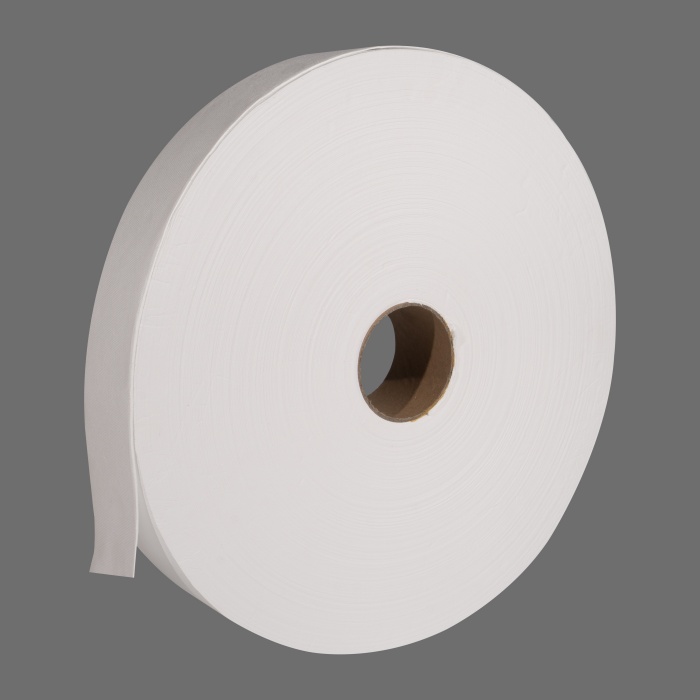
The AGM separator is a paper-like non-woven material produced through a wet-laid process using glass microfibers, typically of the borosilicate type . The manufacturing process begins with fibers dispersed in water, followed by water removal to form a sheet on a paper machine. The fibers are primarily bound together through mechanical interlacing, creating a porous structure . In its basic form, the separator consists of 100% microglass fibers, though modern formulations often incorporate synthetic fibers to enhance specific properties .
The fundamental characteristics of AGM separators are dictated by their application requirements. The material must exhibit high porosity, typically in the range of 90–95%, with a small pore size of 5–8 micrometers . This unique microstructure serves several essential functions. First, it physically separates the positive and negative plates, preventing short circuits that would render the battery inoperable . Second, it absorbs and retains the sulfuric acid electrolyte, ensuring that the active materials remain in contact with the necessary reactants . Third, and perhaps most critically for VRLA battery operation, the separator must retain a small volume of connected gas porosity to permit oxygen transport between the plates for effective recombination .
The acid resistance of glass fibers is a fundamental requirement, as the separator must remain chemically inert in the highly corrosive sulfuric acid environment at battery operating temperatures. Glass fibers exhibit excellent acid wetting, with a near-zero contact angle, allowing the electrolyte to thoroughly penetrate the separator structure . The material must also possess sufficient mechanical strength to withstand the stresses of battery assembly and the volume changes that occur during charge-discharge cycling.
The Challenge of Acid Stratification
One of the most significant challenges facing VRLA battery life is acid stratification, a phenomenon that occurs both vertically and horizontally within the cell. During charge and discharge, the concentration of sulfuric acid changes at the positive and negative plates at different rates. The positive plate reaction involves two moles of water per mole of reacted PbO₂, causing more notable dilution near the positive plate compared to the negative plate . This concentration difference creates a horizontal stratification between the electrodes.
The consequences of this stratification are profound. The concentration gradient triggers concentration polarization, which reduces the battery’s available capacity. More critically, the difference in acid concentration affects the dissolution of lead sulfate (PbSO₄) crystals, as this process is a function of H₂SO₄ concentration . This can result in an imbalance between the amounts of PbSO₄ at the two electrodes during cycling, potentially leading to partial sulfation of one plate—a major failure mode in lead-acid batteries .
In VRLA cells, the reduced electrolyte volume and the presence of the AGM separator significantly impede the diffusion of sulfuric acid between the plates. Depending on the charge and discharge regime and the depth of discharge, the different H₂SO₄ concentrations at the two types of plates can be sustained for extended periods, impeding the reactions of charge and discharge and ultimately reducing battery capacity .
How AGM Separators Extend Battery Life
The AGM separator‘s role in extending battery life operates through several interconnected mechanisms. The physical compression of the glass mat against the plates is fundamental to this function. During battery assembly, the AGM separator is compressed between the plates in the dry state, and the compressed stacks are inserted into the battery case . This compression creates and maintains the contact pressure necessary for efficient ionic conduction and ensures that the separator remains in intimate contact with the active materials.
The maintenance of this compression throughout battery life is critical. As the plates change in volume depending on their chemical state—lead and lead oxide convert to lead sulfate with an accompanying volume increase—the separator must accommodate these changes without losing its resilience . Higher levels of resilience are achieved with higher fine fiber content, and the overall formulation is adjusted to give the correct balance of properties . This resilience ensures that good contact force between the separator and the plates is maintained even when the separator absorbs electrolyte, a property that is essential for ensuring the supply of acid to the plates and maintaining ionic conductivity .
The ability of the AGM separator to suppress acid stratification directly contributes to extended battery life. By using separators composed of fine fibers, the acid-dripping speed can be controlled, and stratification can be suppressed . More sophisticated approaches have involved the development of modified AGM (MAGM) separators, where the glass mat is processed with polymer emulsion that is adsorbed onto the surface of the glass fibers and concentrates at the contact points between fibers . This treatment modifies the surface properties of the AGM to balance hydrophobic and hydrophilic characteristics. The MAGM separator influences the processes in the cells in such a way that the differences in H₂SO₄ concentration between the two types of plates are eliminated, resulting in increased available capacity and substantially extended VRLA battery life .
Enhancing Reliability Through Structural Innovation
The reliability of AGM batteries is inextricably linked to the properties of the separator. Three-layered AGM separators represent a significant advancement in this regard. These separators comprise a thin layer facing the negative plate, a thicker layer facing the positive plate, and a middle membrane layer that divides the anodic and cathodic electrolyte spaces and controls the exchange rates of H₂SO₄, H⁺ ions, O₂, and H₂O flows between the two electrode spaces . The middle layer, processed with an appropriate polymeric emulsion, acquires balanced hydrophobic/hydrophilic properties that sustain constant H₂SO₄ concentration in the two electrode spaces during cycling. Experimental evidence has established that this membrane maintains equal acid concentration in the anodic and cathodic spaces during battery cycling, ensuring longer cycle life performance .
The addition of synthetic fibers to AGM separators represents another important innovation for reliability enhancement. An AGM product range containing up to 30% synthetic fibers by mass has been developed, with the remaining 70% still glass . The synthetic fibers possess a heterogeneous structure in which the inner fiber core provides strength and stiffness, while the outer sheath assists binding by melting onto the glass fibers during a specific step on the paper machine. This reinforcement significantly improves the mechanical characteristics of the separator. The use of reinforced separators in VRLA batteries increases process efficiency, lowers the scrap level of battery assembling lines, and improves battery performance through higher internal pressure .
The prevention of short circuits through dendrite growth is another critical reliability function. During discharge, lead sulfate can precipitate on the fibers within the AGM separator. With repeated charge-discharge cycles, this precipitated PbSO₄ can physically bridge the electrodes and be reduced to conductive lead during charging, creating a short circuit . This risk has traditionally necessitated separator thicknesses of several millimeters. However, recent research has demonstrated that ion-exchangeable AGM separators can inhibit the precipitation of PbSO₄ particles on electrode surfaces and within the separator itself, potentially allowing for reduced separator thickness and battery downsizing .
The Oxygen Recombination Cycle and Water Loss Management
The AGM separator’s role in facilitating the oxygen recombination cycle is central to the maintenance-free operation of VRLA batteries. During overcharge, water decomposition produces oxygen at the positive plate and hydrogen at the negative plate. In a properly functioning VRLA battery, oxygen generated at the positive plate migrates through the gas porosity in the AGM separator to the negative plate, where it recombines to form water. This internal oxygen cycle prevents excessive water loss and eliminates the need for periodic water replenishment .
The AGM separator must maintain the delicate balance between electrolyte retention and gas transport to support this cycle effectively. The separator needs to absorb a maximum volume of electrolyte while retaining a small volume of connected gas porosity to permit oxygen transport between the plates . During battery aging, VRLA batteries experience water loss through positive grid corrosion and hydrogen evolution. As a result, the saturation of the AGM separator decreases over time, leading to changes in both the oxygen cycle current and the oxygen cycle efficiency . The separator’s ability to maintain appropriate saturation levels throughout life is therefore critical to sustained reliability.
Modified AGM separators have been shown to improve the efficiency of the oxygen cycle in cells, thereby reducing water loss . This improvement directly addresses one of the primary degradation mechanisms in VRLA batteries, contributing to extended service life and enhanced reliability.
Market Trends and Future Directions
The global market for ultrafine glass fiber AGM separators reflects the continued importance of this technology. In 2025, global AGM separator production reached approximately 1,058 million square meters, with the market valued at approximately US$1,604 million and projected to grow at a compound annual growth rate of 3.5% from 2026 to 2032 . This growth is strongly driven by advanced applications including automotive start-stop systems, uninterruptible power supplies, telecommunications base stations, and renewable energy storage .
The competitive landscape is characterized by a relatively concentrated structure dominated by established international manufacturers possessing significant technical expertise and production scale. Companies such as Hollingsworth & Vose, ENTEK, and Lydall have cultivated long-standing relationships with major battery producers . Competition is largely based on product performance—particularly in areas like low electrical resistance, high porosity, and durability—as well as global supply chain capabilities and the ability to meet evolving environmental standards .
Technological trends in AGM separator development focus on premiumization and material innovation. Manufacturers are intensifying research and development to enhance separator performance through advanced fiber blends and optimized structures, targeting lower electrical resistance and higher resilience to meet the demanding specifications of high-power applications such as start-stop batteries . The development of mixed fiber separators, incorporating synthetic fibers alongside glass microfibers, represents a significant avenue for improving mechanical properties while maintaining electrochemical performance.
The industry faces challenges, primarily from the long-term competitive threat of lithium-ion batteries in certain premium applications. Additionally, increasingly stringent environmental regulations impose higher compliance costs and sustainability requirements across the lead-acid battery value chain . However, the unique requirements of applications where AGM batteries excel—particularly those demanding high reliability, safety, and cost-effectiveness—ensure continued demand for AGM separators and ongoing innovation in their design and manufacture.
Conclusion
The AGM separator is far more than a passive component in valve-regulated lead-acid batteries. It is an active enabler of battery life and reliability, performing multiple critical functions simultaneously. From preventing short circuits and retaining electrolyte to facilitating oxygen recombination and suppressing acid stratification, the separator’s properties directly influence virtually every aspect of battery performance.
The evolution of AGM separator technology—from basic glass microfiber mats to modified, multi-layered, and fiber-reinforced structures—reflects the industry’s recognition that separator performance is central to meeting the demanding requirements of modern applications. As the market continues to grow, driven by data center expansion, 5G network deployment, and renewable energy storage, the role of the AGM separator in ensuring reliable, long-life battery performance will only become more critical. Continued research and development in separator materials and design promise further advances in battery life and reliability, ensuring that AGM technology remains a vital part of the energy storage landscape for years to come.
Post time: Oct-15-2026


