
The global energy transition has catalyzed an unprecedented surge in lithium-ion battery (LIB) production. From powering portable electronics to enabling the electrification of transportation and grid-scale energy storage, LIBs have become indispensable to modern life. However, this exponential growth carries a significant hidden cost: battery waste. As millions of LIBs reach their end-of-life (EoL) each year, the environmental and economic imperative to recycle them has never been greater .
A striking paradox exists within current battery recycling practices. While substantial research and industrial efforts focus on recovering high-value metals such as lithium and cobalt from spent cathodes, the polymeric separator—a critical functional component constituting approximately 4% of the battery’s total weight—remains largely neglected. These separators, typically manufactured from polyethylene (PE) and polypropylene (PP), are often discarded through landfilling or incineration, raising serious environmental concerns due to their non-biodegradable nature and the potential release of toxic substances . As the battery separator global market is projected to grow from USD 5.3 billion in 2022 to USD 11.4 billion by 2027, the waste stream from these components will become an increasingly pressing challenge .
This article explores the sustainable solutions emerging for PE separator recycling, examining how these materials can be integrated into circular economy models through mechanical upcycling, carbonization, and advanced separation technologies. By transforming an overlooked waste stream into a valuable resource, these innovations represent a critical step toward truly sustainable energy storage systems.
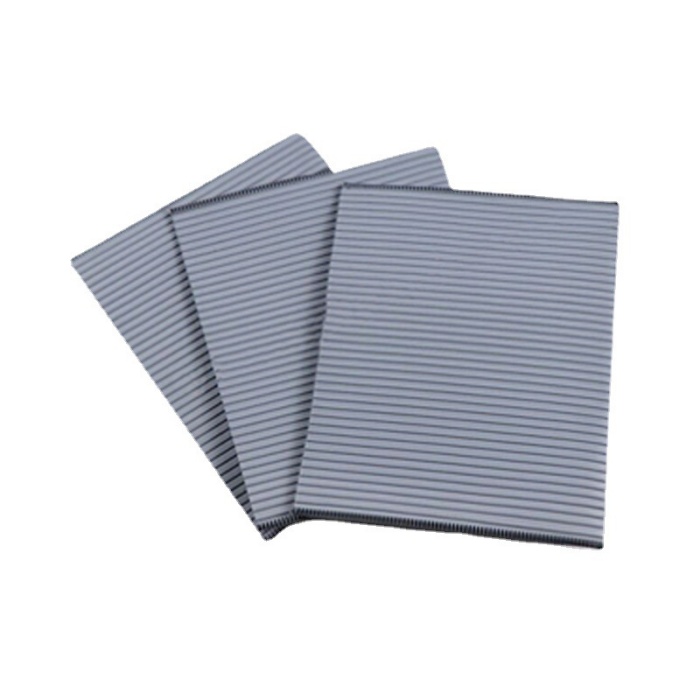
The Overlooked Component: Understanding PE Separators in LIBs
Commercial LIB separators are predominantly composed of polyolefin-based polymers, primarily PE and PP, used as single-layer films or multilayer structures to enhance thermal and mechanical stability. These porous insulating membranes prevent direct contact between electrodes while enabling lithium-ion transport during charging and discharging cycles. Typically, separators possess a porosity of 30-50% with pore sizes ranging between 0.03 and 0.1 μm .
Despite their critical function, separators are thermally vulnerable—PE melts at 135°C and PP at 165°C—and their properties degrade during battery operation. Mechanical testing has revealed that the maximum tensile strength of separators decreases from 13.3 kg mm⁻² in fresh materials to 7.7 kg mm⁻² in used ones. However, research has shown that the melting points for used PE and PP separators (137°C and 161°C respectively) remain comparable to fresh materials, and enhanced electrolyte uptake in used separators suggests potential for reuse .
Mechanical Upcycling: Creating Value from Waste
One of the most promising pathways for PE separator recycling lies in mechanical upcycling, where spent separator materials are processed and incorporated into new polymer composites with enhanced properties.
Polymer Composites for Enhanced Performance
Research has demonstrated that purified spent PE-separators can be effectively added to high-density polyethylene (HDPE) and linear low-density polyethylene (LLDPE) matrices to prepare green composites. Through a melt mixing process, researchers incorporated 5%, 10%, and 15% ground PE-separator into polyethylene matrices, yielding remarkable improvements in mechanical properties. The elastic modulus of LLDPE was enhanced by approximately 20%, while the flexural modulus of HDPE increased by approximately 60%. Additionally, HDPE’s flexural strength improved by 49%, making it particularly suitable for applications in corrugated pipes .
The environmental benefits of this approach are substantial. Carbon footprint analysis reveals that the melt-compounding method proposed in this research emits 67.3% less CO₂ compared to pyrolysis methods. This significant reduction in greenhouse gas emissions, coupled with the economic advantages of utilizing waste materials, underscores the sustainability potential of mechanical upcycling approaches .
From Lead-Acid to Lithium-Ion: Transferable Solutions
It is worth noting that separator recycling innovations have emerged across battery technologies. Spent lead-acid battery separators, which contain approximately 50-60% silica and 20-30% polyethylene, have been successfully purified and repurposed. Silica nanoparticles with purity exceeding 98% can be recovered and used to prepare styrene-butadiene rubber (SBR) nanocomposites with potential tire industry applications . These methodologies offer transferable insights for processing polyolefin separators from LIBs, creating a cross-pollination of recycling technologies across battery chemistries.
Carbonization: Transforming Polymers into Active Materials
An elegant approach to separator recycling involves converting waste polyolefin materials into high-value carbon products through thermal treatment. This upcycling pathway transforms a waste problem into a solution for battery performance enhancement.
Nitrogen-Doped Pyrolytic Carbon for Adsorption
Recent research has demonstrated a urea-assisted pyrolysis strategy to upgrade waste battery separators into nitrogen and oxygen-doped high-value carbon materials. The N,O-doped pyrolytic carbon, rich in C═O/C═N and C–O/C–N bonds, exhibits an exceptional adsorption capacity of methylene blue up to 330.77 mg/g . The adsorption process conforms to the Langmuir model, indicating monolayer adsorption behavior driven by pore filling, electrostatic interactions, π–π interactions, and hydrogen bond formation.
This approach presents significant advantages: the raw material is waste separators, the synthesis process is simple, low-cost, and environmentally friendly, and the resulting product demonstrates promising application potential as an economical and efficient adsorbent for industrial pollutants .
Carbon Anode Materials for Next-Generation Batteries
Beyond environmental remediation, carbonized separators can be directly reintegrated into battery applications. Researchers have demonstrated the conversion of recovered polyolefin separators into carbon material for anode reuse. The process involves heating separators in air at 330°C followed by calcination under argon at 700°C for two hours. The resulting carbon, when mixed with recycled graphite to form a composite anode, exhibited a high lithium-ion storage capacity of 695 mAh·g⁻¹—approximately twice that of recovered graphite alone—attributed to enhanced porosity and surface characteristics .
While this method is efficient and scalable, it requires careful management of greenhouse gas emissions from thermal processing, highlighting the need for integrated environmental mitigation strategies .
Technological Innovations in Separation and Purification
Effective recycling of PE separators depends on advanced separation technologies capable of isolating polyolefins from complex waste streams.
Solvent-Based Selective Dissolution
Solvent-based dissolution-precipitation has emerged as a promising strategy for recycling multilayer plastic packaging containing PE. Research has demonstrated that selective dissolution can extract oxygen barrier materials such as ethylene vinyl alcohol (EVOH) from multilayer films while reclaiming polyolefins for mechanical recycling . The reclaimed polyolefin blend exhibits enhanced performance compared to directly mechanically recycled materials and demonstrates properties comparable to virgin LDPE.
The solvent-targeted recovery and precipitation (STRAP) process enables the recovery of polymers with high purity and efficiency, yielding materials chemically comparable to their virgin counterparts. However, challenges remain regarding solvent costs, process complexity, and operational safety, which limit scalability for commercial applications .
Density Separation and Electrostatic Sorting
Physical separation technologies offer scalable solutions for PE recovery from mixed waste streams. Density-based separation at specific gravities between 1.0 and 1.1 SG can effectively separate PE and PP from heavier plastics, achieving product streams with over 90% polyolefin content .
Electrostatic separation has also shown significant potential for plastic recycling. Recent advances in tribo-electrostatic separation technology enable the efficient separation of polyethylene and polystyrene flakes from packaging waste, with recovery and purity values exceeding 90% . For battery-specific applications, roll-type corona electrostatic separators have demonstrated the ability to recover polymer fractions with 99.6% purity from spent lithium batteries .
Automated Sorting and Quality Assurance
Advanced decontamination and purification processes integrating optical separation systems and artificial intelligence are being developed to ensure the quality and origin of recycled materials. These technologies facilitate the reintroduction of recycled polymers into high-value applications, including food packaging, in compliance with stringent EU regulations . The integration of such technologies into battery separator recycling could similarly enhance quality assurance and enable closed-loop material flows.
Challenges and Pathways Forward
Despite these promising developments, significant challenges remain in scaling PE separator recycling to industrial levels. Recovering used separators without causing damage or shrinkage remains difficult, compromising their suitability for direct reuse. Thermal processing for carbonization generates greenhouse gas emissions requiring mitigation. Modified separators require extensive testing for large-scale reusability and recyclability .
However, recent advances in artificial intelligence and process optimization offer new pathways for overcoming these challenges. Machine learning frameworks are being developed to optimize polyolefin waste valorization processes, enabling screening-level design of recycling systems with estimated annual greenhouse gas emission reductions of 207,000-337,000 tonnes CO₂-equivalent per 131,600 tonnes of PE processed .
Furthermore, innovations in composite materials demonstrate that recycled PE separators can actually enhance rather than diminish material properties, contradicting conventional assumptions about downcycling. The ability to create materials with superior mechanical properties from waste streams fundamentally changes the economics and environmental calculus of separator recycling.
Conclusion
The recycling of PE separators from spent batteries represents a critical yet underexplored frontier in the transition to a circular economy. From mechanical upcycling that enhances polymer properties to carbonization that creates high-value active materials, sustainable solutions are emerging that transform waste into resource.
The data is compelling: melt-compounding approaches reduce CO₂ emissions by 67.3% compared to pyrolysis; carbonized separators achieve adsorption capacities exceeding 330 mg/g; and reclaimed polyolefin blends demonstrate properties comparable to virgin materials. As the global battery market continues its exponential growth, the development and deployment of these technologies will be essential to preventing millions of tons of non-biodegradable plastic waste from entering landfills and incinerators.
Realizing this potential requires continued research investment, supportive policy frameworks, and industry collaboration. By integrating PE separator recycling into comprehensive battery management strategies, we can move beyond the narrow focus on metal recovery to achieve truly sustainable energy storage systems—where every component of the battery contributes to a closed-loop circular economy. The future of PE separator recycling is not simply about waste management; it is about reimagining materials as continuously renewable resources in a truly sustainable energy future.
Post time: Aug-06-2026


