
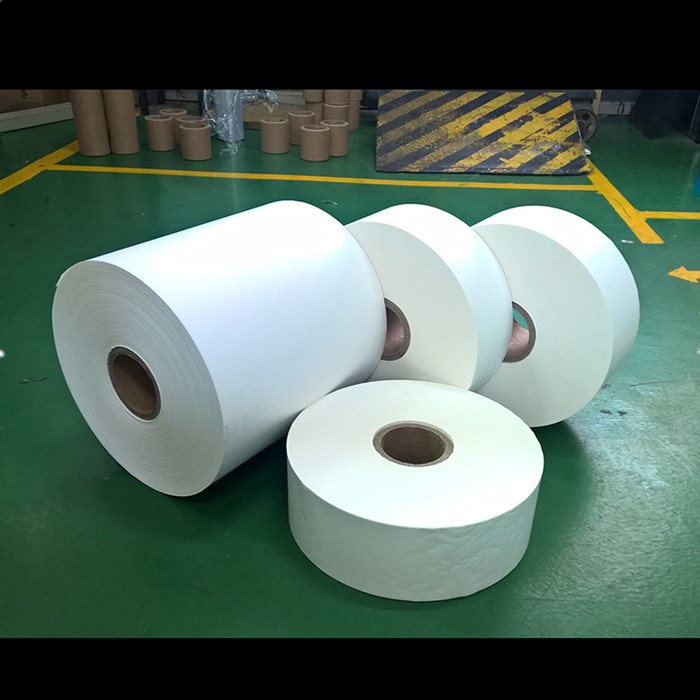
In the world of industrial packaging, surface protection, and specialty manufacturing, pasting paper—often referred to as gummed paper, adhesive-backed kraft, or water-activated tape—occupies a unique and non-negotiable niche. Unlike pressure-sensitive tapes that rely on synthetic adhesives, pasting paper derives its bonding power from a starch or dextrin-based adhesive layer that requires water activation. This seemingly old-school technology remains the gold standard for heavy-duty carton sealing, spiral tube winding, and core starting applications because it offers unparalleled tensile strength, eco-friendliness, and a permanent bond that resists temperature fluctuations.
However, the very quality that makes pasting paper superior—its hydrophilic adhesive—is also its greatest vulnerability. Moisture is not merely an inconvenience; it is an existential threat. A single compromised shipment of pasting paper can halt production lines, ruin finished goods, and trigger costly chargebacks. Furthermore, beyond moisture, sourcing professionals routinely encounter a host of other insidious quality defects, including poor adhesive cohesion, uneven coating weights, edge cupping, and inadequate tensile strength. This article serves as a comprehensive guide for procurement managers, quality engineers, and operations directors on how to source pasting paper successfully. We will dissect the science of moisture damage, expose the most common quality pitfalls, and provide actionable strategies to ensure that every roll that arrives at your dock performs flawlessly.
Part I: The Science of Moisture and Its Devastating Impact
To understand how to avoid moisture damage, one must first appreciate the hygroscopic nature of pasting paper. The base paper—typically a high-porosity kraft—is engineered to absorb water quickly to activate the adhesive. This same porosity makes it extremely susceptible to ambient humidity. The adhesive layer, composed of modified starches or dextrins, is naturally hydrophilic. It actively pulls water molecules from the air.
When relative humidity (RH) exceeds 60%, pasting paper begins to absorb atmospheric moisture. This absorption triggers a cascade of physical and chemical changes. First, the paper expands. The fibers swell transversely (across the width) far more than longitudinally. A 2% increase in moisture content can cause a 1.5% expansion in width. In a roll containing thousands of linear feet, this expansion manifests as telescoping—the layers slip and the roll edges become uneven. More critically, moisture causes the adhesive to become “tacky” prematurely. In a roll format, this means the adhesive layer begins to bond to the backing sheet, resulting in blocking. Blocked rolls are impossible to unwind without tearing, rendering the entire roll scrap.
Second, moisture alters the rheology—the flow behavior—of the adhesive during the machine activation process. If the paper arrives with an elevated moisture content (above 10% by weight), it will require less water at the gluing station. However, this sounds benign until one realizes that the adhesive viscosity is now off-specification. The glue might become too thin, penetrating too deeply into the paper fibers rather than staying on the surface, resulting in a weak bond. Conversely, if the moisture migrates to the surface and forms condensation, the adhesive can crystallize, losing its cohesive strength entirely.
The most insidious form of moisture damage is not always visible. It is the “latent” damage—micro-condensation that occurs during transit. A roll of pasting paper loaded into a container in a dry winter climate (20% RH) that travels through a humid maritime environment (85% RH) will experience a phenomenon known as moisture gradient. The outer layers of the roll absorb moisture rapidly, while the inner core remains dry. This differential expansion creates “baggy wrinkles”—permanent ripples in the paper web that destroy the flatness required for high-speed printing or die-cutting. These wrinkles often do not appear until the roll is unwound at full production speed, at which point it is too late.
Part II: Sourcing Strategies to Preempt Moisture Damage
Avoiding moisture damage begins long before the container arrives at your facility. It starts with stringent sourcing protocols that place the burden of proof squarely on the supplier. The first line of defense is the specification of moisture content in the purchase order. The industry standard for pasting paper is a moisture content between 5% and 7% at the time of manufacturing. Sourcing professionals must demand that this be tested and documented with a lot-specific certificate of analysis (CoA) using a standard test method, such as TAPPI T-412 (moisture content in paper and paperboard). Do not accept generic guarantees; insist on a statistical sampling plan, such as ANSI/ASQ Z1.4, where moisture testing is performed on a defined number of rolls per pallet.
Equally critical is the packaging specification. Standard shrink-wrap is insufficient for overseas or long-haul domestic shipments. The pasting paper rolls must be individually wrapped in a vapor-barrier film—typically a low-density polyethylene (LDPE) with a minimum thickness of 150 microns—and each wrapped roll must contain a desiccant packet proportionate to the roll weight. Furthermore, the entire pallet must be stretch-wrapped and then hooded with an additional heavy-gauge polyethylene bag that is heat-sealed or taped with a moisture-proof tape. When specifying packaging, procurement teams should require a “water vapor transmission rate” (WVTR) test for the packaging material itself. This ensures that the barrier is physically capable of withstanding a 30-day journey in tropical conditions.
Another overlooked strategy is the selection of the manufacturing origin. Suppliers in regions with naturally low ambient humidity (e.g., arid high-altitude regions) often produce more stable pasting paper because they do not need to aggressively dehumidify their manufacturing floors. However, this advantage can vanish if the product is shipped to a humid climate without proper acclimatization at the destination. Therefore, smart sourcing contracts include a clause requiring the supplier to ship the paper immediately upon production, before it reaches equilibrium with a humid warehouse environment.
Finally, consider the mode of transport. Ocean freight is the primary culprit for moisture damage due to the “container rain” effect. During a sea voyage, the temperature inside a shipping container can swing from -5°C at night to 50°C in direct sunlight. This thermal cycling drives moisture out of the container’s wooden floor and the corrugated packaging, which then condenses on the cooler metal ceiling and drips down onto the rolls. The solution is to demand “desiccant packs” at the container level—large, industrial-sized desiccant bags hung from the container’s corrugation rails. Furthermore, request “ventilated containers” when appropriate, and insist that the container is “container floor dried” before loading to eliminate residual moisture from previous cargo.
Part III: The Hidden Gallery of Quality Pitfalls Beyond Moisture
While moisture is the most visible enemy, it is not the only one. A comprehensive sourcing strategy must also guard against structural and chemical defects that can cripple your production.
Adhesive Coating Weight Uniformity: The grammage of the adhesive coating (measured in grams per square meter, or gsm) must be perfectly consistent across the entire width of the roll. If the coating is heavier on the left edge than the right, the paper will curl when activated. This phenomenon, known as “curl,” occurs because the wet adhesive shrinks at a different rate than the paper. A curl of even 2-3 millimeters per 100mm will cause the paper to miss the sealing flap on high-speed carton sealers, resulting in jams. To avoid this, require the supplier to provide a “cross-directional profile” of the adhesive weight, measured via a beta gauge or infrared sensor. A tolerance of ±5% is considered industry-acceptable; anything wider should be cause for rejection.
The “Slime” Phenomenon: This occurs when the starch adhesive is improperly cooked or compounded. If the dextrinization process is incomplete, the adhesive will appear smooth on the surface but will fail to develop tackiness when water is applied. Instead, it forms a slippery, slick layer—hence “slime.” This is a chemical defect that cannot be detected by visual inspection. It requires a field test: applying a standard amount of water and pressing the paper to a corrugated surface, then measuring the peel strength after 24 hours. Sourcing contracts should reference a minimum peel strength (e.g., 4.5 N/25mm) per ASTM D3330. Include a provision that the supplier must replicate this test using the customer’s water source (hard vs. soft water dramatically affects starch activation).
Edge Damage and Cupping: The edges of pasting paper are notoriously delicate. In a high-speed unwind, the edge has the highest tension. If the slitting knives used by the supplier are dull, they will create a crushed, “feathered” edge. This feathered edge is not just a cosmetic issue; it introduces a high-stress point that tears during unwinding, leading to a “web break” and 45 minutes of downtime while the line is rethreaded. When auditing a potential supplier, always request a microscopic image of the slit edge. Clean, sharp edges are characterized by a straight, uniform cut. Also, look out for “cupping”—a condition where the edges of the roll are higher than the center. This indicates uneven winding tension during manufacturing. Cupped rolls will cause the paper to flutter and mis-track on converting equipment. To mitigate this, specify the winding tension in your purchase order (typically 40-60 N/m for kraft) and require a hardness test (using a Schmidt-type hardness gauge) on the finished roll, with a maximum variation of ±3 points across the face width.
Recycled Content Consistency: Many sourcing professionals are under pressure to increase recycled content. While sustainable, recycled fibers often have shorter fiber lengths and higher dirt counts. This directly impacts tensile strength. A roll with high recycled content may snap under the same load that a virgin-fiber roll handles easily. To avoid this, do not simply accept the term “recycled”; specify the percentage and require a tensile strength test in both the machine direction (MD) and cross direction (CD). For example, for a 60 gsm base paper, the MD tensile should exceed 5 kN/m, and the CD should exceed 2.5 kN/m per TAPPI T-494. If the supplier cannot meet these numbers, they must adjust their fiber blend.
Part IV: The Inbound Inspection Protocol
Once the truck or container arrives, the battle is not over. The inbound receiving process is your final fortress against poor quality. Time is of the essence. The first step is to measure the roll temperature and moisture content immediately upon receipt, ideally with a handheld moisture meter equipped with insulated pins (such as a Tramex or Delmhorst). This must be done before the pallets are moved into a warm warehouse, as condensation will occur during the warm-up phase.
Implement a “three-tier” inspection system:
- Visual Tier: Walk around each pallet. Look for torn shrink wrap, signs of rust on the steel cores (which indicates recent high humidity exposure), and any staining on the outer layers of the paper.
- Physical Tier: Unwind the first 10 meters of paper from a roll at the top, middle, and bottom of each pallet. Check for wrinkles, blocked adhesive, and dusting (flaking adhesive). Run your hand across the surface; if you feel a gritty residue, it indicates adhesive crystallization, which is a sign of age or moisture cycling. Also, perform a simple fold test: fold the paper 180 degrees and crease it. If it cracks, the paper is too dry, indicating the supplier over-dried it in the manufacturing process to save energy, which weakens the fibers.
- Functional Tier: Perform a “quick bonding” test. Cut a 5cm strip, apply a water-activated sponge, and seal it to a piece of corrugated cardboard. Wait 30 seconds and attempt to peel it. The fiber of the cardboard should tear before the adhesive bond fails. If it peels cleanly, the adhesive is defective.
Part V: Storage, Handling, and Long-Term Risk Mitigation
Even the best-sourced paper can be destroyed by poor storage. Pasted paper must be stored in a controlled environment: ideally 21°C ± 2°C and 45% to 50% relative humidity. This is non-negotiable. The warehouse must be equipped with commercial dehumidifiers and not rely solely on HVAC systems, which are often shut off during off-hours.
Pallets should always be stored on racking, never on the concrete floor. Concrete is porous and wicks ground moisture. Even a vapor barrier under the floor is insufficient if the pallet sits directly on it; air circulation is required. Use “first-in, first-out” (FIFO) inventory management religiously. Pasting paper has a shelf life—typically 12 months from manufacture. After that, the starch undergoes retrograde, which is a chemical process where the adhesive molecules align and become crystalline, reducing tack. If you must store it longer, request a “slip sheet” between each roll to prevent blocking, and consider climatizing the storage area to 40% RH, which extends shelf life but makes the paper more brittle.
Part VI: The Vendor Audit Checklist
Before signing a long-term contract, a pre-qualification vendor audit is essential. During the audit, focus on the following non-negotiable elements:
- Climate Control: Does their manufacturing floor have closed-loop humidity control? If they do not control RH in the rewinding and slitting area, walk away.
- Dating System: Do they label each roll with a Julian date and shift code? This is vital for traceability in case of a recall.
- Water Quality: Starch adhesives are sensitive to pH. Does the supplier use deionized water for their adhesive mix? Inconsistent pH (outside the 7.0–8.5 range) affects activation speed.
- Winding Equipment: Do they use center-driven turret rewinders with tension control, or are they using ancient surface winders? Surface winders create soft rolls and hard spots. The audit should reveal the age and maintenance schedule of the winders.
- Customer Compliant History: Ask for a Pareto chart of their top five defects from the last 24 months. If “moisture” is not on that list, it means they are either not tracking it or they are lying. Every pasting paper manufacturer has moisture issues; the key is how they handle them.
Part VII: Contractual Leverage and Legal Safeguards
Finally, your technical requirements must be translated into legally binding clauses. The purchase order should include a detailed “Quality Conformance Clause” that stipulates liquidated damages for defects. For instance, if a roll has blocked adhesive and cannot be unwound, the supplier should cover the replacement material, the freight, and a percentage of the production downtime cost. Include a “right to reject” clause that allows you to reject not only the current shipment but future shipments if the supplier fails a repeat audit.
Furthermore, consider requiring a “certificate of conformance” from an independent third-party lab (such as SGS or Bureau Veritas) on every shipment that includes the moisture content test, tensile test, and grammage test. While this increases the cost per unit by approximately 2-3%, the cost is negligible compared to the 15-20% waste rate you will incur from non-conforming material.
Conclusion: Proactive Resilience Over Reactive Scrambling
Sourcing pasting paper is a discipline that demands respect for both chemistry and logistics. The pitfalls—moisture-induced blocking, adhesive slime, edge cupping, and uneven coating—are not random acts of nature; they are predictable outcomes of a chain where each link is controllable. The procurement professional must evolve from being a passive order-placer to an active quality architect. By implementing rigorous moisture specifications, demanding superior packaging, conducting thorough inbound inspections, and enforcing strict storage protocols, you can transform pasting paper from a high-risk consumable into a reliable, high-performance workhorse.
In an era where supply chains are increasingly fragile, resilience is the ultimate competitive advantage. And in the world of pasting paper, resilience begins with keeping it dry, testing it thoroughly, and never trusting a glistening roll at face value. Remember, the difference between a profitable production day and a costly shutdown is often measured in single-digit percentages of moisture. Manage that, and you manage the entire process.
Post time: Jul-09-2026


