
Micro glass fiber is deceptively fragile for a material that ultimately reinforces composites, insulation, and filtration systems. A shipment that leaves the factory in perfect condition can arrive at a customer’s dock with crushed edges, compromised moisture resistance, or—worse—held indefinitely at customs because a single compliance threshold was overlooked. For exporters and importers moving micro glass fiber across borders, the difference between a smooth delivery and a costly claim usually comes down to three things: packaging that accounts for the material’s specific vulnerabilities, realistic lead-time planning, and logistics decisions that match the shipment’s value and urgency.
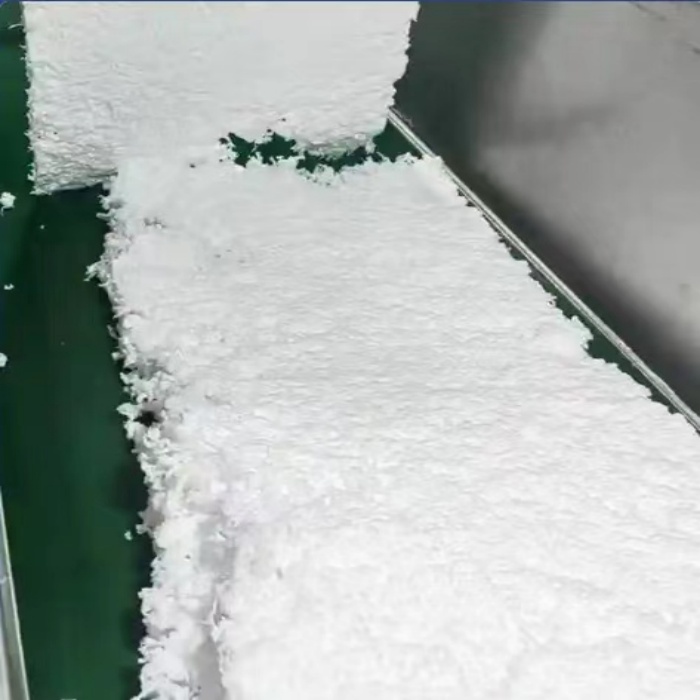
Understanding What You Are Actually Shipping
Before selecting a pallet configuration or booking freight, confirm the precise specification of the micro glass fiber. The commercial stakes are higher than many shippers realize. Glass fiber products can fall under export control regimes depending on their mechanical properties. Under the framework referenced for China-origin shipments, glass fiber or filament materials may be classified as controlled items if they meet both a specific modulus threshold (≥3.18 × 10⁶ m) and a specific tensile strength threshold (≥7.62 × 10⁴ m) . The operative word is both. Unlike carbon fiber controls, which may trigger on either criterion, the glass fiber thresholds generally require simultaneous compliance . Misjudging this distinction has led to real penalties: in 2025, customs authorities in China handled cases involving glass fiber fabrics and yarns exported without the required dual-use export license, resulting in fines and shipment detentions . For any micro glass fiber with high-performance specifications, obtain third-party test data before booking freight. A few thousand dollars spent on qualified laboratory testing is trivial compared to the cost of a detained container or a regulatory penalty.
For standard-grade micro glass fiber—chopped strands, milled fiber, or yarn for general industrial use—the compliance burden is lighter, but the harmonized system classification still matters. Most glass fiber yarns, slivers, and chopped fibers of lengths exceeding 50 mm fall under HS heading 7019, with national tariff lines extending beyond the six-digit international code . Confirm the destination country’s national tariff schedule, because duty rates and import licensing requirements can vary significantly even within the same HS subheading.
Packaging: Where Most Damage Begins and Ends
Micro glass fiber is not fragile in the way a ceramic vase is fragile. It will not shatter on impact. The damage mechanisms are different: edge crushing, moisture ingress, and filament breakage from repeated flexing or vibration. Each requires a specific packaging response.
Primary Packaging and Pallet Configuration
Suppliers of glass fiber products typically offer two standard packaging formats: bulk bags of approximately 1,000 kg, or paper bags of 25 kg stacked 40 per pallet . For micro glass fiber destined for precision applications—filtration media, battery separators, or fine yarn—the 25 kg paper bag configuration is usually preferable because it limits the compressive load on individual packages and allows for more granular inspection upon receipt. Bulk bags reduce handling costs but concentrate weight in a way that can deform the bottom layers during ocean transit.
Pallet dimensions for standard glass fiber shipments are commonly around 1,140 mm × 1,140 mm, with stack heights varying by packaging type . Regardless of format, the critical instruction is this: do not exceed one layer of pallet stacking for stored product, and limit container stacking to what the packaging can structurally bear without compressing the fiber below . Micro glass fiber does not recover its bulk or loft after sustained compression. A pallet that arrives looking intact but has been double-stacked for three weeks may yield fiber with permanently reduced insulation value or compromised processability.
For export-grade protection, the standard paper-bag-on-pallet configuration benefits from an upgrade: a stretch-wrapped pallet with corner protectors, a moisture-barrier liner between the product and the stretch film, and a top cap that prevents water pooling during container transloading. If the shipment is LCL and will be handled multiple times, consider a lightweight wooden crate around the palletized load. The crate need not be heavy—its purpose is to prevent forklift tines from puncturing the paper bags during consolidation and deconsolidation.
Moisture: The Silent Quality Killer
Glass fiber is hygroscopic. It absorbs moisture from ambient air, and moisture on the fiber surface interferes with resin wet-out, sizing compatibility, and—in filtration applications—the consistency of the finished media. A shipment that tests within specification at the factory can fail incoming inspection after a month in a humid container.
The storage specification for glass fiber products typically calls for temperatures between 10°C and 30°C and relative humidity between 50% and 75%, with the product remaining in its sealed packaging until use . Ocean containers crossing tropical routes routinely exceed these conditions. Desiccant bags placed inside the stretch-wrapped pallet, combined with a sealed polyethylene liner, provide a reasonable buffer for transit periods under 45 days. For longer routes or shipments to persistently humid destinations, specify vacuum-foil or aluminum-laminated bags for high-value micro fiber grades. The incremental packaging cost is small relative to the value of the fiber, and the alternative—a customer rejecting a shipment because the sizing has hydrolyzed—is far more expensive.
Labeling and Handling Marks
Labels on micro glass fiber shipments serve two audiences: the carrier’s handlers and the receiving warehouse’s quality team. At minimum, each pallet should carry the product grade, lot number, net and gross weight, and handling instructions in the destination country’s primary language. “Keep Dry” and “This Side Up” markings are not decorative; orientation arrows on at least two adjacent sides help prevent the lateral storage that can distort forming packages or yarn tubes. For LCL shipments, add a “Do Not Double Stack” mark in bold, because consolidation warehouses will stack anything that does not explicitly forbid it.
Lead Times: What to Expect and What to Communicate
Lead times for micro glass fiber vary significantly by product type, order volume, and the supplier’s position in the production cycle. Broadly, the market breaks into three tiers.
Stock and standard grades from established Chinese suppliers frequently ship within 15 to 20 days after deposit receipt . This range assumes the product is a catalog item—common filament diameters, standard sizing, and packaging configurations the supplier produces regularly. For sample quantities, 10 days is a realistic expectation from some manufacturers, with bulk orders running closer to 30 days . Treat these figures as planning estimates rather than commitments; they exclude the time required for export documentation, booking confirmation, and the actual transit.
Custom specifications—non-standard filament diameters, specialty sizing for a particular resin system, or custom packaging—add two to four weeks to the production timeline. The clock starts only after the supplier confirms the specification and, in many cases, after a pre-production sample is approved. Build this sample-approval loop into the project timeline explicitly; relying on “we’ll ship in 20 days” without accounting for the sample round-trip is a common source of missed launch dates.
Logistics transit time is separate from production lead time and depends heavily on mode. Air freight from major Asian hubs to North America or Europe typically runs 5 to 10 days door-to-door for express and 7 to 12 days for consolidated air cargo. Ocean freight to the U.S. West Coast or Northern Europe takes roughly 25 to 35 days port-to-port, with additional time for inland drayage and customs clearance . For time-sensitive micro glass fiber—a production line waiting on filtration media, for instance—the calculus is straightforward: air freight’s premium is often less than the cost of a stalled assembly line.
The most practical advice for lead-time management is to request the supplier’s production schedule confirmation in writing after deposit, not just a generic “15–20 days” quote. A specific vessel booking or air waybill number transforms a vague promise into an actionable plan.
Logistics Mode Selection: Matching Cost, Speed, and Risk
Ocean Freight: The Default for Volume
For shipments exceeding roughly 500 kg, ocean freight is almost always the economic choice. Micro glass fiber palletizes efficiently, and a 20-foot container can hold a substantial volume of 25 kg bags before reaching weight limits. The trade-off is handling risk. Ocean containers are stuffed and de-stuffed multiple times, and every transfer is an opportunity for a forklift to clip a pallet corner or for condensation to form on the container ceiling and drip onto unprotected cargo.
Mitigate these risks by specifying FCL (full container load) whenever volume permits. A dedicated container eliminates the consolidation warehouse handling that drives most LCL damage. If LCL is unavoidable, use a freight forwarder with a documented fragile-cargo protocol and require photo documentation of the pallet condition at origin and at the consolidation facility. For high-value micro fiber, the cost difference between LCL and FCL is often smaller than the expected loss from a single damaged LCL shipment.
Air Freight: Speed at a Premium
Air freight suits micro glass fiber when the shipment value is high relative to weight, when the customer’s production schedule cannot absorb a month of transit, or when the product is a sample or qualification batch. Air cargo handling is gentler than ocean in the sense that there is less time for moisture equilibration and fewer transloading events, but the physical handling at terminals can be abrupt. Palletized air shipments should be stretch-wrapped and corner-protected, with the pallet base secured to the aircraft contour or ULD in accordance with the carrier’s requirements.
One often-overlooked advantage of air freight for glass fiber is reduced moisture exposure. A five-day air transit through climate-controlled terminals presents far less condensation risk than a 35-day ocean voyage through multiple climate zones. For moisture-sensitive grades, the freight premium may be partially offset by the ability to use simpler, lighter packaging.
Express and Consolidated Services
For sample quantities or urgent replacement orders under 100 kg, international express carriers offer the best combination of speed and tracking granularity. The limitation is size and weight: express networks are not designed for palletized freight, and oversize surcharges can quickly erase the cost advantage. For shipments in the 100–500 kg range, consolidated air or LCL ocean with a reputable forwarder is usually the pragmatic middle ground.
Documentation and Customs: The Details That Delay Shipments
Micro glass fiber is not a dangerous good in the conventional sense—it does not carry a UN hazard class for transport. However, the documentation package must be complete and internally consistent. The commercial invoice, packing list, and bill of lading or air waybill should agree on piece count, gross weight, and description. Discrepancies that seem trivial at origin become customs holds at destination, and a held shipment of moisture-sensitive fiber sitting on a dock in a humid climate is exactly the scenario the packaging was designed to prevent.
For high-performance glass fiber that may approach controlled thresholds, retain the test reports and classification determination in the shipment file. Even if the product is not controlled, the ability to demonstrate that determination to a customs officer can resolve a query in hours rather than days.
Destination-country requirements vary. The European Union, for example, may require REACH compliance documentation for the sizing chemistry on the fiber. The United States may apply Section 301 tariffs to certain Chinese-origin glass fiber products, and the Harmonized Tariff Schedule classification must be correct to avoid post-entry adjustments. Work with a customs broker who has specific experience with glass fiber and composite materials; a generalist broker may miss the distinction between a yarn, a roving, and a chopped strand, each of which can carry different duty rates.
Insurance: The Last Line of Defense
Cargo insurance is not optional for micro glass fiber shipments, and the standard carrier liability is not a substitute. Under maritime convention, carrier liability is typically capped at a nominal amount per package—far below the value of a pallet of precision micro fiber . All-risk cargo insurance, arranged at 110% of the CIF value, covers the gap. Confirm that the policy includes handling and transloading as covered perils, not just catastrophic events like vessel sinking or fire. Most damage to glass fiber occurs during the ordinary handling that a “all-risk” policy should cover, but exclusions for insufficient packing can void a claim if the packaging was not appropriate for the transit mode.
Document the condition of every pallet before it leaves the factory. Photographs with timestamps, taken after stretch-wrapping but before loading, establish a baseline. If a claim becomes necessary, the difference between a paid claim and a rejected one is often the ability to show that the damage occurred after the goods left the shipper’s control.
A Practical Pre-Shipment Checklist
Before the container is sealed or the air pallet is tendered, verify the following:
- Specification and compliance: Confirm the product grade and, for high-performance fiber, retain test data against applicable control thresholds.
- Packaging integrity: Inspect stretch wrap, corner protectors, desiccant placement, and moisture barrier. Reject any pallet with visible paper bag damage before loading.
- Labels: Product identification, lot number, weight, and handling marks in the destination language, on at least two sides.
- Documentation consistency: Invoice, packing list, and transport document agree on description, quantity, and weight.
- Insurance: Policy issued and covering the full transit, including transloading.
- Carrier communication: For LCL or consolidated shipments, confirm that the forwarder has flagged the cargo as moisture-sensitive and fragile in its handling instructions.
Micro glass fiber rewards preparation. The material itself is durable in its finished application—it reinforces, filters, and insulates for decades. But in the interval between factory and customer, it is vulnerable to the mundane hazards of global trade: a dropped pallet, a humid container, a missing certificate. The exporters and importers who treat packaging, lead time, and documentation as integrated parts of a single logistics plan are the ones whose shipments arrive intact, on schedule, and without surprises at customs. The ones who do not learn the cost of that omission in claim forms and missed production windows.
Post time: Nov-12-2026


