
For procurement professionals sourcing polyethylene (PE) separators for lithium-ion battery production, the separator is often the single most underestimated component in the bill of materials. It does not participate in the electrochemical reaction, yet its failure mode is catastrophic: a pinhole measured in micrometers can trigger an internal short circuit, thermal runaway, and a field recall that erases years of margin. Unlike commodity films, PE separators sit at the intersection of polymer science, precision coating, and battery safety engineering. A buyer who treats them as a “film purchase” rather than a “safety-critical component purchase” is exposing their organization to unacceptable risk.
This checklist is structured around the actual sequence of a credible procurement program: supplier qualification, incoming specification verification, in-process quality surveillance, and pre-shipment release. Each section identifies what to demand, why it matters, and where suppliers commonly cut corners.
Phase One: Supplier Qualification Before a Single Roll Is Ordered
The first control point is not the product; it is the factory. PE separator manufacturing is capital-intensive and process-sensitive, and the gap between a tier-one producer and a slitting operation that buys master rolls from a third party is enormous. A buyer must establish whether the supplier actually owns the stretching lines, extraction systems, and cleanroom infrastructure, or merely slits and repackages film produced elsewhere . The distinction matters because slitting houses have limited control over pore structure, thermal shrinkage, and contamination—the three parameters most likely to cause downstream battery failures.
ISO 9001 certification is a baseline, not a differentiator. For separators destined for electric vehicle or energy storage cells, IATF 16949 is the relevant standard, and buyers should verify certificate validity directly with the issuing body rather than accepting a scanned PDF at face value . More revealing than certificates is the factory’s cleanroom classification. PE separators are hygroscopic and electrostatic, and particulate contamination on the surface is the leading complaint among battery assemblers . A Class 1000 or better cleanroom at the slitting stage is not a luxury; it is a minimum condition for EV-grade material.
An on-site or third-party audit should answer three specific questions. First, does the extrusion line use a consistent resin source, and can the supplier document the molecular weight distribution of incoming polyethylene? High-density polyethylene with a weight-average molecular weight in the range of 2×10⁵ to 8×10⁵ is typical for separators that must balance puncture strength against shutdown behavior . Second, does the supplier perform in-house Gurley, porosity, and thermal shrinkage testing, or do they rely on certificates from their own film supplier? Third, what is the change-control protocol when a resin lot or extraction solvent ratio changes? A supplier that cannot describe change control in specific terms is a supplier that will eventually ship a silent formulation change .
Phase Two: Incoming Specification Verification
Once rolls arrive, the buyer’s laboratory—or a contracted third-party lab—must verify the parameters that directly govern cell safety and performance. The following checklist reflects the consensus specifications for battery-grade PE separators.
Thickness and thickness uniformity. Nominal thickness is meaningless without a profile. A separator specified at 9 µm that varies between 7 µm and 11 µm across the web will create uneven current density and localized lithium plating. Buyers should require a thickness profile map across the full width, with a tolerance of ±1 µm or better for EV-grade film . Ten micrometer readings per sample at minimum, taken at defined intervals, provide a defensible record.
Gurley value (air permeability). Gurley seconds measure the time required for a fixed volume of air to pass through a defined area. It is an indirect but highly practical indicator of porosity and tortuosity. For PE separators used in high-rate cells, a lower Gurley value generally indicates lower ionic resistance . However, Gurley must be interpreted alongside porosity and pore size distribution; a separator can achieve an acceptable Gurley number through excessively tortuous pores that impair lithium-ion transport at high rates. The buyer’s specification should define both a target and an acceptable range, and the supplier should provide full-width Gurley profiles rather than a single edge sample.
Porosity and pore structure. Typical porosity for PE separators ranges from 40% to 60% . Within that range, the distribution matters as much as the mean. Scanning electron microscopy images of both surfaces and a cross-section should be part of the qualification package. Buyers should specifically ask for evidence of closed pores or excessively large pores; the former reduce effective conductivity, while the latter increase the risk of dendrite penetration . For wet-process PE, which uses a thermally induced phase separation route, the extraction solvent ratio and stretching conditions determine the final pore architecture, and deviations in either can produce subtle but consequential changes .
Puncture strength. This is the separator’s last line of defense against electrode burrs, metal particles, and lithium dendrites. Puncture strength should be specified in grams per micrometer of thickness to allow comparison across film gauges . A separator that meets its nominal puncture specification at 12 µm but fails at 9 µm is not a drop-in replacement, even if the datasheet presents the same force value. Buyers should test puncture strength on conditioned samples and, where possible, after electrolyte soaking, since some coatings and base films behave differently in the wet state.
Thermal shrinkage. PE separators are valued for their shutdown function: the polymer melts at approximately 130–135°C, closing pores and arresting ion transport before thermal runaway becomes irreversible . But the same low melting point makes PE dimensionally unstable at elevated temperatures. Shrinkage testing at 105°C for one hour is a common incoming check . More demanding buyers test at 120°C or 130°C to simulate abuse conditions. Transverse direction shrinkage is particularly important, as excessive TD shrinkage can expose electrode edges and create a direct short path. The buyer should establish a shrinkage limit—typically 5% or less in both machine and transverse directions at 105°C for one hour, with tighter limits for coated grades—and reject lots that exceed it regardless of the supplier’s certificate.
Electrolyte wettability and retention. PE is inherently hydrophobic, and poor wettability translates directly into incomplete electrolyte filling, higher internal resistance, and accelerated capacity fade. A simple contact-angle test with the actual electrolyte formulation to be used in production provides a rapid screening result . More rigorous is an electrolyte retention test, in which a known area of separator is soaked in electrolyte, drained under defined conditions, and weighed. Ceramic-coated separators typically outperform uncoated PE on this metric, but coating quality—binder distribution, particle adhesion, and coating weight uniformity—determines whether the improvement is real or cosmetic .
Surface defects and contamination. This is where incoming inspection earns its keep. A light table inspection of sampled film should be performed for pinholes, gels, scratches, and foreign matter. Gel particles above 50 µm are typically rejectable for EV-grade separators, as they can create thickness excursions and puncture initiation sites . Metallic contamination is a zero-tolerance defect: a single conductive particle can compromise an entire cell. Buyers should require the supplier to perform automated optical inspection with documented defect maps, and should independently inspect a statistically valid sample from every lot.
Phase Three: In-Process Surveillance and Pre-Shipment Release
Quality cannot be inspected into a roll at the loading dock. For high-volume programs, buyers should establish a surveillance regime that includes periodic in-process checks at the supplier’s facility and a formal pre-shipment inspection protocol.
In-process surveillance focuses on the parameters most sensitive to drift: casting solution temperature, extraction bath concentration, stretching ratio, and annealing profile. The buyer does not need to monitor these continuously, but should require the supplier to retain process parameter logs for each production lot and make them available for review. When a lot’s Gurley or shrinkage values trend toward the specification limit, the process logs often reveal the cause before a nonconformance occurs.
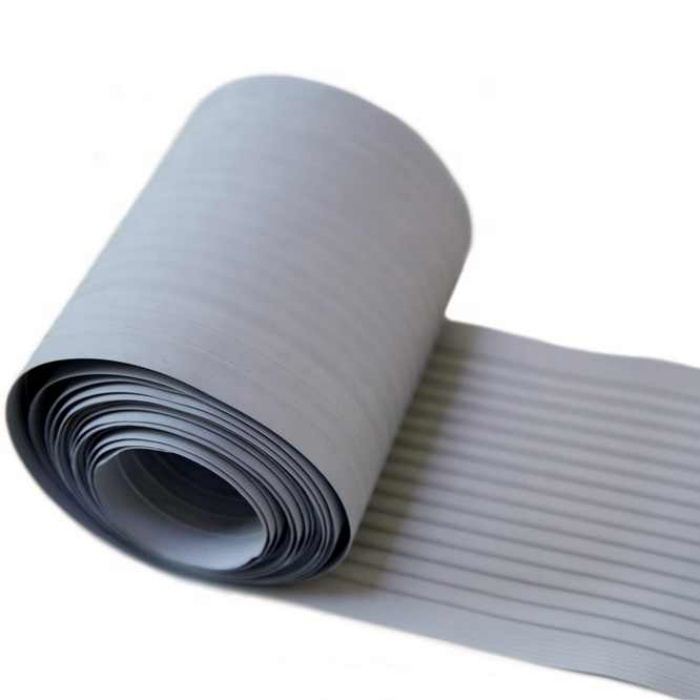
Pre-shipment inspection should sample a defined percentage of rolls—5% is a common threshold—and verify roll hardness, slit edge quality, and packaging integrity . Roll hardness is a proxy for winding tension uniformity; a roll that is soft in the center and hard at the edges will produce tension variations during battery winding, leading to misalignment and separator wrinkling. Slit edge quality is equally critical: burrs, wavy edges, or edge dust indicate dull blades or improper tension, and these defects propagate into coating and assembly processes. The buyer should specify that slitting occurs in a cleanroom environment and that rolls are individually bagged with desiccant and a lot traceability label .
A final, often-neglected checkpoint is the certificate of analysis. The CoA should report actual measured values, not merely “pass/fail” statements, and should be traceable to the specific lot numbers on the shipped rolls. Buyers should compare the CoA values against their own incoming test results. A pattern of consistent discrepancy—even within specification—between supplier data and buyer data indicates a measurement system problem that must be resolved before scaling.
Red Flags and Contractual Protections
Certain supplier behaviors should trigger heightened scrutiny. A supplier that cannot provide full-width thickness and Gurley profiles is likely sampling only the most favorable portion of the web. A supplier that resists third-party sample testing is signaling that its internal data may not be reliable. A supplier that offers unusually low pricing relative to qualified competitors is almost certainly compromising on resin grade, cleanroom discipline, or extraction solvent recovery—all of which affect long-term reliability .
Contractually, buyers should insist on a replacement clause that covers defective rolls at the supplier’s cost, including freight, rather than “credit on next order” arrangements that leave the buyer’s production line idle while waiting for resolution . The specification should be attached as a controlled document, with a defined change-notification period—typically 90 days—for any raw material, process, or facility change. For automotive or grid-storage programs, the buyer should also require REACH and RoHS compliance documentation and a conflict-minerals declaration, even though PE itself contains no restricted substances, because downstream customers will eventually ask .
Conclusion
A PE separator quality control program is not a paperwork exercise. It is a structured defense against failure modes that are invisible at the roll level but catastrophic at the cell level. The buyers who succeed are those who treat supplier qualification as an engineering audit, incoming inspection as a safety gate, and pre-shipment release as the final opportunity to prevent a contaminated or out-of-specification lot from entering production. The checklist above is deliberately demanding, but the cost of a single field failure—in recall expense, customer trust, and brand damage—dwarfs the cost of a rigorous qualification program by orders of magnitude. In separator procurement, the cheapest roll is almost never the least expensive one.
Post time: Nov-12-2026


