
Plug wrapping paper is one of those industrial consumables that few consumers ever think about, yet it sits at the heart of several high-volume manufacturing sectors. If you are sourcing this material for the first time—or looking to diversify your supplier base—this guide will walk you through what it is, how it is specified, where it is used, and what you need to know before placing an order.
The term itself can be a source of confusion. In the tobacco industry, “plug wrap” refers to the paper that wraps the filter plug of a cigarette . In the broader packaging trade, particularly among Chinese exporters, “plug wrapping paper” is also used to describe the narrow, food-grade paper used to wrap toothpicks, drinking straws, coffee stirrers, and similar small cylindrical items . This dual usage matters enormously for buyers: the technical requirements, regulatory pathways, and pricing structures for the two products are different, even though they share similar base materials.
This guide focuses primarily on the food-contact and small-item wrapping application, while noting where tobacco-grade specifications diverge. The aim is to give international buyers a practical, technically grounded reference for evaluating suppliers, comparing quotes, and avoiding costly specification errors.
What Exactly Is Plug Wrapping Paper?
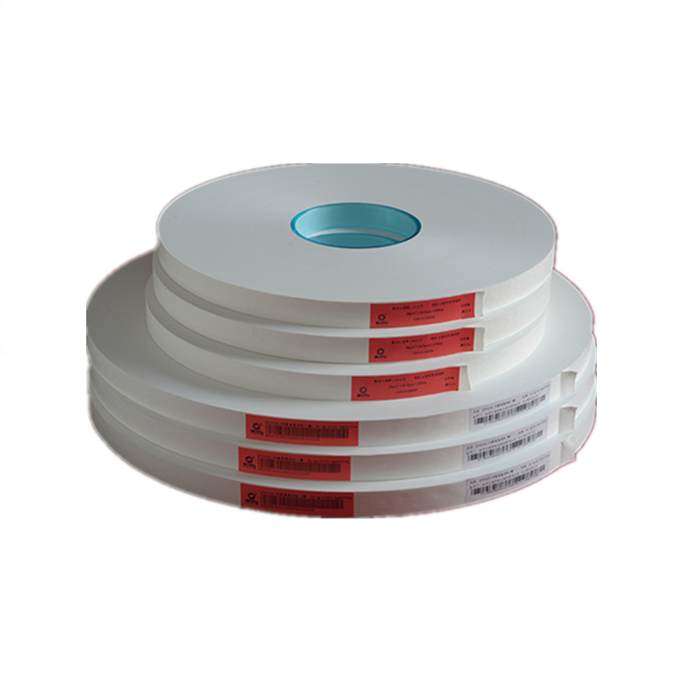
At its most basic, plug wrapping paper is a lightweight, high-tensile paper manufactured from virgin wood pulp. It is produced in narrow rolls—often called bobbins—with widths typically ranging from 19 mm to 50 mm and lengths of 5,000 to 7,000 meters per roll . The paper is slit to precise tolerances and wound onto cores, usually with a 120 mm internal diameter, so it can be mounted directly onto high-speed wrapping machinery.
The material’s defining characteristics are its low grammage (usually 24–30 gsm), high tensile strength, and controlled porosity. These properties allow the paper to feed smoothly through automated equipment at high speed without breaking, while also being thin enough to wrap tightly around small-diameter objects. For food-contact applications, the paper must also be free of harmful substances and meet food-grade standards .
In the tobacco context, plug wrap serves a different mechanical function: it holds the filter tow together and regulates ventilation. Tobacco-grade plug wrap is specified with precise porosity ranges (measured in CORESTA units), controlled ash content, and strict limits on dirt and moisture . While this guide focuses on the broader packaging applications, buyers sourcing for cigarette manufacturers should request CORESTA-compliant specifications explicitly.
Primary Applications and End-Use Sectors
The most visible use of plug wrapping paper is in the food-service and beverage industry. Toothpicks, wooden coffee stirrers, paper drinking straws, and bamboo straws are all commonly wrapped in narrow strips of this paper to maintain hygiene before use . The paper is typically printed with the brand’s logo or a simple design, making it a small but effective branding touchpoint.
Beyond food service, plug wrapping paper is used for wrapping single-use items such as cotton swabs, chopsticks, and certain medical or cosmetic applicators. In these applications, the paper acts as both a physical barrier and a tamper-evident seal. The material’s food-grade certification is essential here: suppliers should be able to provide documentation confirming that the paper is free from aluminum, arsenic, and other harmful substances, and that it is non-toxic, tasteless, and biodegradable .
A third application area is tobacco, where plug wrap is a regulated component of the cigarette filter. The specifications here are far more demanding, with tight tolerances on air permeability, tensile strength, and elongation. Buyers in this sector typically work with specialized mills that can provide batch-level test data against CORESTA or equivalent standards.
Key Technical Specifications and How to Read Them
When evaluating plug wrapping paper quotes, the specification sheet is your most important document. The following parameters appear consistently across supplier data sheets and should be compared carefully.
Grammage (Substance). Most plug wrapping paper falls in the 24–30 gsm range. A typical food-grade specification might call for 25.0 ± 1.3 gsm . Lower grammage reduces material cost but may compromise tensile strength; higher grammage adds strength but can affect wrapping performance on high-speed lines. Buyers should request test data against a recognized standard, such as GB/T451.2, and confirm that the supplier’s tolerances are realistic for their machinery.
Tensile Strength and Elongation. Machine-direction tensile strength is typically specified at ≥1.00 kN/m, with elongation of ≥1.0% or ≥1.1% . These values matter because plug wrapping machines run at high speed, and a paper that is too weak or too brittle will snap, causing costly downtime. If your line runs at particularly high speeds or wraps unusually small-diameter items, ask for samples and run trial batches before committing to a large order.
Porosity. For food-contact and general packaging applications, porosity is less critical than for tobacco. However, suppliers may still report CORESTA porosity values. Tobacco-grade plug wrap often specifies a porosity range of 50–100 CORESTA units, depending on the filter ventilation design . If you are sourcing for tobacco, do not accept a generic “food-grade” specification sheet; demand tobacco-specific test data.
Whiteness and Opacity. Food-grade plug wrap is typically bright white, with whiteness values of ≥87% and opacity of ≥71% . This is partly aesthetic—a clean white wrap signals hygiene—and partly functional, as high opacity helps conceal the contents and improves print contrast if the paper is branded.
Moisture Content. Delivery moisture is usually specified at 4.5 ± 1.5%. This matters for storage and processing: paper that is too dry becomes brittle, while paper that is too damp can jam machinery or promote mold growth. Buyers in humid climates should confirm that the supplier’s packaging (typically cartons or pallets with moisture barrier wrapping) is adequate for sea freight.
Core and Roll Dimensions. Standard core diameter is 120 mm, though some suppliers offer alternatives. Roll length and width should be matched precisely to your wrapping equipment. A mismatch here is one of the most common causes of order rejections, so confirm dimensions in writing before production begins.
Sourcing and Supplier Evaluation
The global supply of plug wrapping paper is concentrated in a handful of producing regions, with China being the dominant exporter for food-grade applications. Chinese suppliers typically offer free samples (with the buyer covering express costs), delivery timelines of 10–25 days after payment, and payment terms including T/T, L/C, and D/P . Minimum order quantities vary widely: some suppliers quote as little as a few thousand rolls for standard specifications, while custom-printed orders may require significantly higher volumes.
When evaluating suppliers, ask for the following documentation as a minimum:
- A technical data sheet with test values and the standards used
- Food-contact compliance documentation (or tobacco-specific certifications if applicable)
- A sample roll for machine trials
- References from existing export customers, particularly in your region
It is also worth distinguishing between trading companies and actual mills. Several of the suppliers that rank highly on B2B platforms are trading firms that outsource production. This is not inherently problematic, but it adds a layer of opacity to quality control and lead times. If consistency is critical, ask directly whether the supplier owns the paper mill or sources from third-party mills, and request a factory audit or video walkthrough.
Tariffs, Regulations, and Compliance
Import duties for plug wrapping paper depend on the classification used by the destination country. In the United States, gift wrap paper is classified under HTS 4810.99.10.10 with a base MFN duty of free, though additional Section 301 duties apply to Chinese-origin goods . Sulphite wrapping paper falls under HS 4805.30, which carries a 6% MFN rate in China and 0% in the US, EU, and UK, again subject to additional measures by origin .
These classifications are not always straightforward. A narrow roll of food-grade plug wrap may be classified differently from a wide roll of decorative gift wrap, and customs authorities in different countries do not always interpret the tariff schedule identically. The practical advice for buyers is to confirm the HS code with your freight forwarder or customs broker before shipment, and to ensure that the commercial invoice description matches the technical specification precisely. A vague description like “wrapping paper” invites delays; a description like “food-grade plug wrapping paper, 25 gsm, 26 mm width, virgin wood pulp, for straw wrapping” is far less likely to trigger a query.
For buyers in the European Union, the Packaging and Packaging Waste Regulation (PPWR) is an increasingly important consideration. The regulation, which fully applies from August 2026, requires all packaging placed on the EU market to be recyclable or reusable by 2030, and restricts the use of substances of concern including certain coatings and finishes . While plug wrapping paper for food-contact items is already relatively simple in construction—typically uncoated or lightly coated virgin pulp—buyers should confirm that any printing inks or adhesives used are compatible with recycling streams and do not contain restricted substances.
Food-contact compliance is the other major regulatory axis. Suppliers should be able to provide documentation confirming that the paper meets the relevant food-contact material regulations in your market, whether that is FDA requirements in the United States, EU Framework Regulation (EC) 1935/2004, or equivalent national standards. Do not accept a generic “food grade” claim without supporting documentation; request the actual test reports.
Sustainability and Market Trends
The broader gift wrapping products market is undergoing a significant sustainability shift, and plug wrapping paper is not immune to this pressure. According to market research, manufacturers and consumers are moving away from non-recyclable and plastic-based materials, driving innovation in biodegradable, recyclable, and reusable alternatives . Companies are investing in recycled paper, organic fabrics, soy-based inks, and plant-based adhesives. In North America and Europe, regulatory pressure and environmental awareness are accelerating the phase-out of single-use plastics and excessive packaging.
For plug wrapping paper specifically, the sustainability story is relatively favorable. The material is typically made from virgin wood pulp, which is biodegradable and recyclable in principle. However, the actual recyclability depends on what is added: heavy printing, plastic-based coatings, or laminated finishes can render the paper unsuitable for standard recycling streams. Buyers who want to make credible sustainability claims should specify uncoated or water-based-coated paper, minimize ink coverage, and confirm that the supplier holds relevant certifications such as FSC for the pulp source.
There is also a market opportunity here. As brands look to differentiate their food-service and small-item packaging, plug wrapping paper offers a low-cost canvas for branding. Custom printing—logos, patterns, or simple messages—is widely available from Chinese suppliers, with relatively low setup costs compared to wider-format packaging . For a coffee chain or a premium toothpick brand, a printed plug wrap is a small but tangible signal of quality.
The unboxing culture driven by social media has also influenced expectations around packaging, even for small items. While plug wrapping paper is unlikely to become a viral unboxing moment, the broader trend toward more considered, visually appealing packaging is filtering down to everyday consumables . Buyers should consider whether a standard white wrap is sufficient or whether a printed design would add enough brand value to justify the additional cost and lead time.
Practical Procurement Checklist
Before placing a first order, work through the following checklist to reduce risk:
- Confirm the application. Food-contact, tobacco, or general packaging? The specifications and compliance requirements differ significantly.
- Match roll dimensions to your machine. Width, length, and core diameter must be exact. Request a sample roll for trial runs.
- Request test data against recognized standards. Do not rely on marketing claims alone. Look for GB/T, CORESTA, or ISO test methods.
- Verify food-contact or tobacco compliance documentation. Ask for the actual test reports, not just a certificate of conformity.
- Clarify the HS code and duty treatment with your customs broker. Classification disputes are easier to avoid than to resolve.
- Check sustainability claims. If recyclability or biodegradability matters to your brand, confirm that coatings and inks do not compromise the paper’s end-of-life properties.
- Start with a trial order. Even a few hundred rolls will reveal whether the supplier’s quality is consistent and whether the paper performs on your equipment.
Plug wrapping paper is a specialized material, but it is not complicated once the key variables are understood. The buyers who succeed in this category are those who treat the specification sheet as a contract, verify compliance documentation rather than assuming it, and build relationships with suppliers who can demonstrate consistency over multiple orders. Whether you are sourcing for a straw manufacturer, a toothpick brand, or a tobacco company, the fundamentals remain the same: know what you are buying, confirm that it meets your regulatory obligations, and test before you commit.
Post time: Nov-05-2026


