
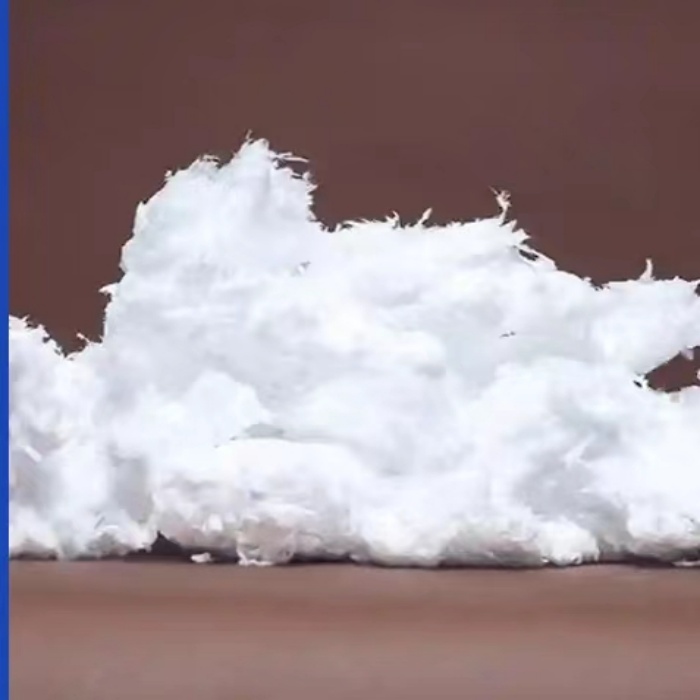
In the vast landscape of engineered materials, few offer the combination of versatility, thermal resilience, and filtration efficiency found in Micro Glass Fiber (MGF). Often unseen but critically essential, this non-woven material—composed of borosilicate or soda-lime glass filaments with diameters typically less than a few micrometers—has become indispensable across numerous high-tech and industrial sectors.
Unlike standard fiberglass used for boat hulls or building insulation, micro glass fiber is defined by its microscopic filament diameter (often ranging from 0.1 to 5 microns). This extreme fineness drastically increases the surface-area-to-volume ratio, unlocking unique physical and chemical behaviors.
This article provides an exhaustive technical explanation of micro glass fiber, delving into its fundamental properties, the different types available, and the key industrial applications that rely on its performance.
Part 1: Fundamental Properties of Micro Glass Fiber
To understand why engineers specify micro glass fiber over polymer or natural fibers, one must first examine its intrinsic material science.
1. Thermal Stability
Micro glass fiber exhibits exceptional resistance to high temperatures. While standard polyester melts around 250°C (482°F), borosilicate glass fibers retain structural integrity up to approximately 550°C to 600°C (1022°F to 1112°F). At extreme temperatures, the fibers do not burn or shrink; they eventually soften but remain non-flammable. This property is vital for applications like gas turbine intake filters or fire-resistant battery separators.
2. Chemical Inertness
Glass is largely composed of silica (SiO₂). Micro glass fibers are resistant to most chemicals, including organic solvents, acids (excluding hydrofluoric and hot phosphoric acid), and oxidizing agents. They do not biodegrade or support microbial growth. However, it is worth noting that standard MGF is susceptible to strong alkalis, which attack the silica network. For alkaline environments, specialized alkali-resistant (AR) glass fibers are required.
3. Filtration Efficiency (The Deep Bed Mechanism)
The defining engineering property of micro glass fiber is its ability to filter submicron particles. Unlike surface-loading membranes, MGF forms a “deep bed” filter. Particles are captured via four mechanisms:
- Interception: A particle follows the airflow stream and touches a fiber.
- Inertial Impaction: Larger particles deviate from the air stream and collide with a fiber.
- Diffusion: Submicron particles (Brownian motion) randomly move and stick to fibers.
- Electrostatic Attraction: Some MGF grades are charged to attract oppositely charged particles.
Because the fibers are thin, they can pack densely while maintaining high porosity (typically 90–95% void volume), resulting in low resistance to flow (pressure drop) with high capture efficiency.
4. Acoustic Absorption
Due to its tortuous internal structure and microscopic pores, micro glass fiber is an excellent sound dampener. The friction of sound waves moving through the fiber matrix converts acoustic energy into minute amounts of heat. This makes it superior to open-cell foams for noise, vibration, and harshness (NVH) control in high-temperature environments like engine compartments.
5. Dielectric Strength
Micro glass fiber is an electrical insulator. It has a high dielectric strength and a low dissipation factor, meaning it does not interfere with electronic signals. This makes it suitable as a battery separator in lead-acid batteries, where it prevents short circuits between plates while allowing ionic flow.
Part 2: Types of Micro Glass Fiber
Not all micro glass fibers are identical. The chemical composition, fiber diameter, and manufacturing process (flame blowing vs. rotary spinning) yield distinct product categories.
|
Type |
Diameter Range |
Key Characteristics |
|
Type A (Alkali) |
0.5 – 5 µm | High soda-lime content, less chemical resistance, low cost. Used in general insulation and air conditioning filters. |
| Type C (Chemical) | 0.1 – 3 µm | Borosilicate glass; excellent resistance to acids and corrosive fumes. Standard for industrial chemical filtration. |
| Type E (Electrical) | 0.3 – 5 µm | Low alkali content; high electrical resistivity and mechanical strength. Standard for battery separators and circuit boards. |
| Type B (Biological) | 0.05 – 1 µm | Borosilicate; biologically soluble (safe for inhalation limits). Increasingly replacing older “refractory ceramic fibers” (RCF) due to health regulations. |
A. Borosilicate Micro Glass Fiber (Type C & B)
This is the most common type for high-performance filtration. Containing 80%+ SiO₂ and 12-15% B₂O₃ (boron trioxide), it offers a low coefficient of thermal expansion (3.25 x 10⁻⁶ /K), meaning it resists thermal shock. It forms the core of HEPA (High-Efficiency Particulate Air) and ULPA (Ultra-Low Penetration Air) filter media.
B. Soda-Lime Micro Glass Fiber (Type A)
Produced from recycled glass or standard container glass, these fibers are cheaper but less durable. They are used in disposable coarse filters, HVAC pre-filters, and low-grade soundproofing pads.
C. Alkali-Resistant (AR) Glass Fiber
Modified with zirconium dioxide (ZrO₂) or titanium dioxide (TiO₂), AR fibers can withstand the high pH environment of cement and concrete. These are niche but critical for structural reinforcement in micro-scale cement composites.
D. Biosoluble (Bio-Soluble)
Due to occupational health concerns regarding inhaled glass fibers (IARC classification), manufacturers developed biosoluble fibers. These dissolve in lung fluids (pH 4.5-7.5) within weeks or months, unlike traditional refractory fibers that persist for years. They are replacing standard MGF in insulation blankets and automotive gaskets.
Part 3: Key Industrial Applications
Micro glass fiber is not a consumer-facing material; it works silently inside critical equipment across four major industries.
Application 1: High-Efficiency Air Filtration (HVAC & Cleanrooms)
The Use Case: Removing 99.97% of particles 0.3 microns in diameter (MPPS).
The Mechanism: MGF paper is pleated to increase surface area. The microscopic fibers create a dense but porous barrier.
Specifics:
- HEPA Filters (Type C, 0.5–2 µm fibers): Used in pharmaceutical cleanrooms, operating theaters, and semiconductor fabs. The glass fibers are wet-laid into a paper, treated with acrylic binders, and pleated.
- ULPA Filters: Use sub-0.3 µm fibers to achieve 99.9995% efficiency at 0.12 microns for nanotechnology research.
Why MGF? Polypropylene membranes may have higher initial efficiency but degrade under heat or moisture. MGF maintains efficiency at 80°C and 100% relative humidity.
Application 2: Liquid Filtration (Food, Beverage, and Pharmaceuticals)
The Use Case: Clarifying beer, wine, fruit juices, and polishing pharmaceutical water.
The Mechanism: Depth filtration. MGF pads (e.g., K series or Ertel Alsop style) capture yeast, bacteria, and hazes.
Specifics:
- Beverage Filtration: A cellulose-MGF blend (sheets) removes particles down to 0.5–1 micron without stripping color or flavor. The glass component adds stiffness and prevents channeling (where liquid bypasses the filter).
- Water Purification: MGF wound cartridges serve as pre-filters for reverse osmosis systems, removing silt and rust.
Why MGF? Unlike melt-blown polypropylene, MGF does not swell in water. Its inorganic nature means no extractables contaminate the product—critical for injectable drugs.
Application 3: Start-Stop Lead-Acid (SSLA) Battery Separators
The Use Case: Modern vehicles with idle-stop-start technology require batteries with superior acid absorption and vibration resistance.
The Mechanism: A 0.2–0.5 mm thick sheet of Type E micro glass fiber is placed between the positive and negative lead plates.
Specifics:
- Absorbent Glass Mat (AGM): The MGF mat is 90% porous. It absorbs all the sulfuric acid electrolyte (hence “starved electrolyte”).
- Function: The fine fibers press against the plates, preventing lead shedding. The mat also compresses to accommodate plate swelling during discharge.
- Performance: AGM batteries using MGF have 3x the cycle life of flooded batteries and can operate at any angle.
Why MGF? Polymer felts lack the compressive resilience and acid wettability of glass. The fiber diameter (0.8 – 2 µm) dictates pore size, which controls ionic flow and cold-cranking amps.
Application 4: Vacuum Insulation Panels (VIPs)
The Use Case: Energy-efficient refrigeration and building insulation (thin, high R-value).
The Mechanism: Fumed silica core + MGF reinforcement.
Specifics: A rigid panel of compressed micro glass fiber (fiber diameter < 2 µm) is evacuated to 0.001 mbar and sealed in a gas-tight barrier envelope. The nanopores of the MGF are smaller than the mean free path of air molecules, virtually eliminating gaseous conduction.
Result: An R-value of R-32 per inch (compared to R-6 for fiberglass batts). A 25mm VIP replaces 150mm of foam insulation.
Why MGF? The microfibers act as an opacifier (blocks infrared radiation) and provide structural rigidity to prevent the vacuum from collapsing the core.
Application 5: Fireproofing and Thermal Coatings
The Use Case: Weld blankets, expansion joint seals, firestop pillows, and engine bay insulation.
The Mechanism: MGF felt or needled mat (no binder, just mechanically interlocked fibers).
Specifics: Able to withstand continuous 550°C and intermittent 800°C. Used as a substrate for ceramic coatings in industrial ovens.
Why MGF? Mineral wool has lower thermal conductivity but is thicker and less flexible. MGF cloth (woven from microfibers) can be sewn into custom shrouds for aircraft engines or exhaust systems.
Part 4: Manufacturing and Fabrication
Understanding how MGF is made informs its final properties.
- Melting: Batch materials (sand, limestone, borax, soda ash) are melted at 1400-1500°C.
- Fiberization: Two primary methods:
- Flame Blowing: A stream of molten glass falls into high-velocity jets of flame or steam. This tears the glass into short, fine fibers (0.1-2 µm). Used for HEPA and battery separators.
- Rotary Spinning: Molten glass is poured into a rotating spinner disc with thousands of small holes. Centrifugal force extrudes fibers, which are blown downward by air. This yields longer, coarser fibers (2–5 µm) for insulation.
- Binder Application (Wet-Laid Process): For filtration, the fibers are mixed with water, binder (acrylic or phenolic resin), and surfactants. This slurry is deposited onto a moving screen (like papermaking). Water is drained, and the wet mat is dried and cured at 250°C to cross-link the binder.
- Calendering: The cured MGF paper is passed between heated metal rollers to compress it to a target thickness and permeability.
Part 5: Safety, Health, and Environmental Aspects
Historically, glass fibers were classified as “possibly carcinogenic to humans” (IARC Group 2B) due to studies on early, coarse fibers. However, modern micro glass fibers used in filtration and battery separators are different.
Current Regulatory Status (EU / US): Most micro glass fibers (Types A, C, E, B) are classified as “Not Classifiable as Carcinogenic to Humans” (Group 3) because:
- They are biosoluble (dissolve in lung fluid).
- Epidemiological studies of fiberglass factory workers show no significant increase in lung cancer.
Installation Risks: During handling (e.g., cutting MGF sheets), fibers can become airborne, causing skin irritation (itchiness) and mechanical irritation to the eyes and upper respiratory tract. This is temporary and reversible.
Best Practices:
- Use local exhaust ventilation when cutting.
- Wear nitrile gloves and safety glasses.
- Wash skin with cold water (hot water opens pores, driving splinters deeper).
Recycling: MGF is inorganic and non-toxic. However, binder-containing waste cannot easily be recycled. Virgin scrap (unbound) can be remelted into new glass products. Landfill disposal is inert and stable.
Conclusion
Micro glass fiber is a benchmark engineering material that bridges the gap between high-temperature stability and microscopic precision. Its ability to be formed into thin, highly porous, and chemically inert structures makes it irreplaceable in modern industry—from the HEPA filter in a hospital ICU protecting against COVID-19, to the AGM battery starting your car on a winter morning, to the vacuum panel keeping pharmaceutical vaccines cold.
While alternative polymers and nanofibers (e.g., electrospun nylon) challenge MGF for some filtration roles, no single material currently matches the combination of thermal resistance, acid tolerance, and submicron depth-loading capacity offered by borosilicate micro glass fiber.
As industries push toward higher efficiency standards (e.g., Euro 7 emissions, ISO 16890 filter classes) and greater fire safety (marine and aerospace), the demand for high-quality, biosoluble micro glass fiber will continue to grow.
Post time: Apr-29-2026