
In the intricate architecture of modern industry, some of the most critical components are often the least visible. Micro glass fiber is one such material—a technological marvel that, despite its microscopic diameter, plays an outsized role in enabling everything from the green energy revolution to the digital economy and aerospace innovation. Today, China has emerged as the undisputed global powerhouse in the production and sourcing of this essential material. The “Made in China” label on micro glass fiber represents not just a marker of origin, but a seal of technological sophistication, cost efficiency, and supply chain resilience that is reshaping global industries.

The Invisible Backbone of Modern Industry
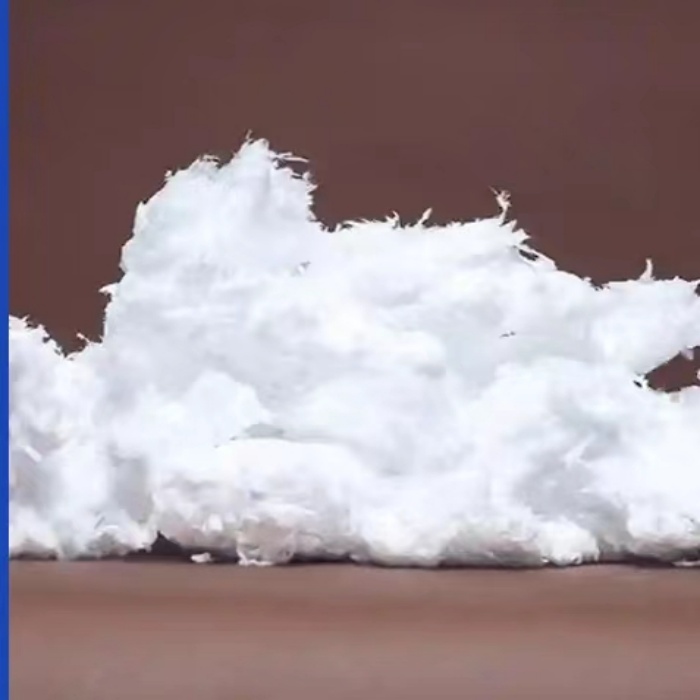
Micro glass fiber refers to ultra-fine glass filaments, typically with diameters ranging from 0.3 to 5 micrometers, produced through advanced flame-spraying or centrifugal processes . In comparison, a human hair is about 75 micrometers thick—making these fibers exceptionally fine. The finished product, resembling soft white cotton wool, offers a unique combination of properties: it is inherently flame-retardant, possesses excellent electrical insulation, and exhibits thermal conductivity as low as 0.04 W/(m·K) .
These properties make micro glass fiber a critical raw material across a vast spectrum of applications . In the energy storage sector, it serves as the essential separator material in Absorbent Glass Mat (AGM) batteries, which are crucial for start-stop automotive systems and uninterruptible power supplies. In high-performance filtration, it forms the basis of air and liquid filters that purify everything from hospital operating rooms to industrial cleanrooms. And in the field of thermal management, it is the core component of Vacuum Insulation Panels (VIPs), enabling energy efficiency in refrigeration, cold-chain logistics, and building insulation .
As the world moves toward carbon neutrality and higher-performance electronics, the demand for high-quality micro glass fiber has surged. This creates a critical question for global supply chains: where is the most reliable and advanced source of this vital material? The answer, increasingly, is China.
The Pillars of China’s Advantage
China’s dominance in the micro glass fiber industry is not accidental. It is the result of decades of strategic investment, technological innovation, and the development of a complete, vertically integrated industrial ecosystem. The global advantage of sourcing from China rests on three core pillars.
1. Technological Prowess and Scale
The narrative of Chinese manufacturing as purely low-cost labor is outdated. In the micro glass fiber sector, China has achieved significant technological breakthroughs that place it at the forefront of the industry. A pivotal example is the development of a domestic centrifugal process for producing micro fiberglass cotton. This technology, which was a breakthrough for the industry, achieved stable mass production, significantly lowering energy consumption and improving fiber uniformity compared to traditional methods . In an industry where fiber diameter consistency is paramount, Chinese manufacturers have achieved the ability to mass-produce fibers as fine as 0.2 microns .
The scale of China’s production capacity is equally impressive. The nation is home to giants like China Jushi, which commands approximately 28% of the global glass fiber market and has the world’s largest production capacity for electronic glass fiber cloth . In March 2026, the company achieved a new milestone by inaugurating the world’s largest single electronic glass fiber production line in Huaian, with a capacity of 100,000 tons per year . This scale, backed by 100% independent intellectual property rights, enables the transition of high-end electronic substrates from laboratory samples to commercial-scale production .
2. A Complete and Resilient Industrial Ecosystem
China’s advantage extends far beyond the individual factory. It is the breadth and depth of its industrial ecosystem that provides a unique sourcing advantage. For instance, in Xuanhan County, a micro glass fiber industrial park has been established where upstream producers of micro glass fiber are located just a few minutes’ walk from downstream manufacturers of VIP cores . This colocation reduces logistics costs and enables tight integration and rapid innovation.
This ecosystem has fostered a rich environment for specialization. Companies are continuously upgrading their capabilities, with some producing micro glass fiber for specialized applications like aerospace soundproofing and heat insulation, a field previously dominated by U.S. manufacturers and subject to technology embargoes . The ability to control the entire value chain—from raw material processing to sophisticated final product manufacturing—makes the Chinese supply chain both cost-effective and resilient to external shocks.
3. Strategic Global Expansion and Cost Competitiveness
Chinese companies have also learned to navigate complex international trade landscapes with strategic agility. A case study in this is China Jushi’s response to the European Union’s anti-dumping duties on glass fiber. Facing a sudden tariff increase, the company chose not to retreat but to invest in a massive production base in Egypt . This move not only bypassed the punitive tariffs but also capitalized on Egypt’s abundant energy and raw materials, creating a low-cost base for supplying European and other global markets . This strategic, long-term thinking ensures that Chinese companies can offer competitive pricing on a global scale.
Addressing the Nuance: High-End Competition
While China dominates in scale, it’s important to acknowledge the competitive landscape, particularly in the highest-end segments. In advanced electronic glass fiber cloth for AI servers and 5G base stations, Japanese companies like Nittobo and Asahi Kasei have historically maintained a technological lead, particularly in low-dielectric and quartz cloth, with a significant global market share .
However, this is a rapidly changing dynamic. Chinese companies are heavily investing in R&D to close this gap. China Jushi, for example, has developed a low-dielectric yarn technology through independent R&D that is cost-competitive and has passed certification for AI server supply chains . This “dual track” of mass-market dominance and targeted high-end breakthroughs demonstrates the full scope of China’s manufacturing ambition.
Conclusion: The Indisputable Sourcing Destination
Sourcing micro glass fiber from China offers a combination of advantages that is difficult to replicate elsewhere. It is not just about price, but about access to the world’s most advanced and extensive manufacturing ecosystem.
China offers the technological capability to produce fibers with diameters as fine as 0.2 microns, the massive scale to supply global demand for AGM batteries and VIPs, and a vertically integrated ecosystem from raw materials to finished filters and insulation panels. The country’s manufacturers have achieved international certifications and are breaking into the most demanding sectors, including aerospace and high-end electronics.
For businesses seeking a reliable, technologically advanced, and cost-effective source of this critical material, “Made in China” is not just an option; it is the definitive global advantage in micro glass fiber sourcing. The future of this industry, much like the material itself, is incredibly fine-tuned and being woven in China.
Post time: Sep-10-2026


