
Sourcing snus paper—or more accurately, pouch-grade nonwoven fabric—from China is not the same as buying generic nonwoven rolls. The material must seal reliably on your specific pouch machine, control fiber shedding, maintain consistent slit-roll dimensions, and come with the documentation your market requires. A supplier that looks capable on a B2B platform may turn out to be a trading company with no converting capability, or a factory that has never supplied a heat-sealing pouch line.
This guide breaks down seven factors that separate a suitable snus paper supplier from a risky one. Each factor reflects the practical realities of pouch production, international trade compliance, and supplier verification in China.
1. Confirm the Supplier Understands Pouch-Grade Material, Not Just Nonwoven
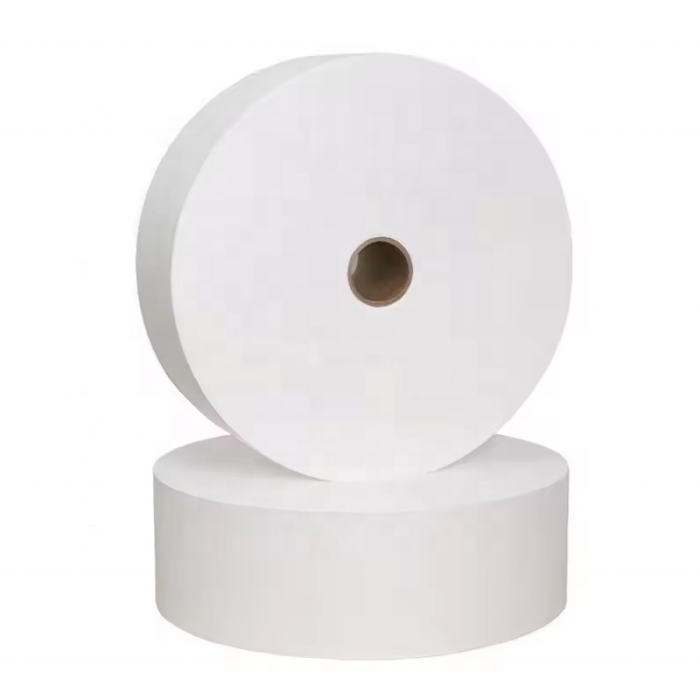
The first filter is technical literacy. Snus paper is a buyer term for a heat-sealable nonwoven substrate used to wrap nicotine powder, tobacco, or functional powders into small oral pouches . A generic nonwoven factory may produce material with the right GSM and width, but that does not mean it will run smoothly on a pouch-making machine.
Pouch-grade material must balance several competing requirements: stable heat sealing at your jaw temperature and dwell time, controlled air permeability for flavor release, low fiber shedding to avoid contamination, sufficient tensile strength for high-speed converting, and a clean, consistent appearance after sealing . A supplier that understands these trade-offs will ask about your machine type, sealing method, pouch width, line speed, and powder condition before recommending anything. A supplier that sends a catalog and a price list without asking those questions is not a pouch material specialist.
Ask specifically whether the supplier organizes material by grade rather than offering a single “universal” product. Professional suppliers typically maintain distinct grades—for example, a broad-compatibility grade for low-to-medium speed lines, a grade optimized for intermittent flat-jaw sealing, and a premium ultra-fine fiber grade for high-speed production with demanding shedding requirements . If the supplier cannot explain why one grade suits one machine and another grade suits a different machine, the technical depth is likely insufficient.
2. Verify Slitting and Roll Converting Capability
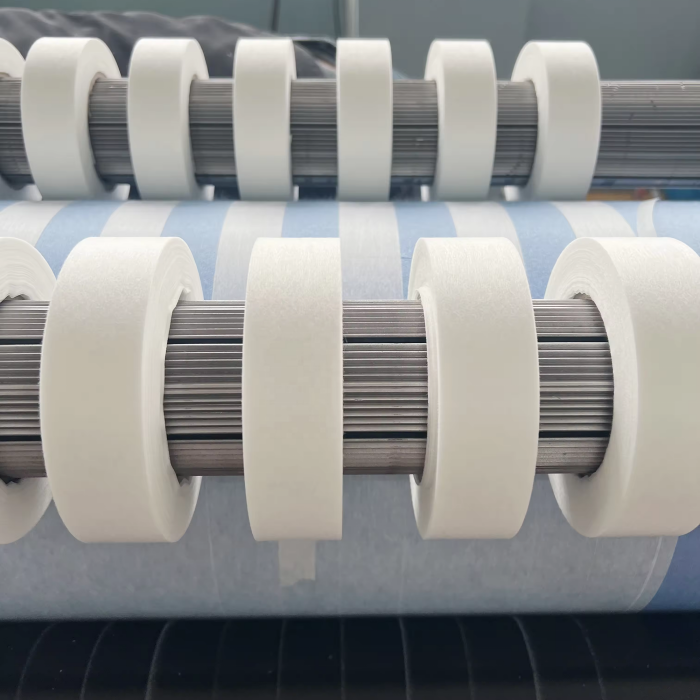
Snus paper is not shipped as wide master rolls. It is delivered as narrow slit rolls, commonly in the 29–33 mm range with 31 mm and 32 mm being the most requested widths, with roll lengths around 700–800 meters and a 76 mm core . The quality of slitting directly affects machine uptime. Poor slitting produces edge burrs, width variation, telescoping rolls, and tracking problems that cause stoppages and inconsistent pouch formation.
A capable supplier must control slit width tolerance, roll winding tension, outer diameter consistency, and core alignment. Ask how they inspect slit rolls before shipment and whether they can provide a roll format drawing that matches your machine’s unwind mandrel. If the supplier outsources slitting to a third party, you lose visibility into one of the most quality-critical steps in the supply chain.
Customization capability is also a signal of converting depth. A supplier that can adjust GSM, width, roll length, softness, whiteness, and pore profile according to your machine and product positioning is operating as a converter, not merely a material reseller . That distinction matters when your production parameters change or when you need to troubleshoot a sealing issue.
3. Check Whether the Supplier Is a Manufacturer or a Trading Company
China’s business registry does not require companies to register English names, and B2B platform badges and certificates can be misleading . A supplier presenting itself as a manufacturer may be a small trading company with no production equipment. Before discussing price, verify the legal entity.
Request the supplier’s official Chinese legal name exactly as it appears on the business license, along with the 18-digit Unified Social Credit Code . Search that name or code on a registry platform such as Tianyancha or Qichacha to confirm registration status, registered address, legal representative, and business scope . If the supplier claims to be a manufacturer, the registered business scope should include manufacturing-related terms; in Chinese practice, this means production, processing, or manufacturing . A scope limited to trading or wholesale is a red flag for a claimed factory.
Cross-check the registered address against the address used for samples and shipments. A mismatch between the registered location, the office address, and the claimed factory address requires explanation. For higher-value orders, a video walkthrough of the production floor—live, not pre-recorded—or a third-party inspection is worth the cost. The goal is not to eliminate trading companies categorically; some are legitimate and well-organized. The goal is to know exactly what entity you are contracting with and who controls quality.
4. Demand Machine-Matched Sample Testing Before Bulk Commitment
No responsible snus paper supplier should confirm a bulk grade without sample testing on your machine. The interaction between substrate, sealing jaws, powder moisture, and line speed cannot be predicted from a datasheet alone . Heat sealing temperature windows, jaw pressure, dwell time, and pouch size all influence whether a material produces a clean seal or a weak, leaky one.
The sample process itself reveals supplier quality. A professional supplier will ask for your machine type, sealing method, target pouch width, line speed, powder type and moisture condition, and target market before preparing samples . They will send sample rolls in a format close to your production format—not a small swatch—so you can run meaningful trials. They will also explain what to observe during testing: seal strength, edge appearance, fiber shedding on the sealing bar, roll tracking, and consistency across the roll length.
Treat a supplier that offers “free samples” without asking about your machine as a supplier that does not understand industrial qualification. The sample is not a marketing gesture; it is the first stage of a technical validation process. Document the test conditions and results, and use them as the baseline for the bulk order specification.
5. Scrutinize Documentation and Compliance Claims
Export documentation is part of supplier capability, not an afterthought. At minimum, a professional snus paper supplier should provide a Technical Data Sheet (TDS) covering GSM, thickness, tensile strength, air permeability, and sealing recommendations; a Certificate of Analysis (COA) for the specific batch; and a Safety Data Sheet (MSDS/SDS) where applicable . For food-contact or oral-use applications, food-contact compliance documentation may be relevant depending on your market and regulatory pathway.
Two cautions apply. First, verify that certificates belong to the supplier you are contracting with. Certificates held by an affiliated company, a trading partner, or an expired registration do not protect you . Second, understand what a document covers and what it does not. A food-contact report for raw material does not automatically certify the finished slit roll after converting and packaging. A CE mark, where claimed, is only meaningful if the product category and applicable directives actually apply; CE is a legal conformity mark, not a general quality award .
For markets with specific regulatory requirements, ask the supplier to confirm which documents they can provide for your exact product and application, and which documents you must arrange independently. A supplier that overpromises on compliance is as risky as one that provides nothing.
6. Evaluate Communication Discipline and Export Experience
The quality of pre-sale communication predicts the quality of post-sale support. A supplier that responds vaguely to technical questions, avoids written specifications, or pressures you toward a deposit before sample validation is exhibiting the same habits that will make dispute resolution difficult later.
Look for structured communication. Does the supplier provide a written quotation that specifies grade, GSM, slit width, roll length, core size, packaging, lead time, and Incoterms? Does the sales contact understand the difference between a trial order and a repeat order, and quote accordingly? When you raise a sealing issue during sample testing, does the response engage with the technical variables, or does it simply offer a discount?
Payment terms are another signal. A common compromise in China sourcing is 30% deposit with the balance due before shipment or against shipping documents . Be cautious of requests for full prepayment to a personal account, last-minute changes to bank details, or payment instructions that route funds to an entity different from the contracting supplier . The bank account name should match the legal entity on the contract and invoice. If it does not, require a written explanation and supporting authorization before transferring funds.
7. Secure a Contract That Defines Quality, Not Just Quantity
Many international buyers transact with Chinese suppliers using only a proforma invoice or a simple order form. For a technical material like snus paper, that practice leaves quality undefined and disputes difficult to resolve. The contract or purchase order should specify the exact grade, GSM tolerance, slit width tolerance, roll length, core diameter, packaging requirements, and the acceptance criteria for sealing performance and fiber shedding.
Quality standards deserve particular attention. Chinese law and the CISG provide frameworks for conformity, but statutory protection is weak when the defect involves product details not covered by existing standards—exactly the situation with a specialized pouch substrate . If the contract does not define what “acceptable sealing” means, a dispute over seal failures becomes a battle of opinions rather than a breach of a written specification. Reference the approved sample as the baseline, and state that bulk material must conform to the sample’s performance in sealing, appearance, and roll format.
Also confirm the contracting party’s identity on the stamp. Chinese companies use official company chops, and the chop on the contract should belong to the same legal entity named in the contract and on the invoice . If a Hong Kong affiliate is involved, understand which entity is contracting, which entity receives payment, and which entity bears quality liability. These are not legal technicalities; they determine whether you have a remedy if something goes wrong.
A Final Word on Price and Partnership
Price matters, but the lowest quotation is rarely the lowest cost in snus paper sourcing. A material that saves a few cents per kilogram but causes machine stoppages, seal failures, or batch rejection consumes far more value in lost production and rework. The right supplier is the one that can explain why a particular grade matches your machine, demonstrate that capability through sample testing, document the material honestly, and commit to a written specification.
China has capable pouch-grade nonwoven manufacturers and converters. It also has traders, repackagers, and opportunists. The seven factors above are designed to separate them before you send a deposit—and to build a relationship with a supplier that understands your production line, not just your purchase order.
Post time: Nov-05-2026


