
China has established itself as the undisputed global leader in fiberglass production, accounting for more than half of worldwide capacity and serving as the largest exporter of glass fiber products. For international buyers seeking micro glass fiber—a specialized category of ultrafine glass fibers used in filtration, battery separators, thermal insulation, and advanced composites—China offers an extensive supplier landscape ranging from large-scale integrated manufacturers to specialized boutique producers.
However, the breadth of options creates its own challenge. Supplier capabilities, quality standards, and compliance credentials vary dramatically across the market. For B2B procurement professionals, selecting the right Chinese micro glass fiber supplier requires moving beyond price comparisons to evaluate manufacturing depth, quality systems, and regulatory compliance. This guide provides a structured framework for making that decision.
Understanding the Micro Glass Fiber Landscape in China
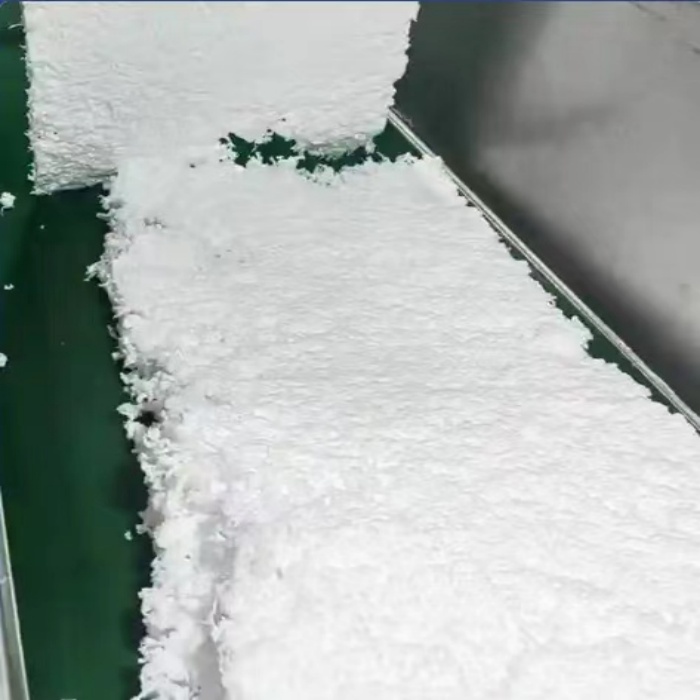
Micro glass fiber occupies a distinct niche within the broader fiberglass industry. Unlike continuous filament fiberglass used in structural composites, micro glass fiber is characterized by extremely fine diameters—typically ranging from 0.2 to 5 microns—produced through flame blowing or rotary spinning processes. These ultrafine fibers are essential raw materials for high-efficiency air filtration (HEPA and ULPA filters), absorbed glass mat (AGM) battery separators, vacuum insulation panels (VIP), and specialty composite applications.
China’s fiberglass market was valued at approximately USD 6.29 billion in 2025 and is projected to reach USD 9.12 billion by 2030, growing at a 7.7% compound annual growth rate . The micro glass fiber segment benefits from this expansion, driven by demand from energy storage, air purification, and construction insulation sectors.
The Chinese supplier landscape for micro glass fiber is stratified. At the top tier are large, integrated manufacturers with national-level certifications and significant production capacity. Below them are mid-sized specialized producers focusing on specific application segments. At the base are smaller operations, some of which may lack the quality systems or compliance credentials required by international buyers.
Core Evaluation Criteria for Supplier Selection
Manufacturing Capability and Production Scale
A supplier’s production capacity serves as an initial filter for assessing whether they can meet your volume requirements reliably. The most capable Chinese micro glass fiber manufacturers operate large-scale facilities with annual outputs measured in tens of thousands of tons.
Consider the example of a major producer: Xuanhan Zhengyuan Micro Glass Fiber Co., Ltd., a subsidiary of Chongqing Zaisheng Technology, operates a production base with an annual capacity of 120,000 tons of various ultrafine glass fiber products . The company was recognized as a national-level “Little Giant” enterprise for specialized and sophisticated manufacturing and holds a national manufacturing single-item champion designation .
For international buyers, production scale signals several things: the ability to fulfill large orders consistently, the financial resources to maintain quality systems, and the operational maturity to serve global customers. However, scale alone does not guarantee suitability—a supplier optimized for commodity glass wool may not possess the precision necessary for battery separator-grade micro fiber.
Quality Certifications and Standards Compliance
Certifications provide third-party validation of a supplier’s quality management systems and product performance. The baseline expectation for any serious Chinese micro glass fiber supplier should include ISO 9001 quality management certification and ISO 14001 environmental management certification.
Beyond these fundamentals, buyers should look for industry-specific credentials. For suppliers serving the aerospace or automotive sectors, AS9100D certification demonstrates compliance with stringent aerospace quality standards. Yulin Tianshengyuan Glass Fiber Technology, a Shaanxi-based producer, has obtained ISO 14001, ISO 9001, and ISO 45001 system certifications, along with multiple EU ROHS standard tests .
Product-level testing capabilities matter equally. A supplier claiming to produce 0.2-micron fiber diameter products should possess the laboratory equipment to verify that specification consistently. The most reliable suppliers operate independent testing laboratories and conduct 24-hour online inspections to maintain quality control .
Technical Specifications and Customization
Micro glass fiber is not a commodity product with uniform specifications. Different applications demand different fiber diameters, chemical compositions, and surface treatments. A supplier’s ability to meet your specific technical requirements is a critical selection factor.
Key specifications to evaluate include fiber diameter distribution, chemical composition (particularly silica content and trace elements), loss on ignition, moisture content, and pH. For AGM battery separator applications, parameters such as beating degree, tensile strength, acid weight loss, and iron content become critical. High-quality micro glass fiber for battery separators typically exhibits acid weight loss below 3.0% and iron content below 0.004% .
Suppliers with strong technical capabilities can adjust production parameters to match customer requirements. The capacity to achieve mass stable production at fiber diameters as low as 0.2 microns represents a significant technical achievement that distinguishes leading manufacturers from commodity producers .
Application Experience and Industry Focus
A supplier’s experience in your specific application area often matters more than general manufacturing capability. Micro glass fiber used in HEPA filtration requires different performance characteristics than fiber destined for vacuum insulation panels or battery separators.
Evaluate whether the supplier has served customers in your industry and can provide references or case examples. Some Chinese manufacturers focus predominantly on domestic commodity markets, while others have developed export-oriented businesses serving international filtration or battery manufacturers. The latter group typically understands international quality expectations and documentation requirements.
For filtration applications, suppliers experienced with ASHRAE, HEPA, and ULPA filter media production understand the relationship between fiber diameter, surface area, and filtration efficiency. For energy storage applications, experience with AGM separator manufacturers translates to familiarity with electrolyte absorption and acid resistance requirements.
Export Experience and Documentation Support
Working with Chinese suppliers requires navigating export procedures, documentation, and logistics. A supplier’s export experience level directly impacts transaction smoothness.
First-time exporters may struggle with the documentation required for international shipments, including commercial invoices, packing lists, certificates of origin, and material safety data sheets. More critically, they may be unfamiliar with destination country import regulations, including anti-dumping duties that apply to certain glass fiber products.
The trade environment has become increasingly complex. The United States and European Union have imposed anti-dumping and countervailing duties on Chinese glass fiber products, with EU duties reaching up to 99.7% . While micro glass fiber products may fall under different tariff classifications than fiberglass reinforcements, buyers must verify the specific HS code and applicable duty rates for their products. Suppliers with export experience can provide accurate documentation and may have insights into tariff optimization strategies.
Certification for Specific Markets
Depending on your destination market, additional certifications may be necessary. For products entering the European Union, REACH compliance documentation is essential. For automotive applications, IATF 16949 certification demonstrates automotive quality management competency. Food-contact or pharmaceutical applications may require FDA or equivalent approvals.
A supplier’s willingness and ability to provide these certifications—or to undergo the testing necessary to obtain them—indicates a commitment to serving international customers rather than focusing solely on domestic commodity markets.
Red Flags and Risk Mitigation
Inconsistent Quality Indicators
When evaluating suppliers, request batch-specific test reports rather than general specification sheets. A supplier that provides detailed, traceable quality data for each production batch demonstrates stronger quality control than one that offers only generic product descriptions.
Be wary of specifications that seem too good to be true or that lack test method documentation. A stated fiber diameter of 0.2 microns should be accompanied by information about the measurement method and statistical distribution, not just a single value.
Lack of Transparency
Suppliers that are evasive about their manufacturing processes, quality systems, or customer references warrant caution. While legitimate concerns about confidentiality exist, reputable suppliers can discuss their capabilities and provide verifiable information about their operations.
Factory audits—whether conducted in person or through third-party inspection services—provide valuable verification. A supplier that resists audits or provides inconsistent information during the audit process should be excluded from consideration.
Communication and Responsiveness
The supplier evaluation process itself is a test of customer service capability. Response times, willingness to answer technical questions, and attention to detail during the quotation phase predict how the supplier will perform during order fulfillment and after-sales support.
B2B sourcing guides recommend evaluating suppliers on metrics such as on-time delivery rate, response time, and reorder rate. High-performing suppliers typically maintain response times under 3 hours and on-time delivery rates approaching 100% .
The Role of Trade Compliance in Supplier Selection
Given the evolving trade landscape, compliance considerations should factor into supplier selection from the outset. The United States Section 301 tariffs and anti-dumping duties, along with EU anti-dumping measures, create significant cost implications for Chinese-origin glass fiber products.
Buyers should verify the specific HS classification of their micro glass fiber products and understand the applicable duty rates. The HS code 70191900.12, which covers certain glass fiber filaments, carries a Most-Favored Nation tariff of 8% in China, but destination country duties vary .
Some suppliers have established production facilities in third countries to circumvent trade barriers. However, rules of origin requirements mean that simple processing or repackaging of Chinese-origin glass fiber does not qualify for preferential treatment. Genuine manufacturing in a non-restricted country—including drawing fiber from locally sourced raw materials—is required to achieve tariff-free status .
For buyers in markets with high anti-dumping exposure, working with suppliers that have addressed these issues proactively can reduce supply chain risk and landed cost uncertainty.
Conclusion
Selecting the right micro glass fiber supplier in China requires a systematic evaluation of manufacturing capability, quality systems, technical expertise, and trade compliance. The Chinese market offers suppliers with world-class capabilities—including national-level technology centers and aerospace-grade certifications—but also includes many operations that lack the quality discipline and documentation support required for international B2B transactions.
The most reliable approach involves narrowing the field through certification and capability screening, then conducting detailed technical evaluations and sample testing before committing to production orders. Factory audits and reference checks provide additional verification. By applying a structured framework rather than defaulting to the lowest-priced option, procurement professionals can establish supply relationships that deliver consistent quality, reliable delivery, and long-term value.
As China’s fiberglass industry continues its shift toward high-performance and specialized products, the gap between top-tier and marginal suppliers will likely widen. Buyers who invest in thorough supplier evaluation will be best positioned to benefit from the capabilities of China’s leading micro glass fiber manufacturers.
Post time: Oct-15-2026


