
China is the world’s largest producer of cigarette paper, and for good reason. The country combines mature pulp and specialty paper infrastructure, a deep pool of technical expertise in tobacco-adjacent materials, and export logistics that reach every major market. For brand owners, distributors, and private-label operators, sourcing from China can deliver attractive margins and genuine customization. But cigarette paper is not a commodity like corrugated board or copy paper. It is an engineered material where small deviations in porosity, basis weight, or burn additives translate into visible differences in ash appearance, draw resistance, and the sensory experience your customer associates with your brand.
That is why choosing the wrong supplier is rarely a matter of paying a few cents more per booklet. It is a matter of discovering, three months after launch, that the second production run burns differently from the first, that the gum line is misaligned, or that the “factory” you wired a deposit to was a trading desk with no machines of its own. This guide lays out seven factors that separate reliable Chinese cigarette paper suppliers from the ones that will quietly erode your margin and your reputation.
Factor 1: Confirm You Are Talking to a Manufacturer, Not an Intermediary
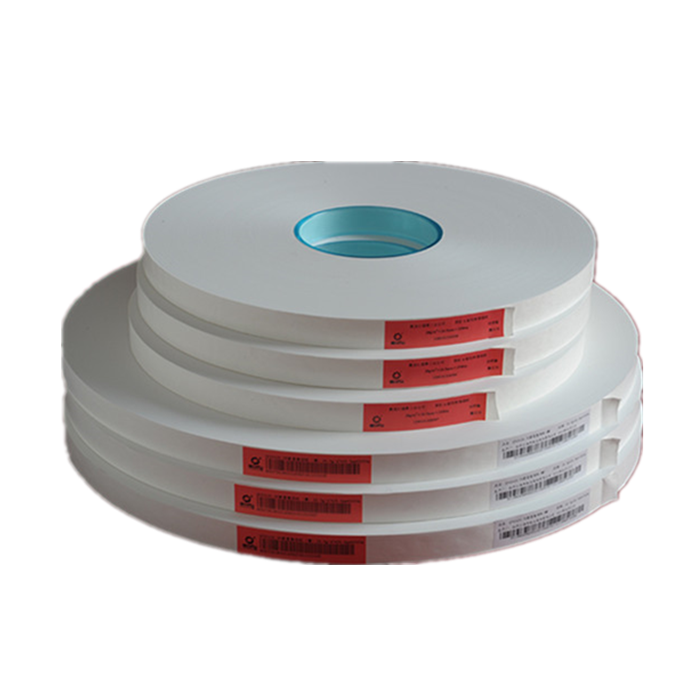
The first and most consequential question is deceptively simple: does the entity quoting you actually make cigarette paper? China’s specialty paper sector includes genuine manufacturers with decades of pulping and converting experience, but it also includes a large population of trading companies that rebrand themselves as factories. The difference matters because cigarette paper quality is a function of process control—fiber refinement, porosity targeting, calender adjustment, and gum application—that only the entity running the machines can manage.
A real manufacturer controls the full chain from base paper slitting to gum-line application to booklet folding and packaging . When something drifts, they can adjust machine settings. An intermediary can only forward your complaint and hope. To verify, ask for the Chinese legal name exactly as it appears on the business license, then check the registered business scope and, more importantly, the production address . Request a live video walkthrough of the slitting and folding lines, not a edited marketing clip. If the supplier hesitates, or if the company name on the quotation does not match the name on the bank account, treat that as a structural warning sign .
There is also a technical dimension to this verification. Cigarette paper manufacturers typically operate in the 20–34 g/m² range for standard grades, with porosity measured in Coresta units (CU) and tuned to specific burn-rate targets . A genuine factory can explain how it adjusts porosity through calendering and furnish selection. A trading desk will send you a generic spec sheet and change the subject.
Factor 2: Lock Specifications Before You Discuss Price
One of the most common mistakes buyers make is requesting a quotation before defining what they actually need. Chinese factories quote faster and more accurately when your brief reads like a technical SKU definition rather than a mood board . For cigarette paper, the critical fields include fiber type (wood pulp, flax, hemp, or blends), basis weight, porosity range, bleaching level (bright white versus unbleached brown), gum type, and booklet format.
The fiber decision is not cosmetic. Flax delivers long fibers and high tensile strength, making it suitable for premium and high-speed machine papers. Hemp offers strong, uniform formation and good opacity control. Bleached wood pulp is cost-efficient and consistent in whiteness, which is why it dominates economy grades . Each fiber source behaves differently on high-speed cigarette makers, and each interacts differently with the burn-control salts that govern ash appearance. If your target market cares about ash whiteness—and many do, because a clean, compact ash signals quality to the smoker—you need a supplier who can discuss citrate-based additives and ash behavior with specificity, not vague assurances .
Porosity deserves particular attention because it is where many new buyers get burned, sometimes literally. Low-porosity papers (roughly 5–20 CU) slow the burn and can produce a harsher draw. High-porosity papers (80–120 CU) increase airflow and lighten the mouthfeel. Mainstream retail products often land in the 15–30 CU range for a balanced experience . The point is not that one range is better than another, but that your supplier must be able to hold your chosen target batch after batch. Ask how they measure porosity—on-line beta gauges, laboratory testing, or both—and what their tolerance is. A supplier who cannot answer this in technical terms is not a cigarette paper specialist.
Factor 3: Treat Samples as the Contract’s Foundation
Every sourcing guide says to request samples. Very few explain what to do with them. In cigarette paper, the sample protocol has two distinct stages, and collapsing them into one is how specification drift begins.
The first stage is a reference or stock sample, used to screen fiber specifications and basis weight candidates. This is a quick filter. The second stage is a production-intent sample: a custom run built to your signed brief, which becomes the retained standard for bulk production . This second sample is the one that matters legally and operationally. Test it under realistic conditions. Check tear and fold memory at ambient humidity, gum adhesion and taste, burn uniformity and ash appearance, and the cut precision of the booklet and the strength of the glue seal . If the product includes a filter tip or cone, verify fit. Compare the packaging die-line against your approved artwork.
Both you and the supplier should retain identical samples labeled with a batch or project ID. Without this reference, reorders invite silent drift—a slightly lighter paper, a substituted gum, a different pulp lot—that no one can prove . The retained sample is your only objective benchmark when a shipment arrives and something feels wrong.
Factor 4: Read Certifications for Scope, Not Logos
Certifications are necessary but frequently misunderstood. A supplier’s website may display ISO 9001, ISO 14001, FSC, or FDA-related claims, but the value of each depends on its scope and validity. ISO 9001 should explicitly cover “cigarette paper manufacturing” or “specialty paper production”; a certificate whose scope reads “trading of paper products” tells you the holder is an intermediary, not a producer . FSC or PEFC chain-of-custody certification matters if your market demands sustainable sourcing claims, but it must cover the specific product line you are buying .
Food-contact compliance is another area where general statements fall short. Cigarette paper contacts the lips and, in the case of rolling papers, the tongue. In the European Union, this brings it within the scope of food-contact material regulations, and in the United States, FDA requirements for paper components apply. Very few Asian manufacturers hold dedicated food-contact certifications for cigarette paper specifically . If your target market includes Germany, the UK, or the US, ask for migration testing reports on the gum arabic and printing inks, not just a declaration of conformity. For printing inks, request a certificate of analysis confirming heavy metals and toxic solvents are below detection limits .
The practical rule is simple: verify every certificate number with the issuing body, check the expiry date, and confirm that the certificate holder is the same legal entity that will sign your purchase contract . A logo on a website is marketing. A verifiable certificate with matching scope is evidence.
Factor 5: Understand the Real Cost Structure
The cheapest FOB quotation is rarely the cheapest landed product. In cigarette paper, low quotes often conceal one of several substitutions: a lower basis weight than quoted, a cheaper gum or pulp source, packaging that crushes in transit, or no retained sample to prove what was actually shipped . A factory that holds its specifications and retains samples may quote two cents more per booklet and still deliver a lower total cost of ownership, because it does not expose you to rework, returns, or brand damage.
Build a landed-cost model that includes unit price, freight, duties, defect allowance, and the risk of a rework cycle. Ask what the minimum order quantity includes: printing plates, die-cut tooling, sample rounds, export cartons, and revision limits . These inclusions vary widely and can swing the effective cost of a first order by a meaningful margin. Also clarify whether the quoted price is for the base paper alone or for the finished booklet, because some suppliers quote paper by the ton and convert through a separate entity, adding a handoff where quality can slip.
Payment structure matters as much as price. A standard arrangement in China sourcing is a 30% deposit before production and 70% before shipment . Be cautious of requests for full advance payment, transfers to personal or unrelated third-party accounts, or last-minute changes to beneficiary bank details—these are among the most common fraud signals in China trade . The receiving account should match the legal entity on the contract whenever possible.
Factor 6: Assess Production Capacity and Process Control
Cigarette paper is a low-margin, high-volume material, and capacity utilization tells you something about reliability. A factory running at 95% utilization may struggle to meet a tight deadline. One running at 20% may lack demand for a reason . Ask for annual capacity in tonnes or booklets and current utilization, and cross-check the answer against the size of the facility and the number of shifts you observe during a video or in-person audit.
More important than raw capacity is process control. Where does the factory add value internally, and where does it outsource? Slitting, gum-line application, printing, and folding should ideally happen under one roof, because every handoff between suppliers introduces delay and a new point of quality failure . If the factory outsources printing to a third party, ask how it controls ink migration and registration accuracy. If it outsources folding, ask who owns the die-cut tooling.
For a material that will run on high-speed cigarette makers, tensile strength and dimensional stability are not abstract concerns. Cigarette paper is among the lightest commercial papers produced, often in the 20–34 g/m² range, and it must withstand machine speeds that can exceed several thousand cigarettes per minute . A supplier who cannot explain how it controls tensile strength through fiber refining and calendering, or how it inspects every reel for basis weight and porosity, is not equipped for serious volume.
Factor 7: Plan for Communication, Culture, and the Long Term
The final factor is the least technical and often the most decisive. Chinese business culture places significant weight on relationships, indirect communication, and preserving face . These are not obstacles, but they require adjustment from buyers accustomed to directness. A supplier may say “yes” to a request it is unsure about rather than risk appearing uncooperative. A vague “this may be difficult” is often the closest you will get to a “no” . The remedy is to ask the supplier to summarize your requirements in their own words, to put every specification and acceptance criterion in writing, and to confirm key agreements with a written record after every call.
Quality expectations also need to be stated explicitly. Chinese manufacturers often operate on the principle of “appropriate quality for the appropriate price,” and if you do not define tolerances, they may assume you are optimizing for the lowest cost . Avoid vague terms like “good quality.” Specify basis weight tolerance, porosity range, gum adhesion standards, and ash color targets. Tie these specifications to the retained production sample and reference them in the purchase agreement.
Finally, think in years, not transactions. A supplier who understands your brand’s trajectory is more likely to reserve capacity during peak seasons, flag raw material changes before they affect your product, and invest in the tooling your packaging requires. Regular communication, visits when possible, and respect for the relationship’s non-transactional dimension go further in China than a sharp email about a late shipment . The goal is not simply to find a supplier who can make cigarette paper. It is to find one who will still be making it to your specification when your third reorder arrives.
Conclusion
China offers genuine depth in cigarette paper manufacturing, but the market rewards preparation. Verify the manufacturer behind the quotation, define your specifications with technical precision, insist on a retained production sample, read certificates for scope rather than logos, model the full landed cost, probe process control, and invest in the relationship that keeps quality stable over time. None of these steps is exotic. Together, they are the difference between a supplier who delivers a first order that passes inspection and a partner who delivers the fifth order with the same burn, the same ash, and the same draw your customers have come to expect.
Post time: Nov-05-2026


