
In the world of advanced lead-acid batteries, Absorbent Glass Mat (AGM) technology has revolutionized performance, offering superior safety, lifespan, and efficiency. At the heart of every AGM battery lies a critical component that dictates its behavior, durability, and suitability for specific tasks: the separator. While often overlooked, the AGM separator is not a one-size-fits-all component. Choosing the right separator is paramount, and the choice hinges fundamentally on the battery’s intended application—primarily, whether it is designed for deep cycle or starter duties. This article delves into the science, design parameters, and selection criteria for AGM separators, providing a comprehensive guide for engineers, procurement specialists, and advanced enthusiasts.
Understanding the AGM Separator’s Role
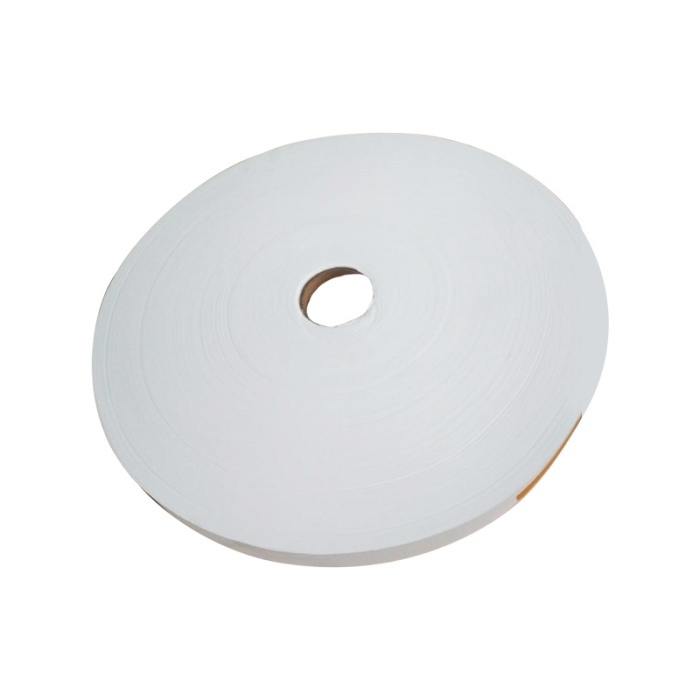
An AGM separator is a fine mat composed of microglass fibers, positioned between the positive and negative lead plates. Its functions are multifaceted and crucial:
- Electrolyte Immobilization: It absorbs and retains the dilute sulfuric acid electrolyte via capillary action, making the battery spill-proof and enabling operation in any orientation.
- Electronic Insulator: It prevents electrical short circuits by physically separating the plates.
- Ionic Conductor: Its porous structure must allow for the free flow of sulfate ions (SO₄²⁻) during charge and discharge cycles.
- Mechanical Spacer: It maintains intimate contact with the plates, supporting the plate structure and preventing active material shedding.
- Gas Recombination Facilitator: Its fine pores create a pathway for oxygen gas (evolved at the positive plate during overcharge) to travel to the negative plate, where it recombines to form water. This is the key to the AGM’s sealed, maintenance-free operation.
The performance and longevity of the entire battery system are intrinsically tied to how well the separator fulfills these roles under specific operating conditions.
Divergent Worlds: Deep Cycle vs. Starter Battery Applications
To choose the right separator, one must first appreciate the radically different operational profiles of deep cycle and starter batteries.
Starter, Lighting, Ignition (SLI) Batteries:
- Primary Function: Deliver a very high current burst (Cold Cranking Amps – CCA) for a short duration (seconds) to start an engine.
- Duty Cycle: Shallow discharges (typically 1-5% of capacity) followed by immediate recharge from the vehicle’s alternator.
- Stress Profile: High instantaneous current, high plate surface area, thin plates for maximum current flow. The primary failure modes are grid corrosion and positive active material softening/shedding due to constant micro-cycling and overcharge in automotive voltage systems.
Deep Cycle Batteries (e.g., for Renewable Energy, UPS, Marine Trolling, Golf Carts):
- Primary Function: Provide a steady, moderate current over a long period, discharging a significant portion of its capacity (Depth of Discharge – DOD of 50-80%) before being recharged.
- Duty Cycle: Deep, prolonged discharges followed by sustained bulk/absorption charging.
- Stress Profile: Thicker, more robust plates to withstand deep discharge. The primary failure modes are positive plate expansion/oxidation, acid stratification, and hard sulfation if left in a partially charged state. The battery experiences significant physical and electrochemical strain with each cycle.
These opposing profiles demand distinct separator characteristics.
Key Separator Properties and Their Application-Specific Optimization
1. Porosity and Pore Size Distribution
- Definition: Porosity is the volume fraction of voids in the separator. Pore size distribution refers to the range of pore diameters.
- Deep Cycle Focus: Moderate to High Porosity with a mix of fine and larger pores. Deep cycling leads to significant volumetric changes in the active material. The separator must accommodate plate expansion without losing contact (which increases resistance). A mix of pores ensures good electrolyte retention (fine pores) while maintaining open channels for ion flow even as the structure is compressed over time. It also aids in mitigating acid stratification by facilitating some internal convection.
- Starter Focus: Very High Porosity with a uniform, fine pore structure. The priority is minimal ionic resistance for maximum cranking current. Plate expansion is less of a concern due to shallow cycling. Fine, uniform pores maximize surface area for electrolyte retention and promote extremely efficient oxygen recombination, which is critical as SLI batteries often experience mild overcharge.
- Selection Insight: A deep cycle battery separator might sacrifice a small amount of ultimate cranking performance for structural resilience, while an SLI separator prioritizes unimpeded current flow above all.
2. Fiber Composition, Diameter, and Mat Density
- Definition: AGM separators are made from borosilicate glass fibers. The blend of fiber diameters (typically ranging from 0.5 to 3 microns) and the compression of the mat determine its density (g/cm³).
- Deep Cycle Focus: Blended or slightly coarser fibers, higher mat density. A tougher, more resilient mat is required to withstand the repetitive mechanical stress of plate expansion and contraction. A higher density (e.g., 0.20-0.25 g/cm³) provides better compression resistance and plate support, prolonging life against positive plate degradation. Some separators may incorporate a small percentage of organic or polymer fibers for enhanced durability.
- Starter Focus: Fine fibers, lower mat density. A mat composed primarily of very fine fibers (<1 micron) creates a vast network of small pores, excellent for wicking and recombination. A lower density (e.g., 0.16-0.20 g/cm³) minimizes weight and cost while still providing sufficient separation for shallow-cycle applications.
- Selection Insight: Squeeze a separator sample (metaphorically or physically). One designed for deep cycle will feel more robust and springy; an SLI type may feel softer and more compressible.
3. Compression and Recovery (Anti-Sag Properties)
- Definition: The separator’s ability to withstand permanent thinning (sag) under constant pressure from the plates and cell growth.
- Deep Cycle Focus: Exceptional compression resistance and recovery is non-negotiable. As the positive plate oxidizes and expands during cycling, it exerts constant pressure. A separator that sags or compacts permanently loses contact, increasing internal resistance (causing heat and premature failure) and reducing capacity. Deep cycle separators are engineered like springs to maintain rebound.
- Starter Focus: Moderate compression resistance is sufficient. The mechanical stresses are lower. The focus is on maintaining contact for recombination rather than fighting massive plate growth.
- Selection Insight: This is arguably the most critical differentiator. Always inquire about the separator’s Compression Resistance and Permanent Set characteristics under long-term stress tests.
4. Electrolyte Retention and Wicking Rate
- Definition: The ability to hold acid and the speed at which it distributes electrolyte vertically.
- Deep Cycle Focus: High retention with moderate wicking rate. The battery must operate reliably even after being partially discharged for extended periods. Superior retention ensures active material utilization. While vertical wicking is important, the larger concern is horizontal distribution and resisting acid stratification—a condition where concentrated acid settles at the bottom, accelerating corrosion and reducing capacity.
- Starter Focus: Very high vertical wicking rate. In an automotive application, the battery must perform immediately after assembly and recover quickly from any slight electrolyte movement. Fast wicking ensures uniform acid distribution across tall, high-surface-area plates.
- Selection Insight: For stationary deep cycle batteries (like in solar), prioritize retention and anti-stratification. For automotive, prioritize fast wicking.
5. Chemical and Electrochemical Stability
- Definition: Resistance to oxidation and degradation from the high-potential, acidic environment, especially at the positive plate interface.
- Deep Cycle Focus: Extreme oxidative stability. During deep discharges and subsequent recharges, the positive plate undergoes severe chemical transformations. The separator in contact must resist oxidation from PbO₂ and high charging voltages (up to 2.45V/cell in equalization). Additives or treatments to enhance this stability are common.
- Starter Focus: High stability, but conditions are less severe. Operating voltages are generally lower, and deep discharges are rare. Standard borosilicate glass offers sufficient resistance for the expected lifespan.
Selection Guidelines and Practical Considerations
For Deep Cycle Battery Design/Manufacturing:
- Prioritize Mechanical Durability: Choose a separator with high density, high compression recovery, and possibly reinforced fiber blends. Request long-term cycle test data showing resistance to resistance growth.
- Specify for Plate Type: If using tubular or particularly thick flat plates, ensure the separator’s rebound force is rated for the expected plate group pressure.
- Consider Acid Stratification Mitigation: Some advanced separators have engineered gradient density or specific fiber layouts to promote internal electrolyte mixing.
- Don’t Over-Optimize for CCA: Accept a slightly higher internal resistance for vastly improved cycle life. The trade-off is worth it.
For Starter Battery Design/Manufacturing:
- Maximize Porosity and Minimize Resistance: Select a fine-fiber, low-density separator to achieve the highest possible CCA and RCA (Reserve Capacity) numbers for a given plate design.
- Ensure Rapid Wicking: This is critical for production line efficiency and initial battery performance.
- Focus on Cost-Efficiency: Since the market is fiercely competitive, the separator must meet performance benchmarks at the lowest possible cost. Standard fine-fiber AGM is typically adequate.
- Verify Recombination Efficiency: This ensures the battery remains maintenance-free under typical automotive charging voltage ranges.
Cross-Application Warning (Dual-Purpose Batteries):
Many marine or RV batteries are marketed as “dual-purpose.” This represents a compromise. Their separator is often a mid-range design—better than a pure SLI separator but not as robust as a true deep-cycle separator. For users with demanding deep-cycle needs, a true deep-cycle battery (and thus, a deep-cycle separator) is always superior.
Conclusion
The AGM separator is the unsung hero that enables the battery to meet its design intent. The dichotomy between deep cycle and starter applications creates a parallel dichotomy in separator engineering. Choosing the right AGM separator is not about finding the “best” one in a universal sense, but about finding the optimal match for the electrochemical and mechanical stress profile of the battery.
- For Deep Cycle applications, the mantra is “resilience over minimal resistance.” Select a separator built like a shock absorber—one that prioritizes compression recovery, oxidative stability, and long-term structural integrity to endure the punishing world of deep discharge.
- For Starter (SLI) applications, the mantra is “conductivity and efficiency above all.” Select a separator that acts like a superhighway for ions—maximizing porosity and wicking to deliver explosive power and efficient recombination.
By moving beyond viewing the separator as a simple component and instead recognizing it as a performance-defining subsystem, battery manufacturers, integrators, and sophisticated end-users can make informed decisions that optimize longevity, reliability, and value for the specific task at hand. Always engage with your separator supplier, providing detailed application parameters, and request application-specific test data to validate the choice.
Post time: Dec-11-2025