
The global tobacco industry operates within one of the most tightly regulated manufacturing environments in the world. For cigarette paper manufacturers—producers of tipping paper, filter plug wrap, and cigarette paper itself—compliance with international standards is not merely a bureaucratic exercise but a fundamental prerequisite for market access. Among the most critical regulatory frameworks are the International Organization for Standardization (ISO) technical specifications and the U.S. Food and Drug Administration (FDA) requirements for food-grade materials.
China has emerged as the dominant global force in cigarette paper production, with companies like Mudanjiang Hengfeng Paper Co., Ltd. commanding a 22.16% global market share and serving major international tobacco giants including Philip Morris International, British American Tobacco, and Japan Tobacco International . This position of market leadership has compelled Chinese manufacturers to develop sophisticated compliance capabilities that meet—and in some cases exceed—the stringent requirements of international regulators. This article examines how Chinese cigarette paper manufacturers are navigating the complex landscape of ISO and FDA compliance standards.
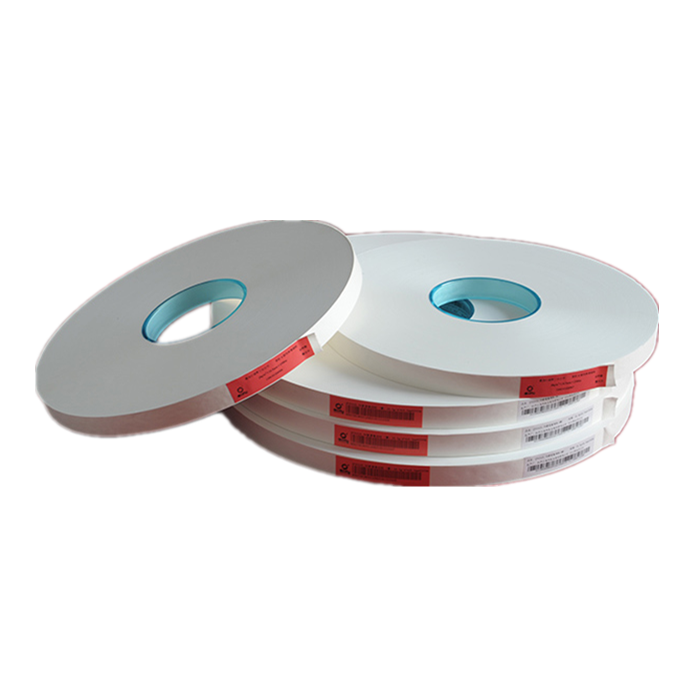
Understanding the Core Compliance Standards
ISO Standards for Cigarette Paper
The ISO framework for cigarette paper materials centers on several key technical specifications. The most fundamental is ISO 2965, which governs the determination of air permeability—a critical property that affects cigarette burn rate and smoke composition . This standard applies to materials used as cigarette papers, filter plug wrap, and filter joining paper, including materials with discrete or oriented permeable zones and materials with bands of differing permeability .
China has aligned its national standards with ISO requirements. GB/T 23227-2018, the national standard for cigarette paper materials, specifies the same air permeability determination methods as ISO 2965 . This harmonization means Chinese manufacturers are essentially operating under the same technical benchmarks as their competitors in Europe, Japan, and the Americas. Additional ISO-related standards address other critical parameters including tensile strength, bursting strength, and whiteness .
FDA Compliance Requirements
For manufacturers exporting to the United States, FDA compliance is mandatory. The FDA regulates cigarette paper and related materials as food-contact substances or, in some interpretations, under the agency’s tobacco product authority. The key requirement is that materials must not introduce harmful substances into the tobacco product and must be manufactured under current Good Manufacturing Practices (cGMP).
Chinese manufacturers have responded by seeking direct FDA certifications for their products. Industry listings commonly cite “FDA-approved” or “FDA-certified” specifications, indicating that materials have been formulated and tested to meet U.S. standards for safety . This includes confirmation that materials are non-toxic, odorless, and suitable for food-grade applications . In practice, this often means using 100% virgin wood pulp, avoiding heavy metals in inks and coatings, and ensuring that all chemical additives are on approved lists .
Technical Capabilities Driving Compliance
Advanced Quality Control Systems
Meeting ISO and FDA standards requires sophisticated quality control systems throughout the manufacturing process. Chinese manufacturers have invested heavily in testing laboratories capable of measuring key parameters with precision. The primary testing categories include:
- Physical Properties: Tensile strength (MD tensile strength ≥1.2 kN/m), bursting strength (≥98%), and thickness consistency .
- Optical Properties: Whiteness (≥83%) and opacity .
- Functional Properties: Air permeability (as specified by ISO 2965), moisture resistance, and anti-curl characteristics .
- Safety Properties: Absence of toxic substances, compliance with food-grade requirements, and appropriate pH levels .
Many manufacturers have achieved ISO 9001 (quality management) and ISO 14001 (environmental management) certifications alongside FDA recognition . These certifications provide independent validation of compliance systems and are frequently highlighted in product marketing and export documentation.
Material Science Innovations
Chinese manufacturers have developed technical expertise in several areas critical to both compliance and product performance:
Permeability Control: ISO 2965 standards require precise control of air permeability, which varies according to cigarette design requirements. Chinese producers have mastered manufacturing techniques—including mechanical perforation and specialized coating—to achieve targeted permeability values with minimal variation .
Virgin Pulp Sourcing: Many Chinese manufacturers emphasize the use of 100% virgin wood pulp in their products . This approach helps ensure product purity and consistency while avoiding contaminants that could trigger FDA compliance issues.
Coating Technologies: Cigarette tipping paper often requires specialized coatings—whether for appearance (gravure printing, hot stamping), functional purposes (wax coatings for moisture protection), or both. Chinese manufacturers have developed expertise in coatings that meet FDA requirements while delivering the aesthetic properties demanded by international tobacco brands .
Industry Consolidation and Compliance Infrastructure
Strategic Mergers
A significant development in the Chinese cigarette paper industry has been the strategic consolidation that enhances compliance capabilities. Hengfeng Paper’s acquisition of Sichuan Jinfeng Paper Co., Ltd. (completed in February 2026) offers a case study in how industry concentration supports regulatory compliance .
This consolidation provides multiple compliance-related advantages:
- Dual-Location Manufacturing: Major international tobacco companies typically require their key suppliers to maintain production facilities in multiple regions—a “standard practice” in the industry . The Hengfeng-Jinfeng consolidation means Chinese manufacturers can meet this prerequisite while maintaining consistent quality systems across facilities.
- Standardized Quality Systems: Mergers allow the transfer of best practices in quality management and compliance documentation, creating a unified approach to meeting ISO and FDA requirements.
- R&D Investment: Larger, consolidated entities have greater resources for research and development. Hengfeng’s annual R&D expenditure reached 85 million yuan in 2024 (3.07% of revenue), supporting technical development for new product categories, including heated tobacco products (HTPs) .
Production Scale and Consistency
China’s cigarette paper industry operates at a scale that supports rigorous compliance systems. Hengfeng operates 22 production lines with an annual capacity of 270,000 tons . Other manufacturers maintain capacities ranging from 6,000 to 15,000 tons annually . This scale allows manufacturers to:
- Maintain dedicated quality assurance teams with specialized expertise
- Invest in advanced testing equipment
- Implement comprehensive documentation systems required for FDA compliance
- Achieve consistent product quality through process control
Emerging Challenges and Future Directions
Heated Tobacco Products
The rapid growth of the heated tobacco product (HTP) market—from US$1.38 billion in 2016 to US$38.4 billion in 2024—has created new compliance challenges . HTP products require more paper components than traditional cigarettes, including specialized base paper, sealing paper, anti-permeability forming paper, and spiral hollow tube paper .
These materials require distinct functional properties—high absorbency, thermal conductivity, flame retardancy, or anti-permeability—that demand new formulations and testing protocols. Chinese manufacturers, particularly Hengfeng, have invested in dedicated product lines for HTP applications . Compliance with ISO and FDA standards for these new product categories requires ongoing adaptation of testing methods and material specifications.
Evolving Regulatory Landscapes
Both ISO standards and FDA requirements continue to evolve. The ISO 2965 standard has been updated multiple times, with the 2019 version representing the current state of technical requirements . Chinese manufacturers must stay current with these changes, a task facilitated by the harmonization of Chinese national standards with ISO specifications.
For FDA compliance, the regulatory environment for tobacco products remains dynamic. Chinese manufacturers exporting to the U.S. must monitor changes in FDA requirements for tobacco product materials and adjust their compliance systems accordingly.
Conclusion
Chinese cigarette paper manufacturers have developed comprehensive systems for meeting ISO and FDA compliance standards, driven by both market necessity and strategic investment. Through alignment of national standards with ISO specifications, pursuit of independent certifications including FDA approval, and consolidation that enables scaled quality management, Chinese producers have established themselves as reliable suppliers to the global tobacco industry.
The industry’s continued success in international markets depends on maintaining this commitment to compliance while adapting to emerging product categories and evolving regulatory requirements. China’s cigarette paper manufacturers have demonstrated the technical capabilities and infrastructure necessary to meet this challenge, positioning themselves as the dominant force in global cigarette paper supply well into the future.

Post time: Aug-13-2026


