
In the quest for reliable and long-lasting energy storage, the Valve-Regulated Lead-Acid (VRLA) battery has emerged as a dominant force across industries—from automotive Start-Stop systems to telecommunications and uninterruptible power supplies (UPS). Central to the performance and longevity of these batteries is a component often overlooked: the Absorptive Glass Mat (AGM) separator. While its primary function is to prevent electrical short circuits between the positive and negative plates, its mechanical properties—specifically wet-elasticity—are the unsung heroes in preventing premature capacity loss and extending cycle life.
This article delves into the science of AGM separator wet-elasticity, exploring how this critical characteristic preserves battery performance under the rigors of repeated charge-discharge cycles and challenging operational conditions.
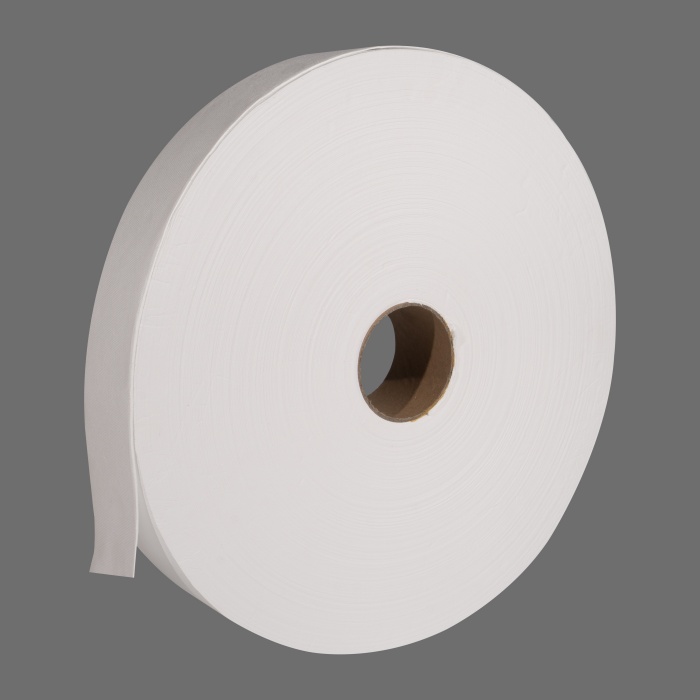
The Dual Role of the AGM Separator
The AGM separator is a highly porous non-woven mat composed of micro-fine glass fibers. In a VRLA battery, it serves two vital purposes simultaneously:
- Ionic Conduction: It acts as a sponge, absorbing and retaining the electrolyte (sulfuric acid) within its micro-porous structure, providing the ionic pathway necessary for the electrochemical reactions.
- Mechanical Support: It maintains a fixed distance between the electrodes, even under the compressive forces applied during battery assembly.
This second function is where wet-elasticity becomes paramount. The separator is not merely a passive spacer; it is an active mechanical component engineered to exert a consistent compressive force on the electrode plate stack throughout the battery’s operational life .
Understanding Wet-Elasticity: More Than Just Spring-Back
Wet-elasticity, also known as wet resilience, is the ability of the AGM separator to recover its thickness and maintain its compressive force after being compressed in a wet state (i.e., after absorbing the electrolyte). This is a distinct property from dry-elasticity, as the presence of acid and water significantly alters the behavior of the glass fiber network.
When a battery is assembled, the plate stack is subjected to a specific assembly pressure. This pressure compresses the AGM separator. After the battery is filled with acid, the separator must maintain a significant portion of this compressive force. This force is critical for:
- Maintaining Plate Contact: Ensuring continuous and low-resistance electrical contact between the separator and the electrodes.
- Accommodating Volume Changes: During charging and discharging, the active materials in the positive and negative plates undergo volume expansion and contraction. Wet-elasticity allows the separator to absorb these dimensional changes, maintaining constant pressure and preventing the plates from losing intimate contact.
The Mechanisms of Capacity Loss
To appreciate how wet-elasticity prevents capacity loss, it is necessary to understand what happens when it fails. The primary failure modes related to compression loss are:
- Premature Capacity Loss Type 2 (PCL2): This is a specific failure mode associated with the degradation of the positive active material. When the compressive force from the AGM separator is insufficient, the positive active material expands and loses its structural integrity, leading to a rapid decline in capacity .
- Increased Internal Resistance: A loss of compression increases the distance between the plates and the separator interface, directly increasing the internal resistance of the battery. Higher resistance translates to lower voltage under load and reduced energy efficiency.
- Active Material Shedding: In severe cases, insufficient pressure allows the active material on the plates to vibrate or shed, leading to short circuits or a permanent loss of electrochemically active material .
- Electrolyte Starvation and Dry-Out: As the separator loses compression, its pore structure can change, potentially reducing its ability to hold the electrolyte. In a sealed VRLA battery, this can contribute to “dry-out,” where the internal resistance increases to a point of failure .
How Wet-Elasticity Prevents These Failures
The wet-elasticity of the AGM separator directly counteracts these failure mechanisms through a combination of physical and structural properties.
1. Maintaining a Robust “Acid Bridge”
For the electrochemical reaction to occur efficiently, a continuous network of electrolyte must bridge the positive and negative plates. The compressive force maintained by a resilient AGM separator ensures that the plate surfaces are in intimate contact with the electrolyte-saturated mat. This reduces the diffusion path for ions and maintains a low electrical resistance. As one study notes, the separator maintains “the elastic characteristics under a defined level of compression force with the plates of the electrodes,” which is key to enhancing cycle life .
2. Accommodating Active Material Volume Changes
During the discharge of a lead-acid battery, lead dioxide (PbO₂) on the positive plate is converted to lead sulfate (PbSO₄), which has a larger molar volume. This causes the positive plate to expand. Upon charging, the lead sulfate is converted back to PbO₂, and the plate contracts. This cyclical “breathing” of the electrodes is a primary source of mechanical stress.
An AGM separator with excellent wet-elasticity acts as a dynamic buffer. When the plate expands, it compresses the separator further. The mat’s fiber network, held together by internal friction, stores this mechanical energy. When the plate contracts, the separator’s recovery force pushes back, ensuring that the plates remain in constant contact. This prevents the formation of gaps that would increase resistance and prevent the structural disintegration of the positive active material .
3. Mitigating Fiber Slippage and Hysteresis
The compression and recovery of an AGM separator are not perfectly elastic. There is a hysteresis loop, meaning the recovery path differs from the compression path. This is primarily due to internal friction and fiber slippage within the mat.
Advanced research has developed three-dimensional analytical models to understand this behavior. These models show that the wet-elasticity is dependent on factors like the fiber volume fraction and the orientation of fibers. A well-designed separator minimizes irreversible fiber slippage, ensuring that the recovery force is as close as possible to the initial compression force . The higher the wet durability and elastic performance, the better the battery can maintain pressure over time .
4. The Fiber Composition Factor
The composition of the AGM separator directly influences its wet-elasticity. The ratio of coarse to fine fibers is a critical design parameter. Research indicates that this ratio has a significant impact on wet resilience . Furthermore, studies on modified glass fibers have shown a direct correlation between fiber content and wet durable elastic performance. For example, separators with 10% modified glass fiber content demonstrated superior performance, maintaining higher capacity and discharge time even after 150 cycles, whereas separators with lower content began to show degradation much earlier .
The Consequence of Assembly Pressure
The benefits of wet-elasticity are only fully realized when the separator is assembled under the correct pressure. There is a delicate balance:
- Too High Pressure: Excessive assembly pressure reduces the porosity of the separator, decreasing its ability to absorb acid and slowing down the oxygen recombination cycle (a critical process for VRLA battery operation) .
- Too Low Pressure: Insufficient pressure fails to activate the separator’s elastic potential. It can lead to poor plate contact, active material shedding, and ultimately, premature capacity loss .
The optimal pressure range is designed to leverage the separator’s wet-elasticity to its maximum potential, ensuring that the separator can exert its “wet force” adequately while maintaining the necessary porosity for oxygen diffusion and ionic flow .
Conclusion
The wet-elasticity of the AGM separator is a fundamental property that ensures the reliability and longevity of VRLA batteries. It is not merely about returning to an original shape but about maintaining a consistent and critical compressive force on the electrode plates over thousands of cycles.
By preventing the loss of intimate plate contact, accommodating the inevitable expansion and contraction of active materials, and managing the internal stresses of the fiber network, wet-elasticity directly thwarts the primary mechanisms of premature capacity loss, such as PCL2 and increased internal resistance.
For battery manufacturers and end-users, understanding this critical relationship is key to designing high-performance batteries and selecting the right technology for demanding applications. The continued refinement of AGM separator materials—optimizing fiber ratios and employing modified glass fibers—will remain a cornerstone of extending battery cycle life and delivering dependable power for the future .
Post time: Aug-20-2026


