
In the evolving landscape of energy storage, the difference between a battery that lasts five years and one that fails within eighteen months often comes down to components that users never see. Among these unsung heroes, the Absorbent Glass Mat (AGM) separator stands out as the critical interface between chemistry and practicality. While battery manufacturers frequently tout plate thickness, grid alloys, and active material density, the separator’s ability to absorb and retain electrolyte—its liquid absorption capacity—is arguably the single most influential factor in determining long-term endurance, especially in cyclic and high-vibration applications. For engineers, fleet managers, and end-users alike, understanding why high liquid absorption in AGM separators matters is not merely an academic exercise; it is the key to unlocking superior performance, extended service life, and lower total cost of ownership.
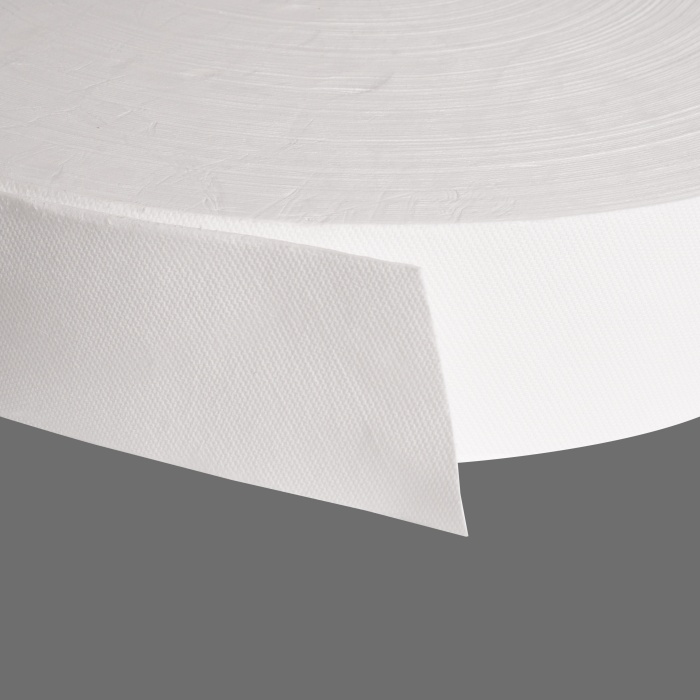
The Anatomy of an AGM Separator
To appreciate the importance of liquid absorption, one must first understand what an AGM separator is and how it functions within a valve-regulated lead-acid (VRLA) battery. Unlike traditional flooded batteries where the electrolyte flows freely, AGM technology immobilizes the sulfuric acid solution within a microfiber glass mat. This mat, typically composed of borosilicate or soda-lime glass fibers with diameters ranging from 0.5 to 3 microns, is manufactured through a wet-laid papermaking process. The resulting structure is a highly porous, three-dimensional network that serves three primary functions: electrical insulation between positive and negative plates, a reservoir for the electrolyte, and a pathway for oxygen recombination.
However, not all AGM separators are created equal. The critical differentiator lies in the fiber diameter distribution, the degree of refining, and the final pore structure. A separator with superior liquid absorption does not simply soak up more acid; it retains that acid under pressure, maintains uniform distribution across the entire plate surface, and ensures that the electrochemical reactions have uninterrupted access to ionic species. This is where the concept of “liquid absorption” transcends a mere milliliter-per-gram statistic and becomes a dynamic performance metric.
The Physics of Absorption: Capillary Action and Pore Architecture
At its core, liquid absorption in an AGM separator is governed by capillary action, which is dictated by the Young-Laplace equation. The smaller the pore radius, the higher the capillary rise, and consequently, the greater the wicking ability. However, this is a double-edged sword. While very fine pores generate strong capillary forces, they also increase electrical resistance and can impede the movement of larger hydrated ions. Conversely, overly large pores reduce surface tension effects and allow electrolyte to drain away under gravity or vibration. High-quality AGM separators strike an exquisite balance through a bimodal pore size distribution—a combination of micro-pores for strong capillary retention and macro-pores for rapid ionic transport.
High liquid absorption is therefore not about total porosity alone, though that is a contributing factor. It is about the effective pore volume that remains filled with electrolyte under operational stress. A separator may boast 92% porosity, but if the pore structure is irregular or if the fiber surface lacks the appropriate silanol groups for acid wetting, the practical absorption will fall short. The best separators achieve absorption values of 95% or higher of their own weight in sulfuric acid, with specific gravity adjusted to the battery’s design. This high absorption ensures that even when the battery is tilted, subjected to road vibrations, or operated at extreme angles, the electrolyte remains securely held in intimate contact with the active material.
Direct Impact on Endurance: The Recombination Cycle
Perhaps the most compelling argument for high liquid absorption lies in the oxygen recombination cycle, which is the defining feature of AGM VRLA batteries. During charging, particularly in the final stages, oxygen evolves from the positive plate. In a flooded battery, this gas escapes into the atmosphere, leading to water loss. In an AGM battery, the oxygen must travel through the separator’s pore network to reach the negative plate, where it recombines with hydrogen to form water, thereby completing the internal cycle and minimizing electrolyte depletion.
Here, liquid absorption directly dictates the recombination efficiency. If the separator is saturated to excess—a condition known as “flooded” in AGM terms—oxygen diffusion is severely hindered because the gas must navigate through liquid-filled pathways. If the separator is too dry, internal resistance skyrockets, and the negative plate becomes polarized. The ideal state, which high-absorption separators facilitate, is a “starved” condition where the separator holds the electrolyte at approximately 90-95% of its total pore volume, leaving a network of interconnected void spaces for gas transport. This delicate balance is only achievable when the material has both high overall absorption and precise control over pore geometry. A separator with substandard absorption inevitably leads to one of two failure modes: acid stratification (where electrolyte pools at the bottom) or dry-out at the top of the plates, both of which accelerate capacity fade and shorten cycle life.
Thermal Management and Acid Stratification
Temperature is the great enemy of battery endurance. For every 10°C rise above 25°C, the corrosion rate of the positive grid roughly doubles, and self-discharge accelerates. High liquid absorption contributes to thermal stability in two significant ways. First, the electrolyte itself has a high specific heat capacity, and a well-saturated separator ensures that this thermal mass is distributed uniformly across all plates. Hot spots, which are often the precursors to thermal runaway, are mitigated when the acid is evenly held and cannot migrate away from high-current-density areas. Second, the absorbed electrolyte serves as a medium for convective heat transfer, even in a nominally immobilized system. The microscopic pumping action caused by charge-discharge cycling induces subtle acid movement, which helps equalize temperature gradients.
Acid stratification, a phenomenon where higher-density acid sinks to the bottom of the cell while lower-density acid rises to the top, is a notorious failure mechanism in flooded and poorly designed AGM batteries. It leads to heterogeneous reactions—over-discharge at the bottom and under-utilization of active material at the top. High-absorption AGM separators with excellent wicking properties counteract stratification by ensuring that acid density remains uniform throughout the separator’s height. The continuous capillary forces pull fresh acid from the reservoir as needed, while the tortuous path of the fiber network discourages gravitational segregation. In practice, batteries equipped with premium AGM separators exhibit 20-30% more uniform current distribution, which directly translates to higher usable capacity over hundreds of cycles.
Mechanical Integrity and Vibration Resistance
In automotive, marine, and off-grid renewable applications, batteries are subjected to relentless mechanical shock and vibration. These forces can cause the separator to compress, the active material to shed, and—most critically—the electrolyte to be expelled from the mat. When a separator has low liquid absorption, vibration causes the acid to pool at the bottom of the cell, exposing the upper portions of the plates to dry conditions. This leads to irreversible sulfation, where lead sulfate crystals grow and harden, effectively blinding the active surface.
High liquid absorption is intrinsically linked to the mechanical resilience of the fiber network. Premium AGM separators use a blend of fine and coarse fibers, often with an additional binder resin that cross-links the matrix. This structure not only provides high absorption but also retains that absorbed liquid under compressive loads. In rigorous testing per standards such as IEC 60095-2 or SAE J2801, batteries with high-absorption separators demonstrate significantly less capacity loss after vibration exposure. The fibers act like a sponge that not only holds water but also rebounds elastically to maintain contact pressure between plates and separator, ensuring that the electrolyte film remains unbroken even under duress.
Cycle Life and Deep Discharge Performance
The true testament to a battery’s endurance is its cycle life, particularly under deep discharge conditions—those where the battery is regularly drawn down to 50% state of charge or lower. During deep discharge, the acid concentration inside the pores of the positive plate drops sharply because lead sulfate formation consumes sulfate ions. If the separator cannot rapidly replenish this acid from its bulk reservoir, the local concentration falls below critical thresholds, leading to premature sulfation and capacity loss.
High liquid absorption ensures that there is a sufficient reserve of acid within the separator’s pore volume to maintain ionic conductivity even at low states of charge. Moreover, during the subsequent recharge, the absorbed electrolyte facilitates the rapid dissolution of lead sulfate crystals, allowing for complete conversion back to lead dioxide and sponge lead. Batteries with standard separators often show a rapid capacity fade after 200-300 deep cycles, whereas those with high-absorption AGM separators routinely achieve 500-800 cycles in similar duty cycles. This is not a marginal improvement; it is a transformative difference that enables AGM batteries to compete effectively with lithium-ion in certain stationary and cycling applications, at a fraction of the cost.
Reduced Internal Resistance and High-Rate Discharge
While endurance is often associated with long, slow drains, it also encompasses the ability to deliver high bursts of current without catastrophic voltage collapse. In applications like engine starting, uninterruptible power supplies (UPS), and electric vehicle cranking, the battery must sustain current densities of 100-200 A per 100 Ah of capacity. Under these conditions, ohmic losses within the separator become dominant. The ionic resistance of the electrolyte is directly proportional to the path length (tortuosity) and inversely proportional to the cross-sectional area available for conduction.
A separator with high liquid absorption does not necessarily have lower intrinsic resistance, but it ensures that all available pores are filled with conductive acid. Dry spots or partially filled pores act as resistive islands, creating non-uniform current distribution and localized heating. Over time, these hotspots accelerate grid corrosion and separator oxidation. High-absorption separators guarantee that the entire plate face is electrochemically active, thereby lowering the effective internal resistance and reducing the energy lost as heat. This, in turn, improves both the instantaneous cranking performance and the long-term endurance by avoiding thermal stress cycles.
Manufacturing Consistency and Quality Control
Another often-overlooked aspect of high liquid absorption is its role as a proxy for overall separator quality. Achieving consistent absorption from roll to roll, and from batch to batch, requires exceptional control over fiber refining, slurry consistency, and drying profiles. Manufacturers who invest in high-absorption formulations invariably invest in tighter process controls. This translates to batteries with less unit-to-unit variation—a critical factor for system designers who rely on predictable performance. When every battery in a fleet exhibits the same capacity, internal resistance, and self-discharge rate, maintenance schedules can be optimized, and premature failures become exceptions rather than the norm.
Economic Implications: Total Cost of Ownership
Ultimately, the importance of high liquid absorption is crystallized in economic terms. A battery that endures 600 cycles instead of 300 effectively halves the capital expenditure per cycle. For a telecommunications tower operating in a remote area, reducing battery replacements from every two years to every four years saves not only the cost of the batteries themselves but also the logistics, installation, and disposal fees. For a forklift fleet, extended battery life means fewer interruptions, higher productivity, and lower downtime. The premium paid for high-absorption AGM separators—typically 10-15% more than commodity-grade materials—is easily amortized over the first quarter of the battery’s extended life.
Future Trends and Innovations
The quest for even higher liquid absorption continues to drive innovation. Researchers are exploring nanofiber interlayers, surface-treated fibers with enhanced hydrophilic groups, and hybrid structures that combine micro-glass with synthetic polymers. Some advanced separators now incorporate antimicrobial agents to prevent organic degradation, while others employ gradient porosity that offers higher absorption on the negative side to favor oxygen recombination. As battery applications become more demanding—with higher charge rates, wider operating temperatures, and longer warranty periods—the absorption specifications will only tighten. Industry standards such as those from the Battery Council International (BCI) and the European Association of Storage Manufacturers (EUROBAT) are already moving toward higher absorption benchmarks as a precondition for certification in premium categories.
Practical Guidance for Battery Selection
For the end-user, evaluating liquid absorption is not as straightforward as checking a data sheet, because absorption values are rarely advertised. Instead, informed buyers can look for indirect indicators. Reputable battery brands will specify their AGM technology as “high-absorption” or “premium micro-fiber.” They may quote the separator’s basis weight and thickness, and they will often highlight the battery’s performance in vibration testing or cycle life reports. When in doubt, comparing the battery’s weight can be revealing—a heavier battery for the same capacity often indicates more lead and more separator mass, both of which correlate with higher absorption reserves. Alternatively, third-party test reports that measure capacity retention after accelerated aging tests provide the most reliable proxy for separator quality.
Conclusion
In summary, the liquid absorption capacity of an AGM separator is not a minor material spec; it is the foundational property upon which battery endurance is built. It governs oxygen recombination efficiency, thermal uniformity, acid stratification, vibration resistance, cycle life, and high-rate discharge capability. Without high absorption, the AGM battery loses its distinct advantages over flooded and gel technologies, reverting to a compromised middle ground. With it, the battery becomes a robust, reliable, and long-lived energy storage solution capable of meeting the toughest demands of modern industry.
As the world transitions toward more electrified and decentralized power systems, the humble AGM separator will continue to play a vital role. Its ability to hold acid tightly, yet release it readily for electrochemical reactions, is a marvel of materials engineering. The next time you evaluate a battery for your solar array, your UPS, your RV, or your fleet vehicle, remember that what lies between the plates is just as important as the plates themselves. High liquid absorption is not merely a specification—it is the silent guardian of your battery’s endurance, working tirelessly across thousands of cycles to keep the power flowing and the costs down. In the final analysis, choosing a battery with superior AGM separator technology is not an expense; it is an investment in longevity, reliability, and peace of mind.
Post time: Sep-10-2026


