
In the rapidly evolving landscape of energy storage, few components are as critical—and as often overlooked—as the battery separator. This thin membrane, typically just tens of microns thick, serves as the vital barrier between the anode and cathode, preventing electrical short circuits while allowing ionic transport essential for charge and discharge cycles. Among the various materials used for separators, polyethylene (PE) has emerged as a dominant force, bridging the gap between traditional lead-acid batteries and advanced lithium-ion systems. The journey of PE separators from their established role in automotive starting-lighting-ignition (SLI) batteries to their sophisticated applications in electric vehicles (EVs) and grid-scale storage illustrates a remarkable story of materials engineering and adaptability.
Polyethylene microporous separators have become the industry standard because they provide an optimal balance of ionic conductivity, puncture resistance, and cost-effectiveness. As battery chemistries have diversified and performance demands have intensified, PE separators have evolved through material innovations—including the use of ultra-high molecular weight polyethylene (UHMWPE), ceramic coatings, and multilayer structures—to meet the challenges of each application.
The Foundation: PE Separators in Lead-Acid Batteries
The story of PE separators begins in the lead-acid battery industry, where they have been the workhorse for decades. Lead-acid batteries, despite being one of the oldest rechargeable battery technologies, remain indispensable for automotive starting applications, uninterruptible power supplies (UPS), and backup power systems. In these batteries, the separator must withstand highly acidic environments while maintaining structural integrity over thousands of cycles.
Polyethylene separators for lead-acid batteries are typically manufactured through a wet process that incorporates microporous silica as a critical component. The silica serves multiple functions: it creates the micropore structure essential for electrolyte uptake, provides structural support, and influences the separator’s acid absorption properties. The oil absorption and particle distribution of the silica are particularly important parameters, as they directly affect porosity, pore-size distribution, and electrical resistance.
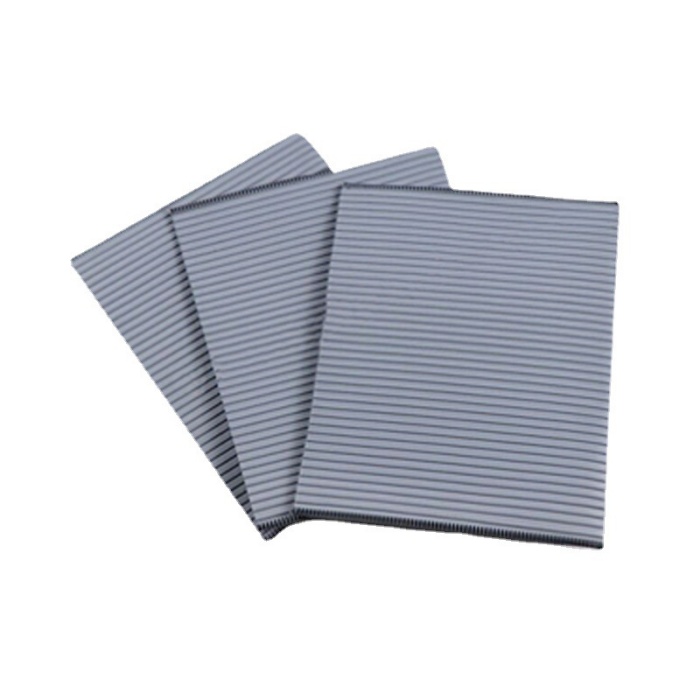
A distinctive feature of lead-acid PE separators is their ribbed profile. These ribs, which run in the machine direction on the side facing the positive electrode, serve to separate the separator from the electrode plate, creating gas channels that allow oxygen and hydrogen to escape during overcharge conditions. Some designs also incorporate cross-machine direction ribs on the negative electrode side to retard acid stratification—a phenomenon that can significantly reduce battery performance and lifespan.
The material of choice for these separators is often UHMWPE, which offers exceptional chemical stability, tensile strength, puncture resistance, and dielectric strength with tight specifications. The high molecular weight of UHMWPE provides the durability needed to withstand the repeated expansion and contraction of electrode plates during charge-discharge cycles, as well as the mechanical stresses encountered in automotive applications where vibration is a constant factor.
The Transition: PE Separators in Lithium-Ion Batteries
As the world shifts toward electrification, the demands placed on battery separators have intensified dramatically. Lithium-ion batteries, which power everything from smartphones to electric vehicles, require separators with properties that differ significantly from those needed in lead-acid systems.
In lithium-ion cells, the separator must maintain its integrity in organic electrolytes rather than aqueous acids. It must also provide a thermal shutdown mechanism to prevent thermal runaway—a critical safety feature given the high energy densities of modern lithium-ion batteries. Polyethylene’s relatively low melting point (approximately 130°C) is actually advantageous in this context, as it enables the separator’s pores to close at elevated temperatures, shutting down ionic transport and preventing catastrophic failure.
The transition from lead-acid to lithium-ion applications has driven significant innovations in PE separator technology. UHMWPE grades designed specifically for lithium-ion separators offer outstanding mechanical properties, excellent chemical resistance, and high melt strength. These properties are essential for the thin separators (often 10-25 microns thick) used in high-energy-density cells, where even minor defects can lead to internal short circuits.
Advanced Designs: Multilayer and Coated Separators
One of the most significant developments in PE separator technology has been the emergence of multilayer structures. These designs combine the benefits of different polymers to achieve performance characteristics that cannot be obtained from a single material.
A common configuration is the PE/PP/PE trilayer structure, where polypropylene (PP) provides mechanical strength and thermal stability (with a melting point of 165°C), while the outer PE layers offer lower coefficient of friction for improved handling during cell winding and the crucial thermal shutdown function. The PE layers can melt and close their pores at lower temperatures than PP, providing an early warning system against thermal runaway while the PP core maintains structural integrity.
The configuration of these layers can be optimized for specific applications. Variations such as PE/PP/PE/PP/PE or PE/PP/PP/PE allow manufacturers to fine-tune the balance of shutdown temperature, mechanical strength, and processing characteristics. The use of PE as the outer layer is particularly advantageous for web handling during manufacturing, reducing wrinkling and creasing issues that can affect production yields.
Ceramic Coatings: Enhancing Performance and Safety
As lithium-ion batteries push toward higher energy densities and faster charging rates, PE separators have been enhanced with ceramic coatings that address their limitations. The thermal shrinkage of polyolefin separators—which can reach 10% when exposed to 120°C for just 10 minutes—poses a significant safety concern. When a separator shrinks, it may expose the electrodes to each other, causing internal short circuits and potentially thermal runaway.
Ceramic coatings address this issue by providing thermal support and mechanical reinforcement. Various coating materials have been developed, each offering unique benefits. LLTO (lithium lanthanum titanate) ceramic coatings, for example, provide structural Li+ ions and three-dimensional channels that homogenize lithium-ion flux and improve wettability, suppressing dendrite growth. Cells using LLTO-coated PE separators have demonstrated specific capacities of approximately 105.6 mAh/g with 80% capacity retention after 500 cycles at 1C.
Graphene oxide (GO) coatings represent another promising approach. The 2D ceramic-like layer provides high modulus and thermal stability, redistributing current and stabilizing the electrode interface. GO-coated PE separators have demonstrated suppressed dendrite growth, long-term cyclability measured in thousands of hours, and maintained thermal stability even after exposure to 100°C temperatures.
Composite coatings incorporating lithium-ion conducting glass-ceramic fillers in a PEO/LiTFSI matrix have also shown excellent results. These coatings create a composite buffer layer that stabilizes lithium deposition and dissolution while lowering interfacial resistance. The result is improved cycling performance with denser, more uniform lithium surfaces after cycling compared to bare PE separators.
Emerging Applications: Flow Batteries and Beyond
The versatility of PE separators extends beyond traditional lead-acid and conventional lithium-ion batteries. Recent research has demonstrated the potential of PE separators in vanadium redox flow batteries (VRFBs), a technology gaining prominence for grid-scale energy storage.
PE separators offer significant cost advantages over the high-cost Nafion membranes traditionally used in VRFBs, while providing negligible protonic resistance. The challenge has been the severe vanadium ion crossover through the micron-sized pores of standard PE separators, which reduces coulombic efficiency and increases self-discharge.
A novel thermal treatment approach has been developed to address this issue. By exposing PE separators to temperatures between 130°C and 250°C, the porous network can be modified to reduce pore size and vanadium permeability. BET analysis shows that both surface area and pore volume decrease with increasing treatment temperature. The vanadium ion permeability of pristine PE separators (217 × 10⁻⁷ cm²/min) was reduced significantly to 9 × 10⁻⁷ cm²/min for separators treated at 170°C.
The results are impressive: PE separators heated at 170°C exhibited a maximum self-discharge time of 94 hours, compared to 70 hours for commercial Nafion 117 membranes and just 24 hours for pristine PE separators. Columbic efficiency reached up to 99% at 80 mA/cm², and VRFB cells equipped with PE-140 separators demonstrated optimum performance in capacity retention, coulombic efficiency, and energy efficiency (70%).
Market Trends and Future Outlook
The battery separator market is entering a phase defined by safety, scale, localization, and digital manufacturing. As electric vehicle deployment accelerates and grid storage capacity expands, separator quality has become a decisive factor in battery reliability, charging behavior, thermal management, and lifecycle performance.
Polyethylene microporous separators dominate the market across both lead-acid and lithium-ion battery chemistries, and this dominance is expected to continue. The Asia-Pacific region leads in manufacturing scale and EV deployment, while North America and Europe are rapidly expanding domestic production capacity through policy initiatives and supply-chain investments.
Industry leaders are focusing on automotive-grade qualification, coating innovation, and regionally diversified production. Separator suppliers that can deliver low defect rates, stable thickness, high wettability, thermal shutdown performance, puncture resistance, and ceramic-coated safety features are positioning themselves for EV and energy storage contracts.
The trend toward thinner separators and higher capacities continues, driven by demand for increased energy density. UHMWPE technology is central to meeting these requirements, providing the mechanical strength needed for thinner membranes without compromising puncture resistance or dimensional stability.
Conclusion
The journey of PE separators from lead-acid batteries to advanced lithium-ion systems exemplifies the adaptability of materials engineering. What began as a relatively simple microporous membrane for automotive batteries has evolved into a sophisticated component with tailored properties for diverse applications.
In lead-acid batteries, PE separators provide reliable service in acidic environments, with ribbed designs that manage gas evolution and acid stratification. In lithium-ion batteries, they enable high energy densities through thin profiles, thermal shutdown mechanisms, and compatibility with organic electrolytes. Multilayer structures combine the strengths of different polymers, while ceramic coatings address thermal shrinkage and dendrite formation. Emerging applications in flow batteries demonstrate the potential of thermal modification techniques to adapt PE separators for entirely new electrochemical systems.
As the energy storage landscape continues to evolve, PE separators will undoubtedly continue to adapt. The combination of low cost, established manufacturing infrastructure, and demonstrated versatility positions PE as a cornerstone material for battery separators across multiple generations of battery technology. Organizations that combine advanced membrane engineering, coating capability, and quality control will be best positioned to capture value in a market where reliability is as important as performance.
The story of the PE separator is far from complete. With continued innovation in materials science, coating technologies, and manufacturing processes, these unassuming membranes will continue to enable the safe, efficient, and reliable energy storage systems upon which our electrified future depends.
Post time: Aug-20-2026


