
In the rapidly evolving landscape of smoking accessories, brand differentiation has shifted far beyond logo design and color schemes. Today’s discerning consumer is educated, health-conscious, and increasingly skeptical of industrial manufacturing processes. They are not merely buying a product; they are buying an experience, a lifestyle, and—most critically—a promise of safety. Within this paradigm, one component often overlooked but fundamentally essential is the plug wrapping paper used in pre-roll cones and filter tips. Specifically, the distinction between standard industrial paper and food-grade plug wrapping paper has become a silent battleground for brand credibility, customer retention, and regulatory compliance.
If your brand is still treating wrapping paper as a commodity, you are leaving money on the table and, more dangerously, exposing your customers to unnecessary risk. This article explores the multifaceted reasons why food-grade plug wrapping paper is not merely a “nice-to-have” but a non-negotiable pillar for any serious smoking accessory brand operating in 2025 and beyond.
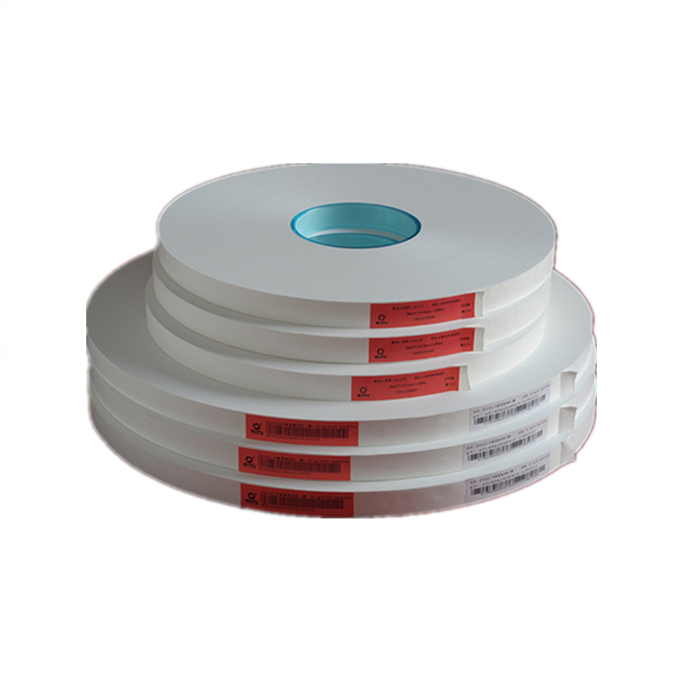
Defining the “Plug” and Its Paper
Before delving into the “why,” we must define the “what.” In the context of smoking accessories, the “plug” generally refers to the filter or tip section of a pre-roll or cigarette—specifically, the rolled paper mouthpiece that sits between the user’s lips and the combustion material. This paper is rolled tightly, often with perforations, to create a firm grip and a smooth draw.
However, unlike the outer rolling paper that burns away, the plug paper is located at the business end of the smoking experience. It is the final point of contact. It sits in the user’s mouth, interacts with saliva, and is subjected to the heat and suction of inhalation. This proximity to the user’s mucosa makes its chemical composition critical. Food-grade plug wrapping paper is manufactured under strict hygiene standards, utilizing virgin fibers or specific non-toxic recycled fibers, and is processed without the use of harmful optical brighteners, heavy metals, or toxic adhesives that are often found in lower-tier industrial papers.
The Health Imperative: Beyond the “Natural” Label
The most compelling argument for food-grade paper is health safety. The smoking community has seen a massive shift toward “organic,” “unbleached,” and “additive-free” claims. Yet, many brands focus exclusively on the herb or the outer wrap, ignoring the plug.
Standard, non-food-grade papers often contain trace amounts of dioxins, polychlorinated biphenyls (PCBs), and heavy metals like lead and cadmium. These contaminants originate from bleaching processes (chlorine-based), ink residues, or recycled content sourced from mixed paper streams. When a user places this paper to their lips, moisture from saliva can leach these chemicals into the oral cavity. Furthermore, as hot air passes through the plug, volatile organic compounds (VOCs) can off-gas directly into the user’s lungs.
Food-grade certification—typically governed by FDA (U.S.) standards, EU Regulation 1935/2004, or GB standards in China—ensures that the paper passes stringent migration tests. These tests simulate saliva and heat exposure to verify that no harmful substances transfer to the user. By utilizing food-grade materials, your brand is effectively stating: “We care about your internal biology as much as you care about the taste of your product.” This is not marketing fluff; it is a tangible health promise that reduces liability and builds deep, unshakeable trust.
The Flavor Profile: Preserving the Terpenes
One of the most underrated attributes of high-quality plug paper is its impact on flavor. Terpenes, the aromatic compounds found in smoking material, are volatile and sensitive to both heat and chemical interference.
Industrial papers often retain the acrid smell of recycled pulp or chemical processing agents. When combined with heat and suction, these odors taint the incoming air stream, muddying the flavor profile of the material. A user may spend premium money on high-grade product, only to taste the “burning paper” or “chemical tang” of a cheap plug.
Food-grade paper, conversely, is manufactured to be neutral. It is processed with pure water and food-safe starches. The lack of optical brighteners (which often have a bitter taste) ensures that the user tastes the terpenes, not the packaging. For a smoking accessory brand, this translates to a superior sensory experience. If your product consistently delivers a cleaner, more authentic flavor, consumers will not just repurchase—they will evangelize. In an industry driven by word-of-mouth and social media reviews, flavor integrity is gold.
The Burn and Draw: Engineering the Experience
Functionality is just as crucial as safety. The physical properties of food-grade plug paper differ significantly from lower-grade options.
- Porosity Control: Food-grade papers require precise porosity levels to regulate the airflow. Too tight, and the draw is restricted, leading to overheating. Too loose, and the smoke is thin and unsatisfying. Premium food-grade papers utilize specialized perforation technology that ensures a consistent draw resistance, preventing “runaway burns” or uneven smoking sessions.
- Tensile Strength: Despite being thin, food-grade paper maintains high wet and dry tensile strength. It does not disintegrate or become soggy when exposed to saliva. A plug that collapses mid-session ruins the experience instantly. By investing in high-quality food-grade stock, you reduce the friction of the smoking experience, ensuring structural integrity from the first light to the final puff.
- Ash Integrity: While less visible than the main rolling paper, the ash produced by the plug matters. High-quality food-grade paper burns to a clean, white or light-gray ash, indicating complete combustion and absence of fillers. Cheap papers often leave dark, flaky ash that can break off and create a mess, projecting an image of cheapness.
Brand Positioning: The “Premium” Signal
In the crowded accessory market, price is often the first battleground. However, brands that compete on price alone are destined for a race to the bottom. Food-grade plug wrapping paper is a decision that signals premium positioning.
When consumers look at your packaging and see “Food-Grade Filter Paper” printed on the box, it immediately elevates your brand above the gas station generics. It tells a story of meticulous ingredient sourcing, akin to a chef sourcing organic vegetables. This is particularly vital for the modern “cannabis connoisseur” or the premium tobacco user who values the “whole experience.”
This premium signal is also a defense mechanism. In the social media age, unboxing is ritualistic. If a consumer opens a pre-roll and the plug paper feels flimsy, has a yellowish hue (indicative of poor bleaching), or smells of chemicals, they will photograph it and post a negative review. Conversely, a crisp, white (or naturally beige), high-tensile paper generates praise. It becomes a touchpoint of quality that consumers can feel immediately.
Regulatory Compliance and Market Access
As the legalization and regulation of smoking accessories expand globally, governments are implementing stricter controls on materials that come into contact with mucous membranes. In the European Union, for example, any paper intended for human consumption (or contact with the mouth) must comply with Framework Regulation (EC) No 1935/2004. Failure to provide documentation of food-grade standards can result in border holds, seizure of goods, and hefty fines.
Similarly, in the United States, while the FDA does not pre-approve rolling papers, they fall under the Food, Drug, and Cosmetic Act if they are intended for human use and are expected to migrate substances into food (or the mouth). Having a clear supply chain that provides a Certificate of Conformity for food-grade standards is essential for passing customs and for protecting your brand against litigation.
Think of food-grade certification as your “passport.” It allows you to export to high-value markets without friction. If you are using undocumented industrial paper, you are essentially gambling with your inventory, risking entire shipment seizures if a random customs inspection flags your product for toxic substance testing.
Sustainability: The Real Deal vs. Greenwashing
Sustainability is a major talking point, but the definition of “green” is often muddied. Many brands claim to use “recycled paper,” which sounds virtuous but can be a nightmare for food safety. Recycled papers often contain bisphenol A (BPA) from thermal receipts or mineral oils from newsprint.
Authentic food-grade plug paper addresses sustainability differently. It often utilizes Elemental Chlorine Free (ECF) or Totally Chlorine Free (TCF) bleaching processes, which minimize environmental toxin output. More advanced manufacturers are now using hemp fibers or bamboo fibers grown without pesticides, which are inherently food-safe due to their low lignin content (requiring less chemical pulping).
By choosing food-grade paper, you are moving beyond plastic-packaging bans and addressing the composition of the product itself. You are telling your consumers: “We are sustainable because we have a low environmental footprint, not because we slapped a green leaf logo on the box.” This authentic approach to sustainability resonates with Gen Z and Millennial consumers who are highly adept at spotting greenwashing.
Building a Narrative: The Customer Education Angle
Food-grade plug paper provides a rich vein of content for your marketing department. It enables educational narratives that separate your brand from the noise.
- Blog Posts: Writing about “What’s in your Filter?” creates a sense of urgency and importance.
- Video Content: Microscopy images comparing food-grade fibers vs. industrial waste fibers demonstrate visual proof of quality.
- Transparency: Publishing your certificates of analysis (COA) regarding heavy metals and migration tests builds a fortress of trust.
When you educate the market, you commoditize the competition. If your competitors cannot prove their paper is food-grade, you can frame them as “outdated” or “unsafe.” This is a powerful psychological shift that repositions your brand as the industry standard rather than just another option.
Cost-Benefit Analysis: The Hidden Costs of Cheap Paper
It is tempting to save a few cents per unit by opting for industrial paper. However, the return on investment (ROI) for food-grade paper is overwhelmingly positive when you factor in:
- Reduced Return Rate: Fewer complaints about “bad taste” or “soggy tips.”
- Enhanced Customer Lifetime Value (CLV): A satisfied customer who perceives the quality will become a repeat buyer. The cost of acquiring a new customer is typically 5–7 times higher than retaining an existing one. Saving $0.02 per unit is irrelevant if you lose a $100 CLV customer.
- Brand Equity: The intangible asset of being perceived as a “safe” and “premium” brand adds a multiplier to your valuation if you ever seek investment or acquisition.
The Future of Materials
Looking ahead, the smoking accessory industry is likely to see a convergence of technology and biology. We are moving toward “intelligent packaging” and “functional papers” infused with natural terpenes or cooling agents. However, the base substrate for these innovations must be food-grade to qualify for these additives.
Furthermore, global regulatory bodies are closing loopholes. The days of “natural” labels without third-party verification are numbered. Early adoption of food-grade standards future-proofs your supply chain. When the new legislation inevitably drops, your brand will already be compliant, while your competitors scramble to switch suppliers, potentially facing stockouts and quality-control disasters.
Conclusion
Food-grade plug wrapping paper is more than a safety precaution; it is the unsung hero of the smoking experience. It protects the user from toxic contaminants, preserves the delicate flavors of the smoking material, enhances the physical draw, and projects a sophisticated image of your brand.
For a smoking accessory brand, choosing food-grade paper is a decisive statement. It says that you respect the craft, you care for the consumer’s health, and you are invested in the longevity of your reputation. In a market where trust is scarce and sensory experience is king, the humble plug paper holds the crown.
As you evaluate your supply chain for the coming year, we urge you to scrutinize this component. Ask your manufacturer for the FDA or EU certificates. Request the migration test results. If they cannot provide them, they are not just hiding a lack of certification—they are hiding a risk you cannot afford to take.
Elevate your brand. Prioritize food-grade. Because when the smoke clears, the only thing that should remain is satisfaction, not suspicion. Your consumers deserve nothing less, and your balance sheet will thank you for the loyalty they bring.

Post time: Jul-16-2026


