
In the rapidly evolving landscape of energy storage, the pursuit of longer battery life has become the holy grail of modern engineering. From the electric vehicles that promise to decarbonize our roads to the grid-scale storage systems that will underpin renewable energy, the demand for durable, high-performance batteries is insatiable. When industry experts discuss cycle life—the number of complete charge-discharge cycles a battery can undergo before its capacity falls below 80% of its initial rating—the conversation inevitably turns to advanced anode materials, sophisticated cathode chemistries, and precision electrolyte formulations. However, buried deep within the manufacturing process, often overlooked by all but the most meticulous process engineers, lies a humble yet critical component: pasting paper. While it may not possess the electrochemical notoriety of lithium cobalt oxide or silicon-graphene composites, high-quality pasting paper plays an indispensable, multifaceted role in determining the ultimate longevity and reliability of a lead-acid battery—and, by extension, the economic viability of the systems they power.
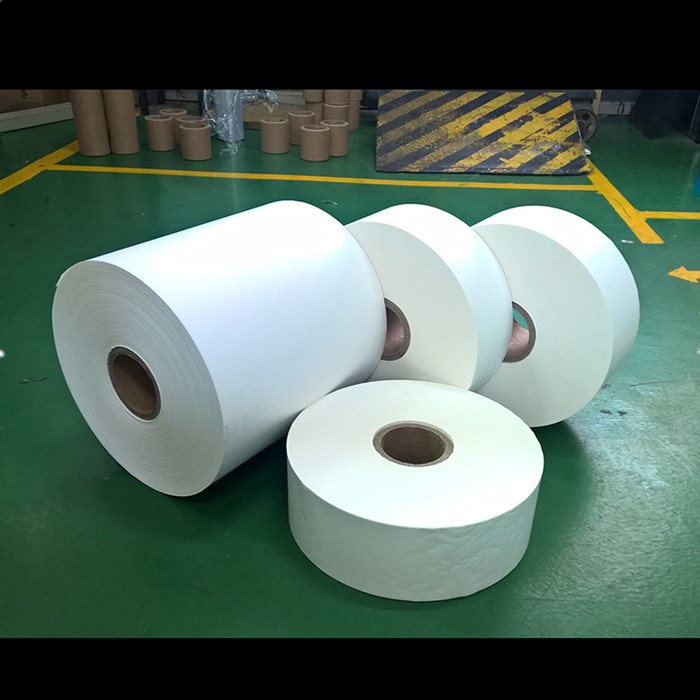
To understand the profound impact of pasting paper on cycle life, one must first appreciate its fundamental function within the lead-acid battery. The pasting paper, also known as absorbent glass mat (AGM) paper or separator paper in certain contexts, is a porous sheet that is applied directly to the surface of the positive and negative plates during the pasting process. Its primary role is threefold: to retain the active paste material against the grid, to provide a uniform interface for electrolyte distribution, and to act as a physical barrier that prevents direct contact between opposing plates while allowing ionic conduction. In the high-stakes environment of a deep-cycle battery, where repeated expansion and contraction of the active material are the norm, the integrity of this paper becomes the thin line between robust performance and premature failure.
The first and most obvious mechanism by which high-quality pasting paper extends cycle life is through superior paste retention. During the initial pasting operation, a slurry of lead oxide, sulfuric acid, water, and various expanders is mechanically applied to the lead-alloy grid. The pasting paper serves as a carrier and a foundation, ensuring that this paste adheres uniformly and stays in place during the subsequent curing, drying, and formation processes. However, the true test comes during the operational life of the battery. As the battery cycles, the active materials undergo volumetric changes. The positive plate, for instance, converts between lead dioxide (PbO₂) and lead sulfate (PbSO₄), each with different molar volumes. This constant mechanical breathing exerts significant stress on the paste structure. Low-quality pasting paper, characterized by poor tensile strength, inadequate porosity, or inconsistent fiber distribution, can tear, delaminate, or lose its adhesion. This leads to “shedding”—the gradual flaking and detachment of active material from the grid. Shedded material collects at the bottom of the cell as a conductive sludge. When this sludge builds up to the point that it bridges the plates, it causes a soft short circuit, rapidly accelerating capacity fade and ending the battery’s useful life prematurely. Conversely, a high-quality pasting paper, engineered with optimal fiber entanglement and a specialized binder system, maintains its structural cohesion through thousands of cycles. It anchors the paste securely, minimizing shedding and ensuring that the electrochemically active material remains precisely where it is needed—in close contact with the grid for efficient current collection.
Beyond mechanical retention, the architectural integrity of the pasting paper directly influences the electrochemical kinetics that underpin cycle life. In a lead-acid battery, the formation of lead sulfate during discharge is a process that must be tightly controlled. While sulfation is a normal part of the discharge reaction, the subsequent recharge must completely convert that sulfate back to lead dioxide and sponge lead. The challenge arises when large, hard-to-dissolve crystals of lead sulfate form, a phenomenon known as “hard sulfation.” This condition is irreversible in practice and progressively robs the battery of capacity and power. The prevention of hard sulfation is inextricably linked to the homogeneity of the electrolyte and the uniformity of the current density across the plate surface.
High-quality pasting paper acts as a micro-distribution manifold. Its carefully controlled pore size distribution and capillary structure ensure that the electrolyte is drawn evenly across the entire face of the plate. This uniformity is critical because localized areas of low acid concentration become nucleation sites for large, stable sulfate crystals. Furthermore, the paper’s role in maintaining a consistent, intimate contact between the separator and the plate surface ensures that the ionic resistance is minimized and uniform. When the current density is even, the lead sulfate is deposited in a fine, amorphous form that is easily re-converted to active material during charging. Cheap, variable-thickness pasting paper creates “hot spots” of high current density, which not only accelerates grid corrosion but also promotes the growth of damaging sulfate crystals. Over hundreds of cycles, this uneven sulfation accumulates, permanently blocking the pores of the active material and cutting off access to the electrolyte, thereby driving down capacity. In essence, the pasting paper is not just a passive substrate; it is an active facilitator of the proper crystallization behavior that defines a long-lived battery.
Equally important, albeit less visible, is the role of high-quality pasting paper in the formation process. The formation stage is where the cured paste is electrochemically converted into its final active form. This is a highly energetic and delicate phase. The application of high-quality pasting paper during plate manufacturing ensures that the paste has a stable platform for the transformation. Crucially, the paper’s purity is paramount. Impurities such as metallic ions (iron, copper, manganese) or organic contaminants can have a devastating catalytic effect on the formation process. They can lead to inefficient conversion, resulting in a plate with lower initial capacity and, more critically, a predisposition to faster degradation. High-quality pasting paper is manufactured to stringent purity specifications, using high-grade, chlorine-free fibers and deionized water in its production. It avoids the introduction of these parasitic elements into the electrochemical system, thereby preserving the integrity of the active material from the very first charge and setting the stage for a long and productive life.
The purity argument extends to the operational phase as well. The corrosion of the positive grid is an inevitable consequence of the electrochemical environment and is a primary determinant of cycle life. As the grid corrodes, a layer of lead dioxide forms at the grid-paste interface. In an ideal scenario, this corrosion layer is protective and conductive. However, the presence of impurities—such as those that could leach from a low-quality pasting paper—can accelerate intergranular corrosion, leading to grid growth and subsequent loss of electrical contact. A high-quality pasting paper, free from aggressive leachables, minimizes this secondary degradation pathway, allowing the corrosion mechanism to follow its natural, slower trajectory. This is especially vital for batteries used in demanding deep-cycle applications, such as in renewable energy off-grid systems or motive power for forklifts, where grid corrosion is one of the primary failure modes.
Furthermore, the thermal management aspect of pasting paper cannot be overstated. Cycle life is a strong function of operating temperature; every 10°C increase in temperature above 25°C roughly halves the life of a lead-acid battery. The heat generated during high-rate discharge and recharge must be dissipated efficiently to prevent thermal runaway and accelerated degradation. High-quality pasting paper, with its optimized fiber structure, can contribute to better thermal conductivity and more effective wicking of the electrolyte, which acts as a cooling medium. By facilitating a more uniform temperature distribution across the plate stack, it helps mitigate the localized hot spots that lead to uneven reactions and premature failure. In contrast, a dense, poorly structured pasting paper acts as a thermal insulator, trapping heat within the active material and accelerating the chemical and mechanical breakdown of the battery.
From an economic perspective, the investment in high-quality pasting paper is a story of profound return on investment (ROI). While the cost per unit of superior paper may be 10% to 20% higher than that of a commodity-grade alternative, the impact on the total cost of ownership is dramatically favorable. Consider a fleet of electric forklifts operating in a logistics center. Each battery is expected to deliver 1,500 cycles. With a low-quality pasting paper, that fleet might see a significant portion of batteries failing at 1,000 cycles due to shedding and sulfation. The capital cost of replacing those batteries early, combined with the operational downtime and labor for change-outs, is enormous. By specifying a high-quality pasting paper, the battery manufacturer or end-user ensures that the majority of those batteries reach or even exceed 1,500 cycles. The incremental cost of the better paper is a minute fraction of the avoided replacement costs. This extended life translates directly to a lower levelized cost of storage, making the entire energy system more competitive, whether it is a telecom backup power installation or a solar home system in a developing nation.
In conclusion, the role of high-quality pasting paper in extending battery cycle life is a compelling narrative of how a seemingly ancillary component can exert a decisive influence on overall system performance. It is the silent guardian of the active material, the architect of uniform electrochemical reactions, the sentinel against harmful impurities, and a critical enabler of efficient thermal management. In an industry relentlessly pushing the boundaries of energy density and power output, it is easy to be captivated by the flashy innovations in chemistry and materials science. Yet, the fundamental reliability and longevity of a battery often hinge on the consistent, unheralded performance of its basic components. Pasting paper is not just a piece of industrial fabric; it is the technical foundation that supports the entire electrochemical edifice. For battery manufacturers, engineers, and end-users who are serious about maximizing their return on energy storage assets, the choice of pasting paper is not a trivial procurement decision—it is a strategic investment in durability, dependability, and the very future of sustainable energy. By prioritizing quality in this often-neglected component, we do not just extend cycle life; we accelerate the transition to a reliable, electrified world.
Post time: Aug-20-2026


