
In the sprawling landscape of industrial manufacturing, few components carry as much responsibility with as little recognition as the Absorbent Glass Mat (AGM) separator. This thin, fibrous sheet—often just a fraction of a millimeter thick—is the quiet enabler of a revolution in energy storage. It is the critical barrier between the positive and negative plates in a valve-regulated lead-acid (VRLA) battery, determining not just the performance and longevity of the unit, but ultimately, the safety of the systems it powers.
From the start-stop technology in modern vehicles and the quiet reliability of electric forklifts to the critical backup power for data centers and telecommunications towers, the AGM separator is the unsung hero. However, the global market demands more than just a functional component; it demands reliability, consistency, and proven compliance with rigorous international benchmarks. Exporting excellence is not merely a slogan; it is a systemic, data-driven approach to manufacturing that ensures every roll of AGM separator that leaves our facility meets or exceeds the expectations of a global clientele.
The Global Standard Landscape: Navigating Complexity
For a component that is physically discreet, the AGM separator operates under a remarkably complex web of international standards. Understanding and adhering to these regulations is the first and most fundamental step in ensuring market access and customer trust. The primary benchmarks that guide our production process are:
- IEC 60896 (International Electrotechnical Commission): This is the cornerstone standard for stationary lead-acid batteries, detailing stringent tests for performance, safety, and durability. For an AGM separator, compliance with IEC 60896 implies that the material supports the battery’s ability to perform under float charge for decades in standby applications.
- SAE J240 (Society of Automotive Engineers): For the automotive sector, this standard is paramount. It dictates the life cycle performance of batteries used in starting, lighting, and ignition (SLI) applications. An AGM separator destined for a luxury SUV or a start-stop vehicle must support the high cyclic demands and rapid recharge rates stipulated by this specification.
- EN 50342 (European Standard): Governing the requirements for starter batteries in Europe, this standard sets the bar for performance at low temperatures and resistance to overcharge, two areas where the AGM separator’s specific pore structure and oxidation resistance are critical.
- BS 6290 (British Standard) and GB/T (Chinese National Standards): Recognizing the regional nuances of battery application, we also align our product with these key regional standards. For instance, GB/T 28545 specifically addresses the battery separator requirements for Chinese electric vehicles, a market we service with dedicated products.
From Raw Material to Elite Product: A Journey of Precision
The journey to a compliant AGM separator begins not in the production hall, but in the procurement of the raw materials. The base material, typically a high-purity, micro-fine glass fiber, is the DNA of the separator. We maintain a strict supplier quality program that mandates third-party certification for key attributes of the raw fiber, including chemical composition, diameter consistency, and oil content.
The production process is where this raw material is transformed into a high-performance component, and it is at this stage that our commitment to quality is most evident.
- Pulping and Formation: The glass fibers are dispersed in water to create a slurry. The precision here is critical; the uniformity of the slurry dictates the homogeneity of the final product. We utilize advanced flow control systems to ensure that the fiber suspension has the consistency required for an even web. Deviations at this stage will lead to variations in basis weight, which directly affect electrical resistance and acid absorption—two key performance indicators (KPIs).
- Wet-Laid Process and Drainage: The slurry is laid onto a moving wire mesh, where water is drained, leaving a uniform fiber mat. Our machinery is calibrated to maintain a precise manufacturing tolerance of less than ±3% for basis weight. This level of precision is essential to ensure that the final separator has the mechanical strength to withstand the winding pressures of automated battery assembly lines and the chemical resilience to resist degradation in acidic environments.
- Sintering and Drying: The mat is passed through a sintering furnace. This process fuses the fibers at their cross-over points, creating a rigid three-dimensional network. The temperature profile of the furnace is computer-controlled and continuously monitored. Too high a temperature, and the fibers become brittle and lose their ability to absorb shock; too low, and the mat lacks the necessary tensile strength to be processed without tearing.
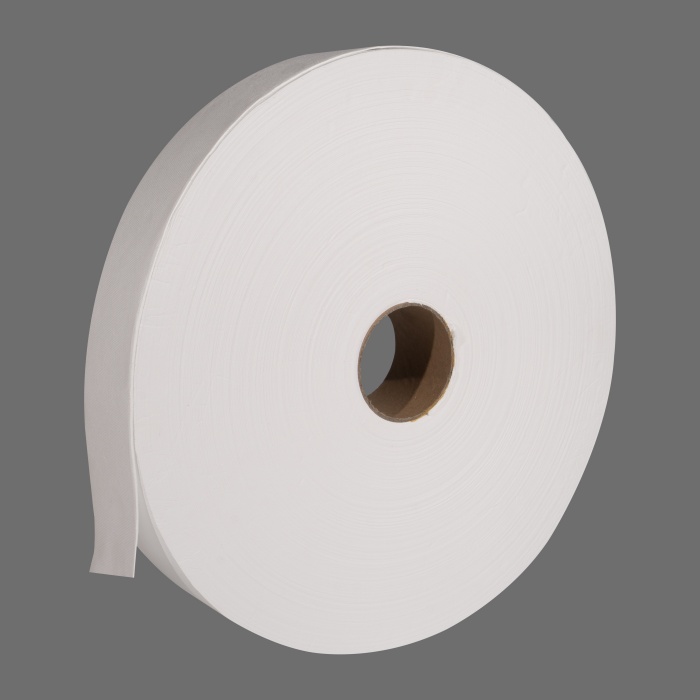
- Winding and Slitting: Finally, the continuous roll of separator is slit to customer-specified widths. Each slit edge must be clean and free of fuzz or debris to prevent shorts in the battery cell. Our state-of-the-art laser-guided slitting systems ensure a precision of ±0.5mm, delivering a product that integrates seamlessly into our clients’ automated production lines.
State-of-the-Art Quality Assurance: Testing to Destruction
Exporting excellence demands that we have a “zero-defect” mindset, which is only possible through a multi-layered quality assurance framework. Our in-house laboratory is an ISO/IEC 17025-accredited facility, housing equipment that allows us to simulate decades of battery life in a matter of weeks.
The physical and chemical properties of each batch are validated through a rigorous suite of tests, directly mirroring the protocols outlined in the international standards we pursue.
- Thickness and Density: Using laser micrometers and precision scales, we measure thickness and basis weight. These values are foundational; they determine the compression tolerance, acid volume, and ion exchange capacity of the battery.
- Puncture Strength: The separator must physically withstand the dendrite growth that occurs during battery discharge. We use a universal testing machine to apply a needle-like force to the sample until it penetrates. A high puncture strength value, typically > 3.5 N, is a non-negotiable requirement for long-life stationary batteries.
- Electrical Resistance (ER): This is arguably the most critical electrochemical property. A low electrical resistance minimizes internal energy loss and heat generation within the battery. Using a four-probe AC impedance test, we ensure the ER remains consistently below 10 mΩ·cm², safeguarding against efficiency losses.
- Oxidation Resistance: The positive plate inside a battery is a hostile environment, generating oxygen and extreme electrochemical potential. Our separators must withstand this oxidative attack. We subject samples to a high-temperature, high-voltage corrosion test in a sulfuric acid solution. The separator must pass 168 hours without showing a significant loss in tensile strength or an increase in electrical resistance.
- Wicking Height and Porosity: A key differentiator of an AGM battery is its ability to allow the electrolyte to flow through the separator’s internal pores. We measure the wicking height of the separator in a controlled acid bath. A high wicking rate (typically > 50mm/30min) and optimal porosity (> 90%) ensure that the active material of the battery is fully saturated, enabling the oxygen recombination cycle to function efficiently.
The Human Element and Process Control (Six Sigma)
While automated systems and testing equipment provide the hard data, it is the human element that truly orchestrates our commitment to excellence. Our operations are guided by Lean Manufacturing and Six Sigma principles. Our floor-level quality engineers are empowered to stop a production line if they observe a deviation from the Standard Operating Procedure, ensuring that any potential issue is rectified before it affects an entire batch.
Furthermore, we employ a rigorous Statistical Process Control (SPC) system. Key process parameters—such as furnace temperature, line speed, and slurry consistency—are charted in real-time. If the system detects a trend that is trending toward a control limit, it triggers an automatic alert, allowing our engineers to make micro-adjustments proactively. This preventative approach is the antithesis of the “inspect and reject” methodology; we prefer to “build it right the first time.”
Traceability and Documentation: The Certificate of Conformity
In an international market where liability and warranty claims are a reality, traceability is non-negotiable. For every kilogram of AGM separator we export, we can trace its production history down to the minute it was manufactured. We maintain a complete digital dossier for every roll, which includes:
- The Supplier Batch Number of the raw glass fiber.
- The specific production line and shift.
- The calibration records of the testing equipment used.
- The complete results of the physical and chemical tests performed.
This comprehensive traceability allows us to provide a detailed Certificate of Conformity (CoC) with every shipment, explicitly stating how the product aligns with the required IEC, SAE, or EN standards. This documentation is not just a piece of paper; it is a testament to our accountability and our commitment to transparency.
Continuous Improvement and Market Adaptation
Meeting the current standards is a baseline. The energy storage landscape is evolving, with trends like the rise of renewable energy storage and the shift to 48V mild-hybrid systems driving new requirements. Our commitment to exporting excellence involves a significant investment in R&D. We are constantly working to develop next-generation separators that are thinner (to increase energy density) and more chemically resistant.
We engage in regular audits and technical exchanges with our customers. By understanding their specific application challenges, we can refine our product. For example, a customer building a battery for a tropical climate may require a separator with enhanced low-resistance properties to counteract the effects of high ambient temperatures, a nuance we address through customization.
Conclusion: A Promise Delivered
“Exporting Excellence” is not just a headline or a tagline; it is the cornerstone of our corporate philosophy. It encapsulates the journey of a product from a simple roll of glass fiber to a sophisticated, high-performance component that meets the most demanding international standards.
Through meticulous material selection, precise process control, rigorous testing, and a culture of continuous improvement, we deliver more than just an AGM separator. We deliver reliability, safety, and peace of mind to our partners across the globe. When a roll of our separator leaves the factory, it carries with it a promise—a promise of performance that ensures the batteries it will become a part of can be trusted to power the world’s critical infrastructure, today and for decades to come. In the global arena, our standard is not just compliance; it is certainty.
Post time: Jul-09-2026


