
In today’s globalized marketplace, ensuring product quality and compliance with international standards is paramount for businesses seeking reliable suppliers. For industries relying on carbonless copy paper—from logistics and finance to hospitality and retail—understanding the regulatory framework governing its production is essential. In China, the benchmark for quality in this sector is the GB/T 16797-2017 standard, which sets the definitive requirements for carbonless paper. This article provides a comprehensive guide to understanding this standard, its classifications, and what it means for international buyers committed to securing top-quality products.
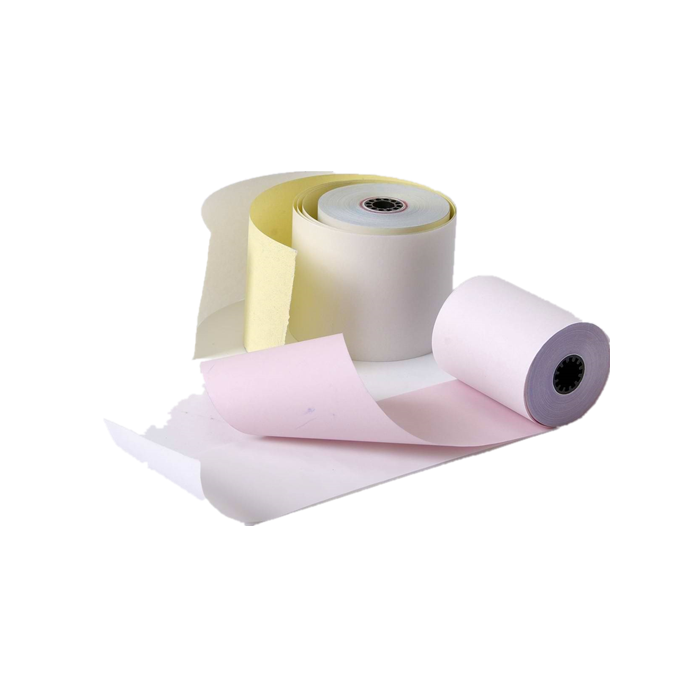
What is Carbonless Copy Paper?
Carbonless copy paper, often referred to as NCR (No Carbon Required) paper, is a specialized type of paper coated with microscopic chemical materials on one or both sides. When pressure is applied—such as from a pen or a printer—these chemicals react to produce a colored image on the receiving sheet . Unlike traditional carbon paper, it creates copies without the mess of a separate carbon layer. It is widely used for multi-part forms like invoices, receipts, delivery notes, and official documents .
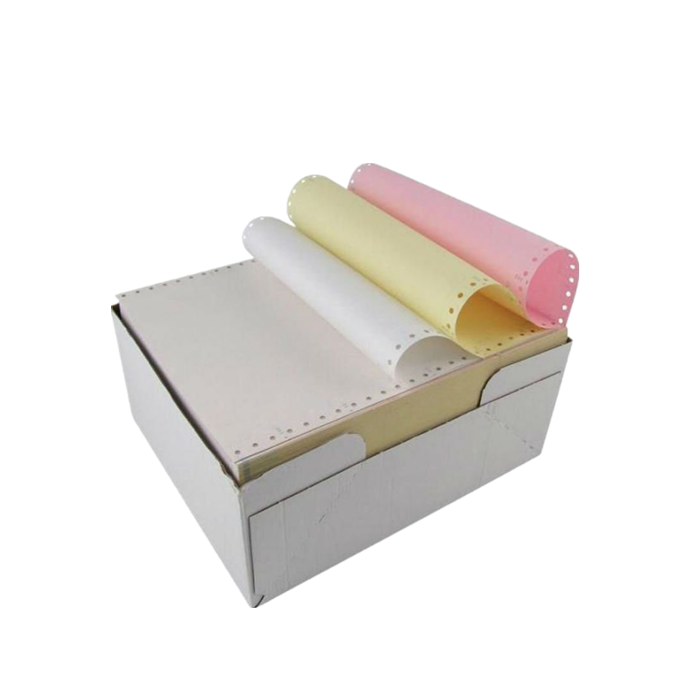
The structure of carbonless paper is categorized into distinct layers, each serving a specific function in the copy-making process. Understanding these classifications is crucial, as the GB/T standard defines quality requirements based on them :
- CB (Coated Back) Paper: This is the top sheet. The coating is applied to the back side and contains the dye (color former). When pressure is applied, it releases this dye to the sheet below .
- CF (Coated Front) Paper: This is the bottom sheet. The coating is applied to the front side and contains the reactive clay or resin (color developer). It reacts with the dye from the CB sheet above to create the visible image .
- CFB (Coated Front and Back) Paper: This serves as the middle sheet. It has a coating on the front (to react with the sheet above) and a coating on the back (to release dye to the sheet below) .
The Evolution of the Standard: From GB 16797-1997 to GB/T 16797-2017
The current mandatory reference is the GB/T 16797-2017 standard, which officially replaced the 2008 version on May 1, 2018 . A significant historical shift occurred with the 2008 revision, where the classification changed from a mandatory national standard (GB) to a recommended national standard (GB/T) . This change often reflects a move towards industry self-regulation and global harmonization, focusing on performance criteria rather than prescriptive manufacturing methods.
Key Requirements of GB/T 16797-2017
The standard is not merely a single document but a comprehensive framework that references multiple other national standards for testing methodologies. It covers everything from classification and technical requirements to testing, inspection rules, and packaging .
1. Quality Grading System
One of the most critical aspects for buyers to understand is the quality grading system. The standard (since 2008) categorizes products into three distinct levels of quality :
- 优等品 (Premium Grade): This is the highest tier, representing international advanced level.
- 一等品 (First Grade): This represents international general level and domestic advanced level.
- 合格品 (Qualified Grade): This represents the domestic qualified level.
For international buyers, specifying “Premium Grade” or “First Grade” in procurement contracts is the most direct way to ensure the product meets high international expectations.
2. Core Technical Performance Indicators
To ensure functionality and durability, the GB/T 16797-2017 standard mandates strict testing for specific physical and chemical properties. These are the metrics that distinguish a high-quality product from a substandard one:
- Image Performance (Copy Quality & Sensitivity): The primary function of carbonless paper is to produce clear, legible copies under pressure. The standard mandates tests for copy quality and the number of copies to ensure all layers are easily readable . This includes rigorous checks for sensitivity (how little pressure is required to form an image) and ensuring that the dye does not penetrate or “bleed” through to unwanted areas (anti-permeability) .
- Physical Strength and Durability: Carbonless paper must withstand handling, printing, and friction without tearing or premature failure. The standard specifies requirements for tensile strength and smoothness, which are critical for high-speed offset printing .
- Appearance and Dimensional Stability: High-quality paper must have a uniform and even fiber formation. The standard prohibits defects such as dirt, tears, wrinkles, or curling that could impair serviceability . Additionally, it measures dimensional stability (shrinkage or expansion) which is vital to prevent misregistration during multi-color printing .
- Optical Properties: The standard also defines acceptable brightness (whiteness) and opacity levels to ensure the paper looks professional and prevents the text from the reverse side showing through .
3. Packaging and Labeling
Proper packaging is essential to protect the sensitive chemical coatings from moisture and environmental damage. The GB/T standard requires that packaging and marking adhere to specific guidelines (GB/T 10342) to preserve the product’s quality during transit and storage .
Why GB/T Matters for International Buyers
For international buyers sourcing from China, GB/T standards serve as the baseline of trust. However, it is vital to recognize that GB/T (recommended) standards allow for the Qualified tier, which may not meet the performance demands of high-volume, professional environments.
To “Ensure Top Quality,” buyers should:
- Explicitly Request “First Grade” or “Premium Grade”: When negotiating contracts, specify that the supplier must provide product meeting the requirements of GB/T 16797-2017 (Premium/First Grade) .
- Request Test Reports: Legitimate suppliers will provide third-party or in-house testing reports confirming adherence to the standards, including grammage, thickness, tensile strength, and pH value .
- Consider the Application: If the paper is intended for demanding applications like continuous high-speed printing or long-term archival, ensure the Class of paper (resistance to light) is also discussed, as some specifications differentiate based on durability against light exposure .
Conclusion
Understanding Chinese Quality Standards for Carbonless Paper—specifically GB/T 16797-2017—is not just about ticking a compliance box; it is about ensuring operational efficiency and product reliability. By understanding the differences between CB, CF, and CFB layers, recognizing the significance of the Premium, First, and Qualified grading system, and knowing the critical physical and optical requirements, international buyers can navigate the Chinese market with confidence. Always remember to specify your quality requirements clearly in contracts and verify compliance through testing to guarantee that the paper you receive performs to the highest international standards.
Post time: Jul-16-2026


