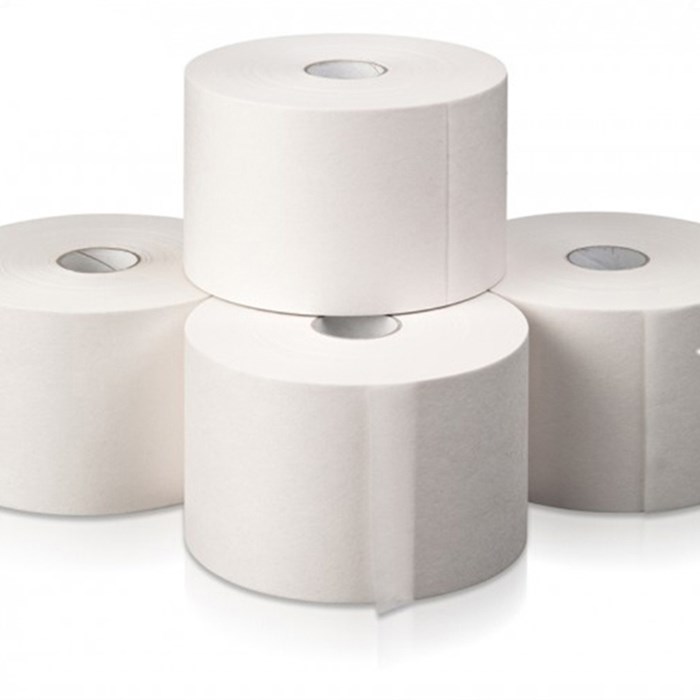
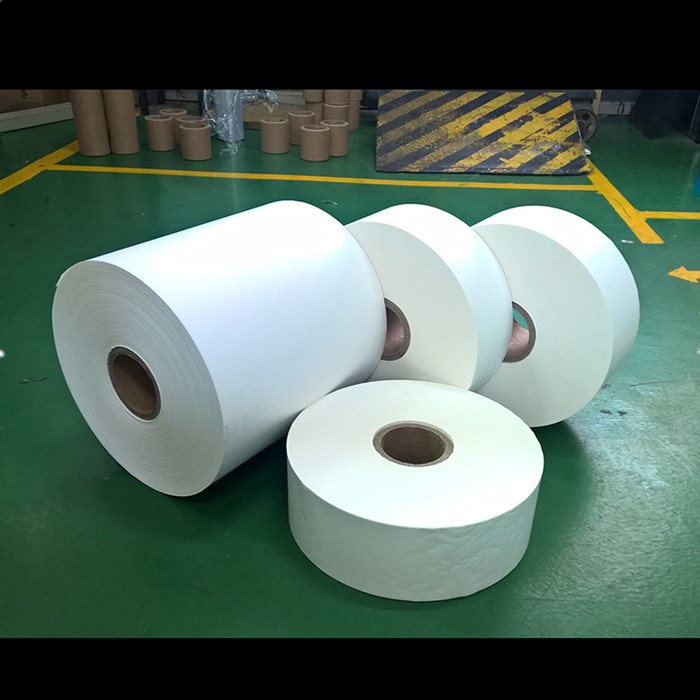
The global packaging industry stands at a pivotal inflection point. As regulatory frameworks tighten and consumer expectations evolve, paper-based solutions are experiencing unprecedented demand across Western markets. Within this transformation, pasting paper—a lightweight, thin-grade paper used in lamination, decorative bonding, packaging reinforcement, and industrial applications—has emerged as a critical enabler of the circular economy transition. Valued at approximately USD 2.1 billion in 2024, the global pasting tissue paper market is projected to reach USD 3.5 billion by 2035, registering a compound annual growth rate of 4.6% . This growth trajectory reflects not merely market expansion but a fundamental reorientation of material economics in favor of fiber-based alternatives.
Western markets, particularly Europe and North America, are driving this shift through a combination of regulatory mandates, corporate sustainability commitments, and evolving consumer preferences. The European Union’s Packaging and Packaging Waste Regulation (PPWR), which entered into force in February 2025 and became fully applicable in August 2026, represents the most comprehensive regulatory overhaul of packaging standards in decades . Meanwhile, seven U.S. states have enacted extended producer responsibility (EPR) laws for paper and packaging, creating a fragmented but rapidly maturing compliance landscape . For producers and suppliers of eco-friendly pasting paper, these developments present both significant opportunities and complex challenges that demand strategic attention.
The Regulatory Landscape Reshaping Western Markets
European Union: The PPWR as Market Catalyst
The PPWR has fundamentally altered the competitive dynamics of packaging materials in Europe. The regulation mandates that all packaging placed on the EU market must be recyclable by 2030, with specific performance grades determining market access. Packaging achieving at least 95% recyclability (Grade A) enjoys unrestricted allowance, while materials falling below 70% recyclability face prohibition from 2030 onward . For pasting paper producers, this regulatory architecture creates a structural advantage: paper-based solutions inherently align with the design-for-recycling criteria that plastic alternatives struggle to meet.
The regulation’s chemical safety provisions further reinforce this advantage. From August 2026, all packaging must comply with stringent limits on per- and polyfluoroalkyl substances (PFAS), with food-contact packaging restricted to individual PFAS concentrations below 25 parts per billion . Heavy metals—lead, cadmium, mercury, and hexavalent chromium—are capped at 100 mg/kg combined. These requirements have eliminated many conventional coating and adhesive formulations from consideration, creating demand for PFAS-free pasting paper solutions that meet both functional and compliance criteria.
North American EPR: A Patchwork of State Mandates
While the United States lacks federal packaging legislation, state-level EPR programs have proliferated since Maine’s pioneering law in 2021. Seven states—California, Colorado, Maine, Maryland, Minnesota, Oregon, and Washington—now operate active EPR programs for paper and packaging . The reporting requirements are substantial: producers must register with Producer Responsibility Organizations, submit detailed packaging data by material type and weight, and in California’s case, provide source reduction plans .
This fragmented landscape creates compliance complexity but also opportunity. Producers who demonstrate leadership in recyclable paper-based packaging position themselves favorably as EPR programs expand. The momentum shows no signs of abating: packaging EPR bills have been introduced in Georgia, New Hampshire, New Jersey, Tennessee, and Wisconsin in 2026 . Industry analysts anticipate that within three years, the majority of the U.S. packaging market will operate under some form of producer responsibility mandate.
Market Dynamics and Demand Drivers
The Paperization Megatrend
The substitution of plastic packaging with fiber-based alternatives—commonly termed “paperization”—has moved from niche sustainability initiative to mainstream market force. Europe’s paper and board packaging recycling rate of approximately 87% substantially outperforms other packaging materials by weight, providing a compelling environmental case for conversion . Mondi, a leading integrated paper and packaging group, now derives 87% of its revenue from reusable, recyclable, or compostable solutions, demonstrating how compliance has become a premium-priced value proposition .
Pasting tissue paper occupies a strategic position within this transition. Its applications span packaging reinforcement, decorative lamination, and industrial bonding—functions where plastic films and laminates have historically dominated. The material’s lightweight characteristics (typically 10–70 g/m²) enable material reduction while maintaining functional performance, aligning with packaging minimization requirements that become mandatory in the EU from 2030 . For brand owners seeking to reduce packaging weight and improve recyclability simultaneously, pasting paper offers a technically viable pathway.
E-Commerce and Food Service Demand
The structural growth of e-commerce and food delivery services has amplified demand for paper-based packaging solutions. Online retail requires up to three times more corrugated volume per transaction than store-based sales, and parallel growth in takeaway and delivery meals inflates demand for grease- and moisture-resistant wraps . Pasting tissue paper functions as a critical component in these applications, providing reinforcement and barrier properties without compromising recyclability.
The food service sector presents particular opportunity. With plastic bans proliferating across EU member states and U.S. municipalities, demand for paper-based alternatives has surged. However, food-contact applications impose stringent chemical safety requirements that have eliminated many conventional pasting paper formulations. Producers who have invested in PFAS-free barrier coatings and food-grade adhesives are positioned to capture premium pricing in this segment.
Corporate Sustainability Commitments
Bain & Company’s 2026 Paper & Packaging Report reveals a significant gap between public sustainability messaging and internal investment priorities. While many companies have toned down external marketing of circularity initiatives, a large number continue to invest substantially in sustainable solutions . The report indicates that 59% of packaging market respondents would switch suppliers if sustainability criteria were not met within three years, and approximately 65% would be willing to pay a premium of 5% or more for sustainable options .
This willingness to pay a premium—combined with regulatory cost pressures on non-compliant materials—creates favorable economics for eco-friendly pasting paper. The total cost of ownership calculation increasingly favors recyclable paper solutions when EPR fees, plastic levies, and brand reputation considerations are incorporated.
Technological Innovations Expanding the Addressable Market
Beyond Traditional Fiber Sources
Innovation in fiber sourcing is expanding the definition of eco-friendly pasting paper beyond conventional recycled content. Releaf Paper, a European Innovation Council beneficiary, has commercialized pulp derived from urban green waste—specifically fallen leaves collected from city parks. This process consumes ten times less water than traditional wood pulping, and the CO₂ absorbed by leaves during their growing season remains sequestered in the finished paper . For pasting paper producers seeking to differentiate on carbon footprint, such alternative fiber sources offer compelling sustainability narratives.
Industrial symbiosis represents another frontier. Italian papermaker Favini produces its Remake paper line incorporating 25% leather manufacturing by-products—shavings and offcuts from tanneries that would otherwise be landfilled or downcycled . The resulting paper is 100% recyclable and biodegradable, with applications in premium packaging and decorative lamination. This model of converting industrial waste streams into high-value paper products exemplifies the circular economy principles that Western regulators and consumers increasingly demand.
Barrier Coating Innovations
The functional limitations of paper—particularly its susceptibility to moisture, grease, and oxygen—have historically restricted its substitution for plastic in demanding applications. Recent advances in barrier coatings are rapidly closing this performance gap. Water-based and bio-based coating technologies now enable paper to achieve barrier properties approaching those of conventional laminates while maintaining recyclability in standard waste streams.
The regulatory prohibition of PFAS in food-contact packaging has accelerated innovation in this space. Producers have responded with barrier solutions based on starches, proteins, and other bio-derived materials that meet both performance requirements and chemical safety mandates. For pasting paper applications requiring adhesion to challenging substrates or protection of sensitive contents, these coating innovations expand the addressable market substantially.
Digital Printing and Customization
The convergence of digital printing technology with eco-friendly substrates has opened new opportunities in decorative and branded applications. Water-based digital printing enables customized designs on pasting paper at production volumes that were previously uneconomical with conventional printing methods. This capability supports the premium packaging segment, where brand differentiation and personalization command higher margins.
For pasting paper producers, the shift toward digital decoration aligns with broader market trends favoring short-run, customized production. Retailers and brand owners increasingly seek packaging that can be tailored to specific campaigns, regions, or customer segments—requirements that digital printing on paper substrates fulfills efficiently.
Strategic Opportunities for Producers
Certification as Market Access
In an environment where “greenwashing” faces increasing scrutiny, credible third-party certification has become essential for market access. Forest Stewardship Council (FSC) and Programme for the Endorsement of Forest Certification (PEFC) chain-of-custody certifications provide verifiable assurance that fiber originates from responsibly managed sources . For pasting paper producers serving European markets, EU Ecolabel certification offers the gold standard for lifecycle environmental excellence, mandating compliance with stringent heavy metal, VOC, and hazardous substance restrictions .
The business case for certification extends beyond regulatory compliance. Research indicates that certified sustainable paper products command price premiums of approximately 12% over conventional counterparts in tender data . As corporate procurement policies increasingly incorporate ESG criteria, certification becomes a prerequisite for accessing premium customer segments.
Lightweighting and Material Efficiency
The EU’s packaging minimization requirements—mandating that void space not exceed 50% of total packaging volume from 2030—create direct incentives for material reduction . Pasting paper’s inherent lightweight characteristics position it favorably in this context, but further innovation in grammage reduction without performance compromise offers competitive differentiation.
SWM International, a specialist in ultra-lightweight papers ranging from 10 to 70 g/m², exemplifies this approach. The company positions lightweighting as one of the most effective levers for lowering environmental impact, using fewer resources without compromising functional efficiency . For pasting paper producers, investment in lightweighting technology and formulation science can capture share in applications where material efficiency is valued alongside recyclability.
Circular Economy Positioning
The most significant long-term opportunity lies in positioning eco-friendly pasting paper as a cornerstone of circular packaging systems. Unlike plastic laminates that contaminate paper recycling streams, properly formulated pasting paper is designed for compatibility with existing recycling infrastructure. This compatibility transforms pasting paper from a mere material substitute into an enabler of system-level circularity.
Producers who collaborate with recyclers, brand owners, and waste management organizations to optimize end-of-life outcomes position themselves as essential partners in the circular economy transition. This collaborative approach—moving beyond material supply to solution provision—creates stickier customer relationships and higher barriers to competitive entry.
Challenges and Considerations
Cost Competitiveness and Raw Material Volatility
Despite favorable regulatory tailwinds, eco-friendly pasting paper faces persistent cost challenges. Swedish roundwood cost inflation reached 30% in 2024, eroding mill margins and exposing non-integrated producers to commodity swings . Recovered paper collection costs have also escalated due to driver shortages and higher diesel prices, narrowing the price advantage versus virgin pulp.
Achieving cost parity with conventional alternatives remains elusive in many applications. While 65% of packaging customers express willingness to pay premiums of 5% or more for sustainable options, the threshold for conversion varies by application and customer segment . Producers must balance sustainability credentials with manufacturing efficiency to maintain competitive positioning.
Fragmented Regulatory Compliance
The patchwork nature of U.S. state EPR programs imposes significant administrative burdens on producers serving national markets. Each state operates distinct definitions of “producer” and “covered material,” with varying reporting timelines and data requirements . For pasting paper suppliers, the complexity multiplies across the multiple industries and applications they serve—food service, consumer goods, industrial, and decorative.
Industry associations have advocated for federal EPR framework to reduce multi-state compliance complexity, but legislative progress remains uncertain . In the interim, producers must invest in sophisticated compliance systems and data management capabilities to maintain market access across jurisdictions.
Performance Perception and Technical Limitations
Despite advances in barrier coatings and formulation science, paper-based solutions still face performance skepticism in certain applications. Consumer misconceptions regarding durability and maintenance of paper products persist, particularly in decorative applications where pasting paper competes with vinyl and other synthetic alternatives . Addressing these perceptions requires investment in customer education and demonstrated performance data.
Technical limitations also constrain substitution in demanding applications. High-humidity environments, prolonged moisture exposure, and extreme temperature variations remain challenging for uncoated paper products. While coated and treated pasting papers can address many of these constraints, the additional processing increases cost and may complicate recyclability.
Conclusion
The Western market landscape for eco-friendly pasting paper presents a compelling alignment of regulatory mandates, corporate commitments, and consumer preferences that collectively favor fiber-based solutions. The EU’s PPWR and proliferating U.S. state EPR programs have transformed packaging sustainability from aspirational goal to compliance imperative. Within this context, pasting paper—with its inherent recyclability, lightweight characteristics, and compatibility with circular systems—occupies a strategically advantaged position.
The opportunities are substantial but not automatic. Capturing value requires investment in certification, chemical innovation, lightweighting technology, and circular economy partnerships. Producers who position themselves as solution providers rather than material suppliers—collaborating across the value chain to optimize both performance and end-of-life outcomes—will command premium positioning in an increasingly crowded market.
The trajectory is clear: the Western packaging economy is transitioning from plastic-dominant to fiber-inclusive, and pasting paper is poised to play an essential role in that transformation. The companies that recognize this shift and invest accordingly will find themselves well-positioned in a market that values not merely what materials can do, but what they enable for a circular future.
Post time: Oct-15-2026


