
Exporting cigarette paper from China requires more than securing a competitive price from a mill. The product sits at the intersection of ordinary paper goods and a highly regulated consumer-goods supply chain, which means customs classification, packaging integrity, and shipping documentation each carry outsized consequences for a smooth transaction. A misdeclared HS code or a moisture-damaged pallet can stall clearance or ruin an otherwise profitable order. This guide covers the operational essentials that exporters, buyers, and freight forwarders should verify before the container leaves the factory.
Customs Classification and Declaration
Cigarette paper falls under Chapter 48 of China’s customs tariff, specifically heading 4813. The critical distinction lies in the physical form of the paper, because China maintains three separate ten-digit codes under this heading, and each carries different declaration requirements.
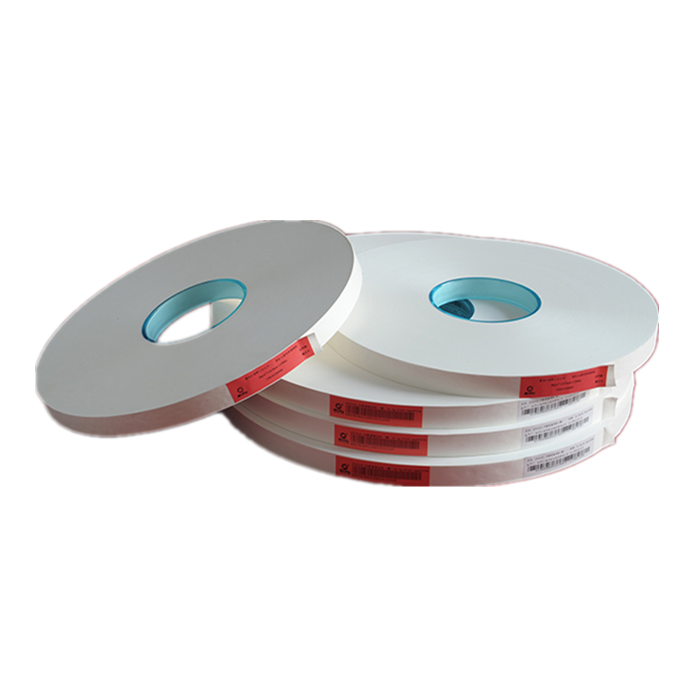
For cigarette paper in the form of booklets or tubes, the applicable code is 4813100000 . This category covers consumer-sized packs of rolling papers as well as pre-formed tubes. For cigarette paper in rolls with a width not exceeding 5 cm, the correct code is 4813200000 . This is the most common classification for industrial cigarette manufacturing inputs, including bobbin rolls used on high-speed cigarette makers. Any cigarette paper that does not fit the booklet, tube, or narrow-roll descriptions falls under 4813900000, a residual category for other cigarette paper whether or not cut to size .
The declaration elements are not optional formalities. Chinese customs requires the brand type, export preference status, specifications including width, brand or manufacturer name in Chinese or English, GTIN, and CAS number where applicable . For roll paper, the specification field must clearly state the width and the fact that the goods are in rolls. Exporters should avoid vague descriptions such as “cigarette paper” alone; the customs broker needs the precise width, grammage, and form to match the declaration to the commercial invoice and packing list. Inconsistent specifications across documents are among the most common triggers for inspection or clearance delay.
A notable feature of the cigarette paper tariff line is the zero percent export tax rebate . Unlike many Chinese manufactured goods that enjoy VAT rebates on export, cigarette paper does not currently receive a rebate. This means the exporter cannot recover the input VAT embedded in the product, and pricing calculations must account for this cost without assuming a rebate offset. Buyers negotiating FOB or CIF prices should confirm whether the quoted price already reflects this zero-rebate treatment.
The regulatory condition code “7” appears on these tariff lines, corresponding to an automatic import license . This is an import-side requirement and does not directly burden the Chinese exporter, but it matters for documentation clarity: the buyer’s ability to import depends on having the license in place. Exporters should not assume that their Chinese clearance is the only gate; confirming the importer’s credentials early prevents goods from sitting at the destination port.
Packaging Requirements
Cigarette paper is a moisture-sensitive, lightweight, and high-value-per-kilogram product. Packaging failures do not usually result in total loss, but they produce edge waviness, tension variation, and dust contamination that render the paper unusable on high-speed cigarette machines. The packaging standard that has evolved in the Chinese export trade reflects these risks.
The primary protection is a moisture barrier. Rolls are typically wrapped individually in polyethylene-coated paper or a metallized film, with the wrap sealed at both ends. For higher-grade cigarette paper, a desiccant sachet is placed inside the wrap or the carton to absorb ambient humidity during transit. The outer carton should be a rigid corrugated box capable of withstanding stacking pressure in a container without deforming. Rolls are usually oriented vertically inside the carton, with dividers or partitions preventing lateral movement. Loose rolls that shift during ocean transit develop flat spots and edge damage that cannot be corrected downstream.
Palletization deserves attention. Export pallets for cigarette paper should be heat-treated or fumigated according to ISPM 15 requirements for wood packaging, and the pallet should be wrapped in stretch film with edge protectors on all four vertical corners. The stretch wrap must cover the entire pallet including the bottom layer of cartons, because container condensation—known as container rain—runs down the walls and pools on the floor. A pallet that sits directly on a wet container floor will wick moisture upward through the cartons.
For booklets and tube-form cigarette paper, retail packaging adds another layer of complexity. Booklet packs are usually shrink-wrapped in bundles of ten or twenty before being packed into master cartons. The shrink film should be perforated to prevent condensation from becoming trapped against the paper. Tube paper, which is more rigid, requires cartons with sufficient internal clearance to prevent crushing at the tube ends, where deformation makes the product unsellable.
Labeling must be consistent across cartons, pallets, and shipping documents. Each carton should carry the product name, grammage, width, roll length, lot number, and gross/net weight in English and Chinese where required. The lot number is essential for traceability if a quality dispute arises after delivery. Cartons should also display the standard shipping marks: consignee, destination port, order number, and carton sequence number.
Shipping and Documentation Essentials
Cigarette paper is not classified as dangerous goods, and it does not require phytosanitary certification because it is a processed paper product rather than raw plant material. However, the shipping documentation must be internally consistent and must satisfy both Chinese export control and the destination country’s import requirements.
The core document set includes the commercial invoice, packing list, sales contract, bill of lading, and certificate of origin. The invoice should describe the goods precisely as declared to customs: “Cigarette paper in rolls, width [X] mm, grammage [X] gsm,” rather than a generic product name. The packing list must show the number of cartons, rolls per carton, net and gross weights, and pallet dimensions. Discrepancies between the packing list and the actual pallet configuration are a frequent cause of customs inspection at destination.
For buyers in countries with preferential trade agreements with China, a Certificate of Origin under the relevant FTA—such as RCEP or the China-ASEAN FTA—can reduce or eliminate the destination tariff. The exporter should confirm with the buyer which form is required and whether the product meets the rules of origin. This should be settled before shipment, not after the vessel departs.
Incoterms choice affects risk allocation for moisture damage and handling. FOB terms transfer risk to the buyer once the goods are loaded on board, but the seller still controls packaging and palletization at origin. CIF terms obligate the seller to arrange freight and insurance, and the insurance coverage should explicitly include wet damage and condensation alongside the standard institute cargo clauses. Many general cargo policies exclude moisture damage unless specifically endorsed, and cigarette paper claims are almost always moisture-related.
Container selection matters more than it might for less sensitive paper products. A standard dry container is adequate, but the container should be inspected for holes, door seal integrity, and residual moisture before loading. Desiccant bags—typically calcium chloride or silica gel—should be hung from the container walls or placed on pallets at a rate of roughly one kilogram per ten to fifteen cubic meters of container volume, depending on the route and season. Shipments crossing the tropics or discharged in humid climates require the higher end of that range. The container floor should be lined with a moisture barrier or dry pallets should be used, and cartons should never be stacked directly against the container doors, where condensation is most severe.
Common Pitfalls and Practical Checks
Three recurring problems account for a disproportionate share of cigarette paper export disputes. The first is HS code mismatch between invoice and declaration. A shipment declared as 4813200000 but invoiced as “rolling papers” or “cigarette paper booklets” invites scrutiny, because the customs code and the commercial description point to different tariff lines. The invoice and declaration must use the same product description that matches the chosen code.
The second is weight and quantity inconsistency. Cigarette paper is sold by roll count, length, and grammage, but customs declaration is in kilograms. The conversion between rolls and kilograms must be verifiable from the packing list, and the declared total weight should be within normal tolerance of the actual weight. Under-declaring weight to reduce apparent value is a compliance risk that outweighs any marginal duty advantage, particularly for a product with zero export rebate where the incentive for misdeclaration is already low.
The third is packaging degradation before loading. A carton that looks acceptable in the warehouse may collapse after two weeks at sea if the corrugated board has absorbed ambient humidity before loading. Exporters in southern China should pay particular attention to this during the humid season. Cartons should be stored on pallets in a dry area before loading, not on the factory floor, and the container should be loaded during dry weather or under a canopy.
Conclusion
Cigarette paper export from China is a technically straightforward trade in terms of customs procedure, but it rewards precision in classification, discipline in packaging, and consistency in documentation. The zero export rebate means there is no tax incentive to navigate, but it also means the exporter’s margin depends entirely on operational efficiency and product quality arriving intact. Before booking the next shipment, verify the HS code against the actual product form, confirm that the packaging will survive the specific route and season, and ensure that the invoice, packing list, and declaration all describe the same goods in the same terms. These checks take less than an hour and prevent the delays and claims that consume far more time than they save.

Post time: Nov-05-2026


