
The Absorbent Glass Mat (AGM) separator is a critical component in valve-regulated lead-acid (VRLA) batteries. It serves three essential functions: physically separating positive and negative plates, absorbing and retaining electrolyte, and providing a path for oxygen recombination. As the global demand for reliable energy storage grows—driven by start-stop automotive systems, uninterruptible power supplies (UPS), and telecommunications backup—the quality of AGM separators directly determines battery performance, cycle life, and reliability.
China has emerged as the world’s largest and most technologically advanced hub for AGM separator production. With hundreds of manufacturing lines, vertically integrated raw material supply chains, and continuous process innovation, Chinese suppliers now produce separators that meet or exceed international benchmarks. However, navigating this landscape requires more than a simple supplier search. Importers must understand manufacturing technologies, applicable standards, quality control protocols, and export logistics.
This article provides a technical deep dive into AGM separator manufacturing in China, outlines key international standards, and offers actionable export tips for buyers.
Part 1: Manufacturing Technology – From Glass Fibers to Finished Rolls
1.1 Raw Materials: The Foundation of Performance
AGM separators are composed primarily of microglass fibers, typically classified into two types:
- Fine fibers (0.1–1.0 µm diameter): Provide high surface area, wicking ability, and fine pore structure for oxygen recombination.
- Coarse fibers (3.0–6.0 µm diameter): Enhance mechanical strength, stiffness, and throughput during battery assembly.
Leading Chinese manufacturers use a blend ratio of fine to coarse fibers (commonly 50:50 to 70:30) depending on the target application. High-end separator producers import specialty glass fibers from Japan or the US (e.g., Johns Manville, Owens Corning), while mid-tier suppliers rely on domestic fiber sources from provinces like Shandong and Jiangsu. The purity of glass fibers—particularly low iron content and absence of metallic contaminants—directly affects electrical resistivity and float voltage stability.
1.2 Wet-Laid Nonwoven Process
Over 95% of AGM separators in China are produced using a modified wet-laid nonwoven process, similar to papermaking. The key steps are:
- Slurry preparation: Glass fibers are dispersed in deionized water with surfactants that prevent flocculation. Consistency is tightly controlled (0.1–0.5% fiber concentration).
- Sheet formation: The slurry flows onto a moving mesh wire where water drains by gravity and vacuum, leaving a uniform fiber mat.
- Binder application: An acrylic latex or phenolic binder is sprayed or impregnated onto the mat (typically 5–15% by weight). Binder choice influences stiffness, tensile strength, and acid solubility.
- Drying and curing: The mat passes through multi-zone heated rollers (150–200°C), evaporating water and cross-linking the binder.
- Calendaring: The dried separator is compressed between heated steel rollers. This step controls final thickness, pore size distribution, and surface smoothness.
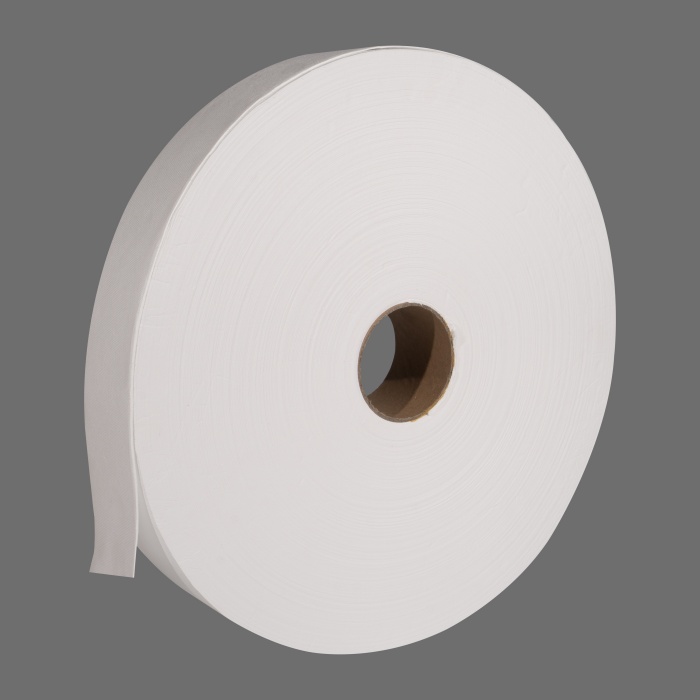
- Slitting and winding: Large master rolls (up to 2.5 m wide) are slit into custom widths (from 15 mm to 1000 mm) and rewound on cores.
1.3 Advanced Modifications for High-Performance Batteries
Chinese manufacturers have moved beyond commodity-grade separators into specialized variants:
- Low-resistance coatings: Applying a thin layer of silica or polymer reduces electrical resistance (ER) from 50–80 mΩ·cm² down to 25–40 mΩ·cm², critical for start-stop batteries.
- Anti-sulfation treatments: Adding organic phosphate or carbon-based additives slows hard sulfation during partial state of charge.
- High-compression resilience: Modified binder systems and fiber orientation allow separators to maintain porosity after 30–50% compression—essential for AGM batteries in heavy vibration environments (e.g., mining equipment).
Part 2: Quality Standards & Performance Metrics
Importers must verify that AGM separators comply with internationally recognized specifications. Chinese manufacturers commonly claim conformance to four major standards: EN 50342 (Europe), JIS C 2303 (Japan), IEC 61056, and GB/T 28545 (China). However, performance should be validated through laboratory testing.
2.1 Critical Technical Parameters
|
Parameter |
Typical Range |
Test Method |
Significance |
|
Basis weight (g/m²) |
150–400 | Weighing known area | Determines acid absorption capacity |
| Thickness (mm) | 0.3–3.0 | Micrometer under 10 kPa | Plate spacing; compression design |
| Tensile strength (N/cm) | 15–60 | Constant rate of extension | Assembly line durability |
| Electrical resistance (mΩ·cm²) | 30–150 | AC four-probe method in 1.28 g/mL H₂SO₄ | Cold cranking performance |
| Pore size (µm) | 5–25 mean | Bubble point or mercury porosimetry | Oxygen recombination rate |
| Wicking height (mm/30min) | ≥80 | Vertical strip in electrolyte | Acid filling speed |
| Iron content (ppm) | ≤30 | ICP-OES | Self-discharge reduction |
| Moisture content (%) | ≤0.5 | Loss on drying at 105°C | Shelf life stability |
2.2 Common Defects to Watch For
Despite advanced automation, Chinese AGM separator production can suffer from:
- Streaks and pinholes: Uneven fiber distribution leading to localized shorts. Caused by clogged forming fabric or inconsistent slurry.
- Calender scorching: Overly hot rollers degrade binder, producing brown/yellow spots that increase acid solubility.
- Thickness variation: CV (coefficient of variation) exceeding 5% across a roll causes uneven plate compression. High-quality lines claim CV < 3%.
- Fiber clumps (“fish eyes”): Undispersed fiber bundles create hard spots that can puncture plates.
Reputable exporters provide certificates of analysis (CoA) for each batch and accept third-party inspections (e.g., SGS, Bureau Veritas).
Part 3: Key AGM Separator Manufacturers in China
China hosts dozens of AGM separator factories, ranging from small workshops to billion-yuan publicly traded companies. Based on production volume, export capability, and technical sophistication, the following categories emerge:
Tier 1 (Global suppliers, ISO 9001 & IATF 16949 certified)
- Ningbo Tongchuang Strong Energy Fiber Co., Ltd. – One of the largest, producing >10,000 tons/year. Supplies Exide, Clarios, and CSB. Known for low-resistance AGM.
- Chongqing Zaisheng Technology Corp. (Zaisheng) – Listed on Shenzhen Stock Exchange. Focuses on premium separators for automotive and UPS batteries.
- Shandong Jinjing Industrial Group – Vertically integrated glass fiber production. Offers cost-competitive standard grades.
- Jiangxi Haorui New Material Technology – Specializes in thin AGM (0.3–0.8 mm) for start-stop systems.
- Henan Longyuan Separator Co., Ltd. – Strong presence in Southeast Asia and African battery assembly markets.
- Numerous smaller factories in Hebei, Anhui, and Guangdong provinces. Prices can be 20–30% lower than Tier 1, but quality consistency is a gamble.
Tier 2 (Mid-size, export-ready, OEM-focused)
Tier 3 (Low-cost, domestic market)
Recommendation: For first-time importers, start with Tier 1 or Tier 2 suppliers. Request 50–100 kg sample rolls before bulk orders. Check if the supplier has experience with your regional battery electrolyte standards (e.g., European batteries require stricter iron content limits).
Part 4: Export Logistics & Compliance
Shipping AGM separators internationally involves three critical risks: moisture damage, dimensional deformation, and customs classification.
4.1 Packaging for Ocean Freight
AGM separators are hygroscopic; exposure to humidity >60% can raise moisture content above 0.5%, leading to blistering during battery formation. Export-grade packaging should include:
- Inner layer: Vapor-proof aluminum foil bag with desiccant packs (silica gel, 5–10 g per roll).
- Middle layer: Corrugated cardboard or foam core to prevent edge crush.
- Outer layer: Reinforced wooden crate or double-walled carton with pallet.
- Seal integrity: Heat-sealed inner bags, not just twist-tied.
4.2 HS Code & Tariffs
AGM separators typically fall under HS Code 5911.90.00 – “Textile products for technical uses.” However, some customs districts classify them under 4823.90.90 (paper-based separators). To avoid disputes, request binding tariff classification from your customs broker. As of 2025, US Section 301 tariffs on Chinese-origin AGM separators remain at 7.5% (in addition to standard duty rates). EU has no specific anti-dumping duties on AGM separators as of this writing, but this can change—monitor EU TARIC.
4.3 Documentation Must-Haves
- Packing list: Gross/net weight, roll dimensions, core I.D., quantity per pallet.
- Bill of lading: Indicate “AGM separators for lead-acid batteries – non-hazardous.”
- Certificate of Origin: Form E (for ASEAN countries) or ordinary C/O.
- Test reports: Provide data for ER, thickness, Fe content, and wicking height.
- MSDS (Material Safety Data Sheet): Even though AGM separators are not hazardous, many freight forwarders require MSDS for warehouse acceptance.
4.4 Reducing Lead Times
Typical Chinese AGM separator production lead time is 20–35 days after deposit, but sea freight from Shanghai/Ningbo to Europe or US West Coast takes 30–45 days. To avoid line-down situations:
- Maintain safety stock = 2× sea freight duration + 10 days.
- Use air freight for emergency orders (e.g., 100 kg sample via DHL: ~$500–800, 5–7 days).
- Build rolling forecasts with suppliers during Chinese New Year (January–February) when factories shut down for 2–3 weeks.
- Supplier refuses to provide batch-specific CoA or third-party test report.
- Factory tour is refused or postponed indefinitely.
- Payment terms demand 100% T/T in advance (standard is 30–50% deposit, balance against BL copy).
- Price is >30% below market average (typically $1.8–3.5/kg FOB China for standard 0.8–1.2 mm AGM, as of 2025).
Part 5: Negotiation & Supplier Verification
5.1 Red Flags When Sourcing
5.2 Technical Audit Checklist
Before placing large orders, perform a remote or on-site audit focusing on:
- Incoming fiber quality control: Do they test fiber diameter and iron content?
- Process control: Are thickness and basis weight measured online with feedback loops?
- Roll traceability: Does each roll have a unique barcode linking to production parameters?
- Cleanliness: Is the production floor isolated from dust and metal particles? (Magnetically susceptible debris can cause battery micro-shorts.)
Conclusion
China’s AGM separator industry has evolved from a low-cost copycat sector into a mature, technology-driven supply base. Today, Tier 1 Chinese manufacturers offer separators with electrical resistance, pore uniformity, and mechanical strength comparable to European (Hollingsworth & Vose) or Japanese (Nippon Absorbent Glass) products—often at 20–40% lower landed cost.
Success for international buyers depends on three actions:
- Specify performance parameters numerically, not qualitatively (e.g., “ER ≤ 60 mΩ·cm²” instead of “good conductivity”).
- Invest in pre-shipment inspection and periodic production audits.
- Design logistics for humidity control, especially when shipping to tropical or high-latitude winter regions (condensation risk).
By combining technical knowledge of AGM separator production with disciplined sourcing practices, battery manufacturers worldwide can reliably source world-class components from China, reduce their cost per kilowatt-hour, and improve battery cycle life.
Post time: May-14-2026