
Tipping paper is one of those components in a cigarette that smokers rarely notice until something goes wrong. It wraps the filter, joins it to the tobacco rod, carries the brand’s visual identity, and—in ventilated designs—plays a direct role in smoke dilution. When tipping paper performs well, it is invisible. When it fails, the consequences range from ink smearing on machine rollers to loose filters, inconsistent ventilation, and complaints about taste or appearance.
Quality in tipping paper is not a single property. It is the outcome of several interacting variables, from the structure of the base paper to the humidity of the storage room. Based on recent technical literature and industry research, five factors stand out as the most consequential for manufacturers and converters who need consistent, runnable material.
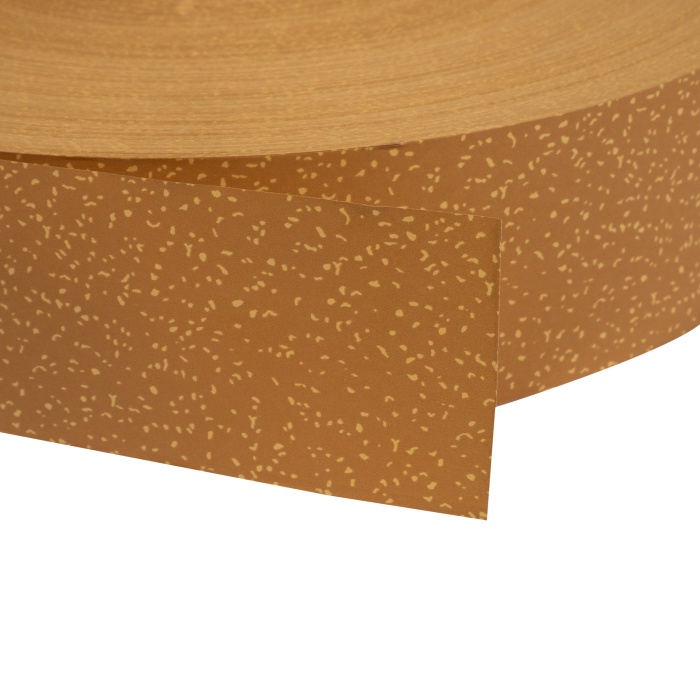
1. Base Paper Structure and the Hidden Influence of Pin-Holes
The foundation of tipping paper quality is the base paper itself. Grammage, fiber composition, formation, and thickness all set the boundaries for what printing and converting can achieve. But one structural feature deserves particular attention: the presence of microscopic penetrative pores, often called “pin-holes.”
Research presented at CORESTA 2025 investigated base paper variants from different manufacturers and grammages, examining how structural properties relate to air permeability, smoothness, tensile strength, and absorptivity . The findings were striking. Although tipping base paper is by definition a non-porous substrate, optical analysis revealed pin-holes in the micrometer range that generate measurable natural air permeability. These pin-holes are not merely a curiosity. They are dominated by grammage—lower grammage papers tend to show greater air permeability—while thickness and tensile strength showed no significant relationship with permeability .
Why does this matter for quality? Pin-holes create pathways for printing ink to penetrate through the paper during converting. When ink strikes through, it contaminates machine parts, particularly rollers in contact with the backside of the tipping paper. The same pathways can allow glue to strike through during cigarette making, compromising adhesion and creating visible defects . Coating the paper with a hydrophobic lip-release layer reduced air permeability by approximately 50 percent by partially closing these pin-holes, but did not eliminate the underlying variability .
For converters, the practical lesson is that base paper specification cannot rely on grammage and thickness alone. Natural air permeability serves as an indicator of pin-hole density, and incoming quality checks should include permeability screening alongside conventional physical tests. A paper that meets grammage targets but carries a high density of pin-holes will cause printing and machine-performance problems that no amount of process adjustment can fully compensate for.
2. Smoothness and Surface Profile: Beyond Simple “Slickness”
Smoothness is often discussed in vague terms—paper that feels slick, paper that feels rough—but recent Chinese research has clarified its role in a specific and important quality outcome: machine adaptability. A 2025 study published in China Pulp & Paper examined the relationship between tipping paper smoothness and “上机适应性,” the ability of the paper to run smoothly through high-speed cigarette making equipment .
The study found that friction coefficient, a commonly cited metric for surface slipperiness, showed no direct correlation with machine running results. Smoothness, however, did. When smoothness reached certain values, machine faults appeared. The researchers further explored what controls smoothness during production. Base paper smoothness had no significant effect on finished tipping paper smoothness. Instead, ink type and ambient relative humidity dominated. One base color ink reduced smoothness from 5.022 seconds to 1.197 seconds. Adding a hardening agent to a varnish reduced smoothness from 5.010 to 1.296 seconds. Drying at low humidity (24 percent relative humidity) for 120 minutes produced a smoothness drop of up to 9.49 percent .
The finding that ink formulation and drying conditions, rather than base paper, determine finished smoothness shifts attention to the printing process. It also explains why two converters using the same base paper can produce tipping paper with very different running behavior. Smoothness is not inherited from the paper mill; it is created—or damaged—in the printing press and drying tunnel. For quality control, smoothness should be measured on the finished, printed web rather than assumed from base paper specifications, and drying conditions should be treated as a critical process parameter rather than an afterthought.
3. Ink Formulation and Printing Process Control
The printing process does more than apply brand colors and logos. It alters the physical surface of the paper in ways that affect adhesion, slip, and sensory performance. The smoothness study above demonstrated that ink type alone can change smoothness by a factor of four . But ink also interacts with the base paper’s permeability and surface chemistry.
Water-based and solvent-based inks behave differently on tipping paper. A study comparing the two found that water-based inks produced better surface wettability, but solvent-based inks gave better tipping adaptability and fewer appearance defects in finished cigarettes . The wettability difference matters because tipping paper must accept adhesive during cigarette making. If the printed surface is too repellent, the glue cannot form a reliable bond. If it is too absorbent, glue may strike through or fail to form a continuous film. The researchers concluded that for water-based ink systems, increasing the contact angle of the printed surface or modifying the adhesive was necessary to ensure sufficient glue for bonding .
Functional printing adds another layer of complexity. When fragrances, sweeteners, or other functional materials are incorporated into inks, their concentration must be carefully controlled. A patent document describing fragrance-carrying inks found that microcapsule content between 10 and 20 percent provided excellent reduction of tobacco odor on fingers without excessive external scent or surface contamination from capsule breakage . Vanillin content above 30 percent caused sharp increases in discoloration over two months of storage, to the point where the change was visible to the naked eye . Printing quality, in other words, is not only about visual sharpness. It is about chemical compatibility, controlled release, and long-term color stability under real storage conditions.
4. Adhesion, Wetting, and the Chemistry of the Glue Line
A cigarette filter that detaches from the tobacco rod is a total quality failure, regardless of how attractive the tipping paper looks. Adhesion depends on the interaction between the tipping paper surface, the adhesive, and the machine conditions at the moment of bonding.
The wetting behavior of the printed surface is central. Contact angle measurements reveal whether an adhesive will spread and penetrate into the paper structure or bead up and form a weak bond. The comparison of water-based and solvent-based inks showed that solvent-based systems, despite lower surface wettability in the laboratory sense, performed better on the machine—likely because the adhesive and the printing chemistry were better matched in practice . This suggests that adhesion cannot be optimized by selecting glue in isolation. The glue, the ink, and the paper must be treated as a system.
Machine temperature and humidity further complicate the picture. A study on tipping paper applicability found that within a temperature range of 20 to 30 degrees Celsius and relative humidity of 50 to 60 percent, flatness remained below 5 millimeters and permeability and wetting properties were only minimally affected . Outside that window, problems multiply. Adhesive viscosity changes with temperature, and paper moisture content changes with humidity, altering both dimensional stability and surface energy. The practical implication is that the converting hall and the cigarette making floor should be treated as a continuous controlled environment. A paper that bonds perfectly in one season may fail in another if humidity is not managed.
5. Environmental Conditions During Storage and Converting
The fifth factor is the one most often overlooked because it is invisible. Paper is hygroscopic. It absorbs and releases moisture from the air, and in doing so it changes dimensions, stiffness, surface conductivity, and adhesion behavior. For tipping paper, which must run at high speed through printing presses and cigarette makers without curling, wrinkling, or jamming, moisture equilibrium is not a comfort issue. It is a quality requirement.
Research on holographic transfer tipping paper established a correlation model between ambient temperature, humidity, and moisture content, and used it to define an optimal storage window: relative humidity of 50 to 54 percent and temperature of 24 to 25 degrees Celsius . The researchers noted that in regions with humid summers and damp winters, sealed packaging during delivery is essential to preserve adaptability in subsequent production. Without sealing, paper at the outer layers of a roll will equilibrate with the external environment, creating moisture gradients that cause curl and dimensional inconsistency.
The smoothness study cited earlier added a crucial detail: low humidity during drying can reduce smoothness by nearly 10 percent . This connects storage and converting. A roll stored in a dry warehouse enters the press with a different moisture profile than one stored in a controlled room. The press may then compound the problem if its drying tunnel is also dry. Quality management therefore requires a chain of custody for moisture, from paper mill to printing press to cigarette maker, with measurement at each transfer point. Temperature and humidity are not background variables. They are process parameters as consequential as ink viscosity or press speed.
Bringing the Five Factors Together
None of these five factors operates in isolation. Base paper pin-holes allow ink penetration; ink penetration changes surface smoothness; smoothness affects how adhesive wets the surface; adhesive performance depends on moisture content; moisture content is governed by storage and drying conditions. A weakness in any one area propagates through the others.
For manufacturers and converters, the implication is that quality assurance must be integrated rather than compartmentalized. Incoming base paper should be screened for permeability and pin-hole density, not just grammage. Printing processes should be monitored for their effect on surface smoothness and wettability, with drying conditions recorded and controlled. Adhesive selection should be matched to the specific ink system and paper surface, not treated as a commodity purchase. Storage and converting environments should be maintained within defined temperature and humidity windows, with sealed packaging to protect paper in transit.
Tipping paper is a small component by weight and cost, but it sits at the junction of every major cigarette quality attribute: appearance, ventilation, adhesion, and sensory experience. The manufacturers who treat it as a precision material—rather than a printed wrapper—are the ones whose products run smoothly, look consistent, and reach the smoker without surprises.
Post time: Nov-05-2026


